


What factors influence the price of SA203 Grade B?
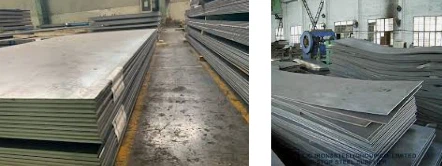
SA203 Grade B is a nickel-alloy steel plate standardized under the ASME Boiler and Pressure Vessel Code (Section II, Part A). It is specifically designed for low-temperature and cryogenic service in welded pressure vessels and other critical structures where good notch toughness at sub-zero temperatures is required.
The price of SA203 Grade B steel plate is influenced by a combination of global market factors, specialized production costs, and stringent quality requirements specific to its role as a nickel-alloy steel for low-temperature service. Here are the key factors:
1. Raw Material & Global Market Factors
Nickel Commodity Price: This is the most significant variable. Since SA203 Grade B contains a specified 2.25% nickel, its cost is directly and strongly tied to the volatile global price of nickel. Fluctuations in the London Metal Exchange (LME) nickel price have an immediate impact.
Steel Scrap & Iron Ore Costs: Provides the base cost for the steel component.
Energy Costs: The normalizing heat treatment and any tempering processes are energy-intensive, adding to production costs.
2. Specialized Manufacturing & Quality Costs
Alloying & Chemistry Control: Precise addition of nickel and tight control of impurities (P, S) increase melting and refining costs compared to carbon steel.
Mandatory Impact Testing: The Charpy V-Notch test at -75°F (-60°C) (or lower if specified) is a fundamental cost adder. It requires dedicated equipment, specimen preparation, and documentation. Testing multiple locations (e.g., quarter-point tests) further increases cost.
Heat Treatment (Normalizing): This required process adds furnace time, energy, and handling costs.
Limited Mill Production: Not all steel mills produce nickel-alloy plates. Fewer producers and smaller production batches than commodity steels lead to higher unit costs.
3. Purchaser Specifications & Requirements
This is where the price can vary most for the same "Grade B" designation. Stricter requirements lead to higher premiums.
Lower Test Temperature: Specifying impact tests at -100°F (-73°C) instead of the standard -75°F requires tighter process control and increases the risk of rejection.
Higher Impact Energy Values: Requiring 20 ft-lbf average instead of the standard 15 ft-lbf.
Supplementary Requirements: Additional tests like:
Ultrasonic Testing (UT) for internal soundness.
Hardenability (Jominy) Tests.
Third-party inspection or extra documentation.
4. Product Dimensions & Order Details
Plate Thickness & Width: Thicker plates and extra-wide plates often command a premium due to more complex rolling and heat treatment to ensure uniformity.
Order Quantity: Larger tonnage orders typically secure a lower price per ton due to amortized setup and testing costs.
Delivery Lead Time: Rush orders or very short lead times may incur premium charges.
5. Supply Chain & Logistics
Supplier Type: Buying directly from a mill is cheaper for large volumes. Purchasing from a steel service center involves additional markup but offers flexibility and smaller quantities.
Processing Services: Costs for cutting, edge preparation, or shot blasting provided by the supplier.
Transportation & Geography: Freight costs for heavy plate and import duties (if applicable) are significant.
Summary: Price Driver Hierarchy
| Factor Category | Specific Cost Drivers |
|---|---|
| 1. Commodity Price | Nickel Price (Primary Driver) |
| 2. Specification Severity | Test temperature, Impact energy value, Supplementary tests (UT) |
| 3. Product Dimensions | Plate thickness, Plate width, Order quantity |
| 4. Manufacturing Process | Alloying, Normalizing heat treatment, Quality testing |
| 5. Supply Chain | Supplier (Mill vs. Service Center), Freight, Geography |
Relative Cost Context: SA203 Grade B is significantly more expensive than carbon steel pressure vessel plates (e.g., A516 Gr. 70) due to its nickel content and testing. However, it is considerably less expensive than higher-nickel cryogenic steels (e.g., A553 Type I with 9% Ni or stainless steels).
For an accurate quote, provide a complete specification package: "ASME SA-203 Grade B, Thickness, Impact Test Temperature & Minimum Energy, and a list of all Supplementary Requirements (e.g., S1, S2, UT)."
1.What is SA203 Grade B?
SA203 Grade B is a nickel-alloy steel plate designed for low-temperature pressure vessel service, with a nominal nickel content of 2.25%, offering good notch toughness for applications down to approximately -75°F (-60°C).
2.What is the chemical composition of SA203 Grade B?
Its composition includes approximately 2.25% Nickel, along with controlled amounts of Carbon (max 0.17%), Manganese (max 0.70%), Silicon (0.15-0.40%), Phosphorus, and Sulfur.
3.What are the mechanical properties of SA203 Grade B?
Key mechanical properties include a minimum tensile strength of 65-85 ksi (450-585 MPa) and a minimum yield strength of 37.5 ksi (260 MPa) for plates up to 2.5 inches thick.
4.Is SA203 Grade B a carbon steel or alloy steel?
It is classified as a nickel-alloy steel due to its intentional and significant (2.25%) nickel content, which differentiates it from carbon steels and gives it enhanced low-temperature properties.
5.What is the impact toughness of SA203 Grade B?
SA203 Grade B is known for good notch toughness, typically requiring Charpy V-Notch impact testing at -75°F (-60°C) with minimum absorbed energy values specified.
6.How does SA203 Grade B differ from Grade A, D, and E?
The primary difference is nickel content. Grade B has 2.25% Ni, while Grade A has 2.25% Ni but lower strength, Grade D has 3.25% Ni, and Grade E has 3.50% Ni, offering progressively better low-temperature toughness.
7.What is SA203 Grade B used for?
It is commonly used in low-temperature pressure vessels, storage tanks, and structural components for applications such as propane tanks, ethylene storage, and other services down to -75°F (-60°C).
8.Can SA203 Grade B be welded?
Yes, it has good weldability. However, welding procedures should use low-hydrogen practices, and matching or suitable nickel-alloy filler metals are often recommended for critical applications.
9.What is the heat treatment for SA203 Grade B?
SA203 Grade B is typically supplied in the normalized or normalized and tempered condition to achieve the required mechanical properties and toughness.
10.Is SA203 Grade B suitable for cryogenic service?
Yes, it is a standard material for moderately low-temperature (cryogenic) service, commonly used for applications in the -50°F to -150°F (-46°C to -101°C) range, making it suitable for many liquefied gas storage applications.
Full specification and details are available on request. The above information is provided for guidance purposes only. For specific design requirements please contact our technical sales staff.
