


Angle Steel
GNEE Group, established in 2008, is a prominent foreign trade company specializing in the production and export of steel trade. With over a decade of experience, we have emerged as a trusted name in the industry, catering to a global clientele.
At GNEE Group, we understand steel's important role in everything from construction to automotive. Therefore, we are committed to supplying quality steel products that meet the highest industry standards. Our product portfolio is extensive and includes a wide range of sections, coils, pipes, and structural steel to meet different project needs.
Why choose us?
Rich experience
With more than ten years of experience, GNEE has an in-depth understanding of the ever-changing steel market dynamics, enabling us to make informed decisions and provide strategic guidance to our clients.
Quality Assurance
We are committed to providing the highest quality steel products. Our stringent quality control measures ensure that every product leaving our factory meets the strictest international standards.
Broad Market
GNEE Group operates globally, with an extensive network of partners and distributors spanning across different continents.
Customer-centric
At GNEE, customers always come first. We work closely with each client to understand their unique needs and challenges, customizing our products to provide the most suitable solution.
Advanced Equipment
One of our core strengths lies in our comprehensive manufacturing facilities. Equipped with state-of-the-art machinery and cutting-edge technology, we ensure efficient and precise production processes. Our skilled workforce, combined with stringent quality control measures, guarantees that our products consistently meet customers 'expectations.
Lifelong After-Sales Service
Full-time after-sales personnel provide services 24 hours a day. If any problems occur during the use of the device, users can contact us.


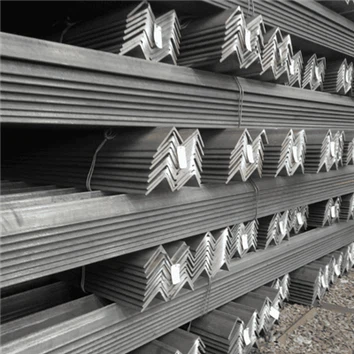


What is Angle Steel?
Steel Angles are the most basic type of roll-formed steel. They are formed by bending a single angle in a piece of steel. Angle Steel is 'L' shaped; the most common type of Steel Angles are at a 90-degree angle. The legs of the “L” can be equal or unequal in length.
Strength and Durability
Steel angle is renowned for its exceptional strength, making it a top choice for numerous structural applications. The molecular composition of steel, combined with its L-shaped configuration, contributes to its ability to bear substantial loads and resist deformation. This inherent strength ensures a prolonged lifespan for structures and components that utilize this, thus offering both short-term resilience and long-term durability.
Resistance to Corrosion
One of the noteworthy attributes is its ability to resist corrosion, especially when treated or coated with protective layers. This resistance is particularly valuable in environments where the material is exposed to moisture, chemicals, or saline conditions. By preventing rust and corrosion, the integrity and appearance of the components remain uncompromised, making it ideal for indoor and outdoor applications.
Flexibility and Adaptability
Steel angle offers remarkable flexibility and adaptability beyond its strength and resistance to wear. Its design can suit various applications despite being a rigid material. From varying its lengths and thicknesses to bending it into specific angles other than the standard 90 degrees, it can be tailored to meet the unique requirements of different projects. This adaptability ensures that architects and engineers can innovate and optimize designs using this versatile material.
Benefits of Angle Steel
Durability
Steel is known for its strength and durability, as it can withstand extreme pressure and temperature. This prominent feature makes it an excellent material for construction projects.
Resistance to Corrosion and Rust
Steel angles can be coated or painted to enhance their resistance to corrosion. This protective layer ensures their longevity and structural integrity, even in harsh environments or exposure to moisture.
Versatility
Steel can be customized to the desired shape and size, making it a versatile building material.
Low Maintenance
Once installed, steel angle requires minimal maintenance, making it an excellent choice for large-scale construction projects that seek durability and long-term performance.
Fire Resistance
Steel angle is highly resistant to fire, making it a safe option for large-scale buildings and infrastructure projects.
Ideal for Welding
Steel angle is one of the best materials you can use for welding. It can handle high temperatures and is easy to shape, mould, and weld.
Suitable for Heavy Load Projects
Steel angle can support high loads without bending or breaking. It is, therefore, an excellent choice for bridge construction and other large-scale infrastructure projects.
Cost-Effective
Steel angles are cost-effective compared to other structural materials. Their availability and affordability make them a practical choice for projects that require strength and stability without breaking the budget.

Equal Angle
Equal angles, commonly referred to as L-shaped angles, are structural components characterized by having equal-length legs meeting at a 90-degree angle. Their symmetrical shape ensures uniformity and balance, making them highly versatile for a wide range of applications. These angles are utilized in bracing systems to resist lateral forces and enhance structural integrity. They are employed for constructing support beams, guardrails, and signposts, contributing to the integrity of transportation networks and utility systems in infrastructure projects.
Unequal Angle
Unequal angles are distinguished by having one leg longer than the other, which offers a versatile solution for applications—where unequal distribution of forces is necessary or aesthetic considerations dictate asymmetrical profiles.
They are applied in construction for trusses, and floor framing, as well as in industrial machinery for structural components—where specific load-bearing requirements or aesthetic considerations dictate unequal distribution of forces.
Furthermore, their unequal geometry allows engineers and architects to tailor the angles to the unique demands of each application.
Rolled Steel Angle
Rolled steel angles are produced through a meticulous manufacturing process, wherein heated steel billets are fed through a succession of rollers to attain the desired angle profile.
They are in demand for framing structures, fabricating machinery components, and building support beams and frameworks in both the construction and manufacturing sectors. Their ability to withstand heavy loads and harsh environments makes them a preferred choice for engineers and architects seeking dependable solutions for their projects.
Cold-Formed Steel Angle
Cold-formed steel angles are crafted through a precise manufacturing process. This involves bending or folding sheet metal or strip steel at room temperature eschewing the need for heat. This offers several advantages, foremost among them being the ability to create angles with intricate geometries and tight tolerances.
Common applications include partitions, shelving systems, and architectural details, where cold-formed steel angles contribute to both the structural integrity and aesthetic appeal of the final product.
Frames
Another popular use of steel angles is framing for different structures and objects. While the basic design involves an equal (or non-equal) angled L-shaped cross-section featuring two opposing legs, it can be fabricated to attain the desired appearance. Metal stamping or punching, in particular, can create multiple openings on a steel angle to create an aesthetically pleasing framing component. Other custom-built designs can also be done on steel angle framing to support handrails, utility carts, interior moldings, trimmings, paneling, cladding, and many more.
Bridges
Steel angles are heavily used for reinforcement in bridge components such as arches, girders, bearings, and pedestrian walkways. The sturdy character of steel angles ensures concrete reinforcement and less material handling during construction, which contributes to the lifetime and durability of bridge constructions.
Machines
Steel angles are necessary for structural support in the machines and appliances industries. Steel angles play an important role in strengthening structural integrity in anything from heavy industrial machinery like forklifts and bulldozers to home appliances like washing machines and stoves. They provide a unique design that adds strength and protection to the equipment when placed in corners.
Warehouse Shelves
Warehouses use the strength of steel angles to build storage racks that can withstand heavy loads. Steel angles support the corners of these racks, assuring longevity and preventing buckling under heavy loads. This use improves the overall structural integrity of warehouse shelves, allowing them to endure harsh industrial demands.
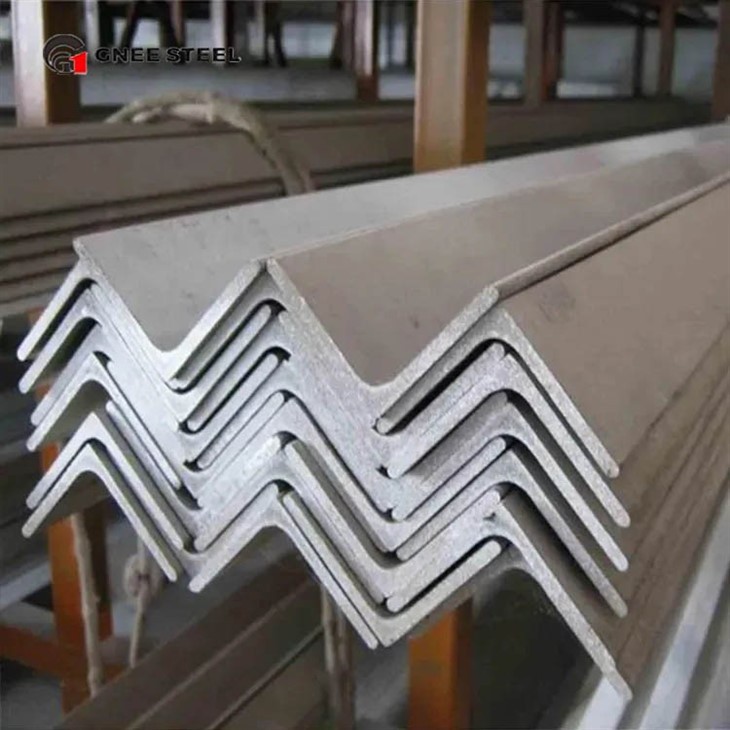
Raw Material Selection
The journey of manufacturing steel angles begins with carefully selecting suitable raw materials. High-quality carbon or low-alloy steel is typically chosen due to its excellent strength and durability. The composition of the steel is meticulously controlled to ensure the desired mechanical properties. The selected steel is sourced in the form of long bars, known as billets or blooms, which are usually produced in steel mills.
Heating and Conditioning
The next step involves heating and conditioning the raw materials to facilitate shaping and forming. The billets are heated to extremely high temperatures in a specialized furnace, reaching a malleable state. This heating process helps to reduce the force required for deformation and enhances the material’s flexibility. Once heated, the billets pass through rollers to reduce their cross-sectional size and shape. These slabs or coils are then allowed to cool and are cut into specific lengths, ready for the next stage of the manufacturing process.
Forming the Profiles
In the forming stage, the steel angles start to take shape. The slabs or coils are fed into a rolling mill, which consists of a set of specially designed rolls that gradually shape the metal into the desired profile. A series of rolls of steel channels slowly bend the metal, forming the distinctive “U” shape.
Cooling, Straightening, and Cutting
Once the profiles are formed, they are cooled to room temperature to stabilize their structure and prevent warping or distortion. Cooling can be achieved through air cooling or water quenching, depending on the specific requirements of the steel. After cooling, the profiles may undergo straightening processes to correct any bending or twisting during forming. Finally, saws or shearing machines cut the straightened profiles into specific lengths. The cutting process ensures uniformity and provides the desired product for further applications.
Surface Treatment and Finishing
Steel angles often undergo surface treatment to enhance their corrosion resistance and improve their appearance. Common surface treatments include galvanizing, painting, or powder coating. These processes provide an additional protective layer, ensuring longevity and reducing maintenance requirements.
Safety Precautions When Working With Stainless Steel Angle
● Personal Protective Equipment (PPE): Always wear appropriate PPE such as safety goggles, gloves, and protective clothing to protect yourself from potential hazards. Stainless steel angle can have sharp edges, so wearing gloves is especially important to avoid cuts or scrapes.
● Avoid lifting the material alone if it is too heavy and ask for assistance if needed.
● Cutting and machining: Ensure that the tools are sharp and in good condition to minimize the risk of accidents. Take breaks to prevent overheating of the equipment and to avoid fatigue.
● Fire prevention: Stainless steel is not flammable, but it can generate sparks when cut or ground. Therefore, it is essential to keep flammable materials away from the work area. Additionally, ensure that fire extinguishers are readily available in case of emergencies.
● Ventilation: Stainless steel angle may release fumes or dust particles during cutting or welding processes. Adequate ventilation in the work area is necessary to minimize exposure to these substances. If ventilation is insufficient, use appropriate respiratory protection.
● Cleanliness and organization: Maintain a clean and organized work area to reduce the risk of accidents. Keep the floor free of clutter, tools, and materials to prevent slips, trips, and falls. Properly store stainless steel angle to prevent it from falling or causing injuries.
● Training and supervision: Ensure that all workers handling stainless steel angle are properly trained in safe work practices. Supervise their activities to ensure they are following safety protocols and to address any concerns or potential hazards.
To Order Steel Angles, the Following Parameters Shall Be Considered
Dimensions
The length, width, and thickness of the angle legs are crucial in determining their strength and suitability for a particular application (a key choice is between the equal or the unequal shape).
Material Grade
The grade of steel used impacts the angle’s mechanical properties, such as yield strength, tensile strength, and ductility.
Surface Finish
Angle steel can be hot-rolled or cold-rolled, with hot-rolled being the most common for structural applications. The surface finish can also include galvanization or painting for additional corrosion resistance.
Regular Cleaning: Steel angles should be cleaned regularly to remove any dirt, dust, or debris that may accumulate on the surface. This can be done using a mild detergent or cleaner and a soft cloth or sponge. Avoid using abrasive cleaners or scrub brushes, as these can scratch the surface of the steel.
Avoid Harsh Chemicals: It is important to avoid using harsh chemicals or cleaners that contain chlorine or bleach on steel angles, as these can corrode the surface and cause damage. Instead, opt for mild, non-abrasive cleaners that are specifically designed for use on steel.
Remove Stains and Spots: If steel angles develop stains or spots, they can be removed using a mixture of baking soda and water, or by using a stainless steel cleaner. Apply the cleaner to the affected area and gently scrub with a soft cloth or sponge, following the grain of the stainless steel.
Prevent Scratches: While steel is highly durable, it can still be prone to scratches, especially if exposed to abrasive materials or rough handling. To prevent scratches, avoid using abrasive cleaning tools, and be cautious when moving or handling steel angles.
Protect from Corrosion: To protect steel angles from corrosion, avoid prolonged exposure to saltwater, acidic or alkaline substances, and high humidity environments. If steel angles are installed outdoors, consider applying a protective coating or using a steel grade that is specifically designed for outdoor use. By following these maintenance requirements, steel angles can maintain their appearance, durability, and performance for many years, ensuring they continue to serve their intended purpose effectively.
Our Factory
FAQ
We're professional angle steel manufacturers and suppliers in China, specialized in providing high quality customized service. If you're going to buy discount angle steel made in China, welcome to get pricelist from our factory. For price consultation, contact us.
purchase angle steel, import angle steel, weather resistant angle steel