


Universal Beam
GNEE Group, established in 2008, is a prominent foreign trade company specializing in the production and export of steel trade. With profound experience, we have emerged as a trusted name in the industry, catering to a global clientele.
At GNEE Group, we understand steel's important role in everything from construction to automotive. Therefore, we are committed to supplying quality steel products that meet the highest industry standards. Our product portfolio is extensive and includes a wide range of sections, coils, pipes, and structural steel to meet different project needs.
Why choose us?
Rich experience
With more than ten years of experience, GNEE has an in-depth understanding of the ever-changing steel market dynamics, enabling us to make informed decisions and provide strategic guidance to our clients.
Quality Assurance
We are committed to providing the highest quality steel products. Our stringent quality control measures ensure that every product leaving our factory meets the strictest international standards.
Broad Market
GNEE Group operates globally, with an extensive network of partners and distributors spanning across different continents.
Customer-centric
At GNEE, customers always come first. We work closely with each client to understand their unique needs and challenges, customizing our products to provide the most suitable solution.
Advanced Equipment
One of our core strengths lies in our comprehensive manufacturing facilities. Equipped with state-of-the-art machinery and cutting-edge technology, we ensure efficient and precise production processes. Our skilled workforce, combined with stringent quality control measures, guarantees that our products consistently meet customers 'expectations.
Lifelong After-Sales Service
Full-time after-sales personnel provide services 24 hours a day. If any problems occur during the use of the device, users can contact us.


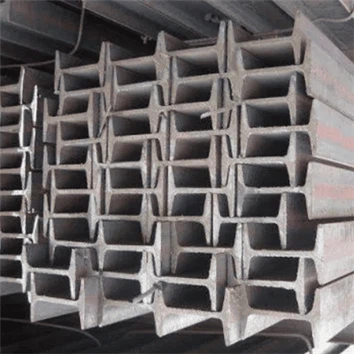


Known in Australia as universal beams (UB) and universal columns (UC) but also commonly referred to as I beams and H beams, these are named after the I and H-shaped appearance of their cross-section.
The vertical middle section of the beam is known as the 'web' and the horizontal components are called 'flanges'. These beams are designed to support a lot of weight in one direction. UBs used in floors will support more force vertically than a standard square beam, but are weaker against horizontal movement and do not react well to twisting. They are used as a component in floor framing and can be used with other beams and joists where extra load-bearing capacity is required.
Various Dimensions
One of the primary advantages of universal beams is their versatility in terms of dimensions and sizes. True to their name, universal beams are available in an extensive range of weights, section depths, flange widths, and web thicknesses. This variety allows for precise customization to meet the specific requirements of different projects. Whether it's a small residential structure or a massive industrial complex, there is an I-beam size that suits every application.
Even Weight Distribution
They are designed to handle uniform loads across the beam length, with the maximum deflection falling on the center of the beam. This increases the tension on the sides of the beam. With the weight applied on the flange, the entire mass is distributed evenly, causing less stress to pass through the web.
Bears High Loads
The design of beams makes them capable of bending, rather than buckling, under high stress. Steel universal beams can withstand enormous loads of structures. The strength of steel in the I-beam shape can also help to reduce the need for numerous other support structures, which can help to save time in the construction.
Helps In Custom Steel Fabrication
Universal steel beams are very versatile and can be used in various structural steel construction projects. Steel fabrication involves cutting, bending, and shaping of steel, and steel beam fabrication is one of the most efficient processes for fulfilling orders and meeting the deadlines of a project. It’s easier to use I beams during custom structural steel fabrication and welding processes for all types of construction.
Recyclable And Cost-Effective
Steel products can be recycled numerous times. What’s superb is that their strength is never compromised the longer they are used. Recycling structural steel can also help to reduce costs, saving on production expenses, materials, time and energy.
Even Weight Distribution
Universal beams are engineered to handle uniform loads efficiently. The design of these beams ensures that the maximum deflection occurs at the centre of the beam, resulting in even weight distribution along the sides. By evenly distributing the weight, universal beams reduce stress on the web and enhance the overall structural stability.

Strength: Universal beams are strong and durable, and they can withstand significant loads and stresses.
Versatility: Beams can be used in a variety of construction applications, such as floors, roofs, bridges, and even buildings. They can also be designed to span different distances, making them suitable for both small and large structures.
Cost-effective: Beams are typically less expensive than other types of structural elements, such as trusses or arches. This makes them a cost-effective solution for many construction projects.
Easy to install: Beams are relatively easy to install, and they can be put into place quickly and efficiently. This can help to speed up the construction process and reduce labor costs.
Design flexibility: Beams can be designed in a variety of shapes, sizes, and materials. They can be straight, curved, tapered, and even hollow. This allows architects and engineers to have a greater degree of freedom in the design of the structure.
Durability: Beams are designed to last the lifetime of the structure. They are resistant to fire, pests, and weathering, and they do not require regular maintenance.
Construction
Universal Beams are used all the time in construction. They are used in new-build properties where the steel structure supports the new building, or when renovating a property where an existing building is being altered or extended. They are also commonly used when removing internal walls. If the wall to be removed is load-bearing, a beam will be needed to replace that support.
Transport
Around 16% of the steel produced worldwide is used in the transport industry, whether that’s in motor vehicles, trains, ships shipping containers, or aircraft. It’s also used in transport infrastructures such as roads, bridges, tunnels, and rail tracks and large buildings like ports, airports, and train and fuelling stations. Structural steel is a popular choice because of its elasticity, tensile strength, cost-effectiveness, and malleability. In vehicles, it’s used in many internal elements, as well as to protect the engine.
Bridges
Structural steel beams are of paramount importance when building bridges because of their high-yield strength. Structural steel comes in certain grades, and these are used for specific builds as each steel grade offers a different tension, strength, shear level, and compression. What’s more, structural steel is strong and sturdy enough to support the exceptionally heavy loads bridges have to hold.
Manufacturing
Steel is used in manufacturing all the time. Most of the things we use on a daily basis are made from, or with, steel. Mobile phones, cars, fridges, tools and machinery, construction and agricultural equipment are all made from steel. Even plastic or glass bottles are manufactured using steel tools.
Art
In addition to their structural uses, universal beams are also used in artistic and decorative applications. They can be used as decorative features in building facades or as sculptures in public spaces. The clean lines and modern aesthetic of beams make them a popular choice for contemporary design.
Continuous beams
A continuous beam has two or more supports that reinforce the beam. These supports are used under and between the beams and are typically vertical. Continuous beams are thought to be more economical when compared to other beam types.
Simply supported beams
Simply supported beams are those that have supports at both ends of the beam. These are most frequently utilized in general construction and are very versatile in terms of the types of structures that they can be used with. A simple support beam has no moment resistance at the support area and is placed in a way that allows for free rotation at the ends of columns or walls.
Fixed beams
A fixed beam is fixed on both ends of the beam with supports. This type of beam does not allow for bending moment production and will not have any vertical movement or rotation. Fixed beams are most frequently used in trusses and similar structures.
Overhanging beams
An overhanging beam is supported at two different areas, typically at one end and in the middle of the beam but does not have support at the other end of the beam, leaving it hanging. This type of beam extends beyond the walls or columns and the overhanging section of the beam is unsupported. An overhanging beam is a combination of a simply supported beam and a cantilever beam.
Cantilever beam
A cantilever beam is one that is free-hanging at one end of the beam and fixed at the other. This type of beam is capable of carrying loads with both bending moment and sheer stress and is typically used when building bridge trusses or similar structures. The end that is fixed is typically attached to a column or wall. The tension zone of a cantilever beam is found at the top of the beam with the compression at the bottom of the beam.

How They’re Made
These steel beams require precise manufacturing processes that include either milling or rolling. Due to its tapered flanges, I-beams are typically less straightforward than H-beams.
H-beams, meanwhile, are made of rolled steel and require metal to be welded together. The flanges are welded to the web to create its H shape.
Beam Thickness
I-beam webs are thinner than H-beam webs, which means they can’t hold as much weight but are typically lighter. This makes I-beams suitable for smaller projects like residential buildings, whereas H-beams are ideal for larger and taller structures like bridges. H-beam flanges are also wider, longer, and heavier than I-beams.
Beam Cross-sections
The cross-section of a H-beam has greater strength per unit area than the I-beam. This makes the H-beam an overall stronger beam with a decent strength-to-weight ratio. As H-beams have large surface areas, they’re great for carrying heavy loads.
I-beams, on the other hand, have cross-sections that are higher than the width of their flanges. This makes the steel beams ideal against local buckling, where individual parts and plate elements of the beam are put under extreme pressure.
Beam Height and Weight
I-beams are lighter and thinner than H-beams, and only span between 33 to 100 feet due to their complex shape. H-beams can span to 300 feet, making them the obvious choice for very tall structures. However, due to the I-beams being relatively lightweight, they are more suited for shorter spans and projects that require less weight bearing.
Beam Resistance Against Loads
Both beams have enough strength to withstand direct and tensile loads. However, H-beams are better at withstanding twisting loads as their cross-sections are larger and broader. As such, torsional deformation is less likely to occur when using H-beams.
Beam Practical Uses in Structures
I-beams are better as support frames and columns, typically used for elevators, trailers, houses and structural steel buildings. H-beams, meanwhile, withstand compression and tension and are used to support vertical loads like girders, and cables.
How to Install Universal Beam?
● A structural engineer will need to look at your plans and size an appropriate structural steel beam for your project. They may even need to come on-site.
● Builders use beam pockets to install large main support beams in basements. A beam pocket is “a groove or a cut out near the top of the foundation wall in which a steel support beam is placed during construction”. Be sure that your beam pockets match your engineer’s plans. If not, it may be necessary to construct new beam pockets or alter floor joists (all per the structural engineer of course).
● Using a crane or telescoping forklift, the beam can be lifted and set into place on the beam pockets.
● Create temporary posts to set the beam on. Be sure they won’t interfere with the placement of permanent support posts later on. Fasten these to the beam.
● Following your structural engineer’s instructions, support columns can be installed and placed evenly at the designated spacing. This could involve installing steel plates on the top and bottom of the post so it can be properly fastened.
Our Factory
FAQ
We're professional universal beam manufacturers and suppliers in China, specialized in providing high quality customized service. If you're going to buy discount universal beam made in China, welcome to get pricelist from our factory. For price consultation, contact us.
hospital universal beam, amazonian universal beam, stadium arena universal beam