


16Mo3 Pressure Vessel Steel Plate is a low-alloy molybdenum steel specified under EN 10028-2, with material number 1.5415. It is primarily used in the manufacture of boilers, pressure vessels, heat exchangers and industrial equipment operating at elevated temperatures.
For industrial pressure tank manufacturing, 16Mo3 steel plate provides specified mechanical properties at temperatures up to 500°C. Its molybdenum content of 0.25–0.35% contributes to its elevated-temperature performance.
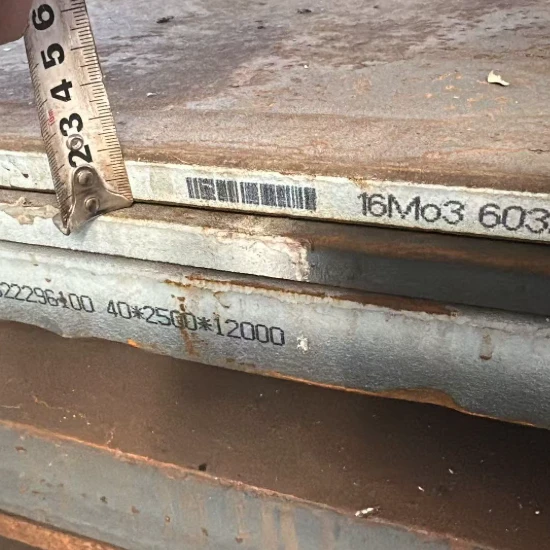

However, the maximum allowable operating temperature of a finished pressure vessel must be determined according to the applicable design code, operating pressure, material thickness and design life.
Gnee supplies 16Mo3 pressure vessel steel plates for international industrial equipment projects, supporting customized dimensions, steel plate processing, material inspection and bulk export requirements.
EN 10028-2 16Mo3 Steel Plate Specifications
Before purchasing 16Mo3 pressure vessel steel plate, buyers should confirm the material standard, delivery condition and inspection requirements.
| Specification | Technical Data |
|---|---|
| Steel Grade | 16Mo3 |
| Material Number | 1.5415 |
| European Standard | EN 10028-2 |
| Steel Type | Molybdenum-Alloyed Steel |
| Main Alloying Element | Mo: 0.25–0.35% |
| Reference Plate Thickness | 5–150 mm |
| Delivery Condition | Normalized / Normalized Rolled |
| Minimum Yield Strength | 220–275 MPa, depending on thickness |
| Tensile Strength | 420–590 MPa, depending on thickness |
| Minimum Elongation | 22% |
| Impact Energy | ≥31 J at +20°C |
Chemical Composition of 16Mo3 Pressure Vessel Steel Plate
The chemical composition of 16Mo3 pressure vessel steel plate is controlled to meet the requirements of elevated-temperature applications.
| Element | Chemical Composition (%) |
|---|---|
| Carbon (C) | 0.12–0.20 |
| Silicon (Si) | ≤0.35 |
| Manganese (Mn) | 0.40–0.90 |
| Phosphorus (P) | ≤0.025 |
| Sulfur (S) | ≤0.010 |
| Chromium (Cr) | ≤0.30 |
| Molybdenum (Mo) | 0.25–0.35 |
| Nickel (Ni) | ≤0.30 |
| Copper (Cu) | ≤0.30 |
| Nitrogen (N) | ≤0.012 |
The values represent specified cast-analysis limits. Actual chemical composition should be verified against the mill test certificate supplied with each production batch.
Mechanical Properties of 16Mo3 Steel Plate by Thickness
For pressure vessel manufacturers, plate thickness directly affects the specified minimum yield strength of 16Mo3 steel.
According to published EN 10028-2:2017 plate data, the minimum yield strength decreases from 275 MPa for plates up to 16 mm thick to 220 MPa for plates over 100 mm and up to 150 mm thick.
| Thickness (mm) | Min. Yield Strength (MPa) | Tensile Strength (MPa) |
|---|---|---|
| 5–16 | 275 | 440–590 |
| >16–40 | 270 | 440–590 |
| >40–60 | 260 | 440–590 |
| >60–100 | 240 | 430–580 |
| >100–150 | 220 | 420–570 |
These values apply to the specified material and delivery conditions.
Request Customized 16Mo3 Pressure Vessel Steel Plates
Gnee supplies 16Mo3 steel plates according to customers' material specifications. Submit your required thickness, dimensions, quantity and delivery condition to receive a customized quotation.
Elevated-Temperature Properties of 16Mo3 Steel Plate
For industrial tanks operating at elevated temperatures, room-temperature tensile properties alone are insufficient for material selection.
The following table shows the specified minimum 0.2% proof strength of 16Mo3 steel plate at different temperatures and thicknesses.
Minimum 0.2% Proof Strength (MPa)
| Temperature | 5–16 mm | >16–40 mm | >40–60 mm | >60–100 mm |
|---|---|---|---|---|
| 100°C | 264 | 259 | 250 | 230 |
| 150°C | 250 | 245 | 236 | 218 |
| 200°C | 233 | 228 | 220 | 203 |
| 250°C | 213 | 209 | 202 | 186 |
| 300°C | 194 | 190 | 183 | 169 |
| 350°C | 175 | 172 | 165 | 153 |
| 400°C | 159 | 156 | 150 | 139 |
For example, a 20 mm 16Mo3 steel plate has a specified minimum 0.2% proof strength of 259 MPa at 100°C. At 400°C, this value decreases to 156 MPa, representing a reduction of approximately 39.8%.
This illustrates why the actual design temperature must be provided when selecting 16Mo3 pressure vessel steel plate.
Applications of 16Mo3 Steel Plate in Industrial Tanks
16Mo3 pressure vessel steel plate is suitable for consideration in pressure-retaining equipment where elevated-temperature mechanical properties are required.
| Application | Typical Components |
|---|---|
| Pressure Vessels | Shells and heads |
| High-Temperature Process Tanks | Pressure-retaining shells |
| Heat Exchangers | Shells and pressure components |
| Boiler Equipment | Pressure-retaining components |
| Industrial Processing Vessels | Welded vessel components |
Unlike ordinary atmospheric storage tanks, high-temperature pressure vessels require material selection based on the actual combination of temperature, pressure and design requirements.
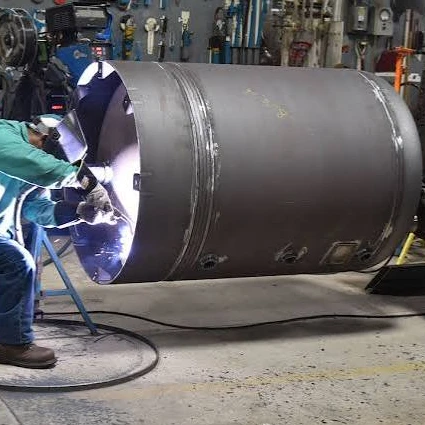
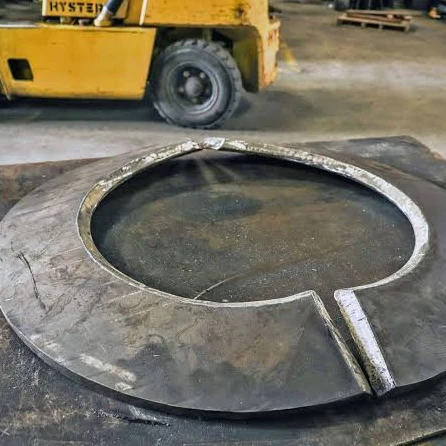
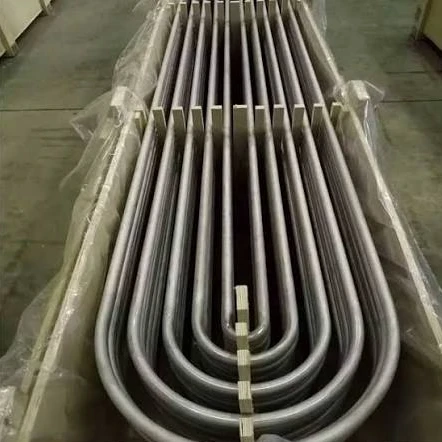
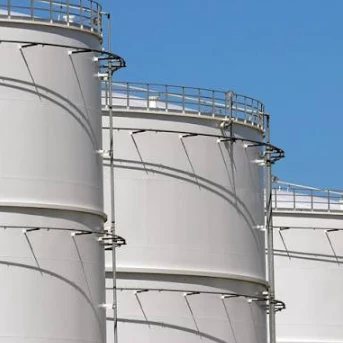
For corrosive media, additional material compatibility assessments are necessary. 16Mo3 is not inherently a corrosion-resistant substitute for stainless steel.
How to Calculate 16Mo3 Steel Plate Procurement Weight
For international pressure vessel projects, calculating the theoretical weight of steel plates helps buyers estimate procurement quantities, packaging requirements and transportation arrangements.
The following examples use a nominal steel density of 7,850 kg/m³. These are calculated examples, not Gnee inventory specifications.
Theoretical Weight = Thickness × Width × Length × Density
| Plate Dimensions (mm) | Weight per Plate | Quantity | Total Weight |
|---|---|---|---|
| 10 × 2000 × 6000 | 942 kg | 50 | 47.10 t |
| 12 × 2000 × 6000 | 1,130.4 kg | 50 | 56.52 t |
| 16 × 2000 × 6000 | 1,507.2 kg | 50 | 75.36 t |
| 20 × 2000 × 6000 | 1,884 kg | 50 | 94.20 t |
| 25 × 2000 × 6000 | 2,355 kg | 50 | 117.75 t |
For example, an order consisting of 50 pieces of 16Mo3 pressure vessel steel plate measuring 20 × 2000 × 6000 mm has a theoretical total weight of approximately 94.2 metric tons.
Actual shipment weight may vary depending on dimensional tolerances, cutting requirements and packaging.
Bulk 16Mo3 Steel Plate Supply for International Projects
For bulk procurement, send Gnee your complete material list, including plate dimensions and required quantities. We can review the specifications and prepare a quotation with the applicable material and delivery requirements.
Inspection and Certification Requirements for 16Mo3 Steel Plate
For international pressure vessel manufacturing, material documentation must match the purchase order and applicable construction requirements.
| Inspection Item | Information to Verify |
|---|---|
| Material Identification | Steel grade, heat number and plate identification |
| Chemical Analysis | Actual chemical composition |
| Tensile Testing | Yield strength, tensile strength and elongation |
| Impact Testing | Test temperature and absorbed energy |
| Dimensional Inspection | Thickness, width and length |
| Ultrasonic Testing | Applicable standard and acceptance level |
| Material Certification | EN 10204 3.1 or 3.2, as specified |
Additional testing requirements should be confirmed before production rather than assumed to be included with every order.
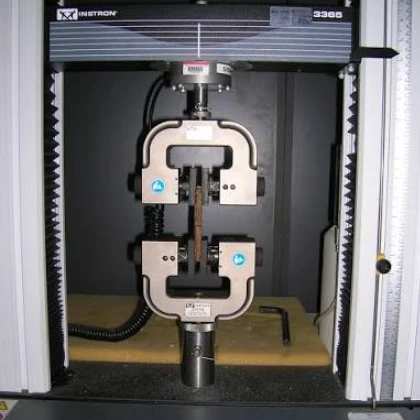
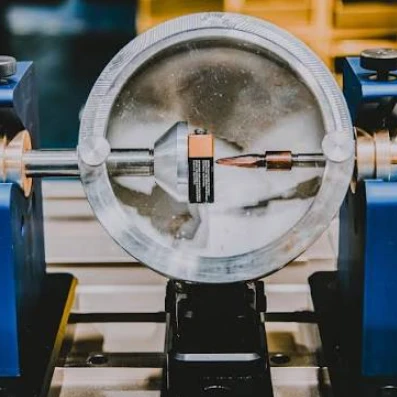
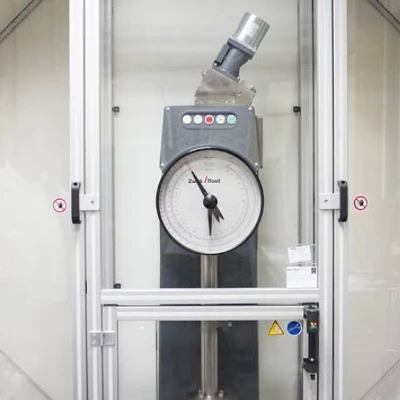
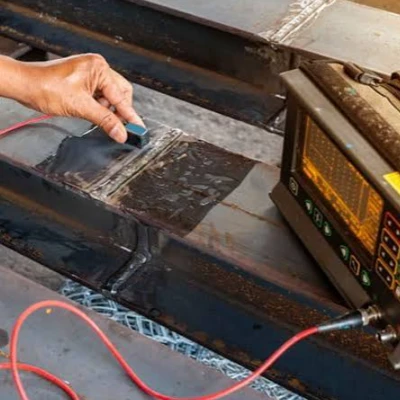
For overseas pressure vessel manufacturers requiring specific inspection arrangements, Gnee can review the requested documentation and coordinate the corresponding supply requirements.
FAQ Of 16Mo3 Boiler Steel
Q1: What is the minimum yield strength of 16Mo3 pressure vessel steel plate?
The specified minimum yield strength ranges from 275 MPa for plates up to 16 mm thick to 220 MPa for plates over 100 mm and up to 150 mm thick.
Q2: Can 16Mo3 steel plate be used at 400°C?
Published material data specify elevated-temperature mechanical properties at 400°C. However, whether a particular pressure vessel can operate at this temperature depends on its design pressure, thickness, applicable construction code and design life.
Gnee supplies 16Mo3 pressure vessel steel plates for overseas industrial equipment manufacturers, pressure vessel fabricators and steel distributors.
Contact Gnee for 16Mo3 Pressure Vessel Steel Plate
For projects requiring customized dimensions or large-volume procurement, our team can review material specifications, cutting requirements, inspection documentation and shipping arrangements.
To obtain an accurate quotation, please provide your required plate thickness, width, length, total quantity, delivery condition and destination port.