


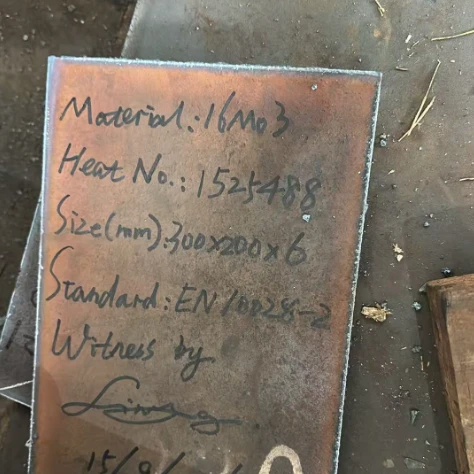
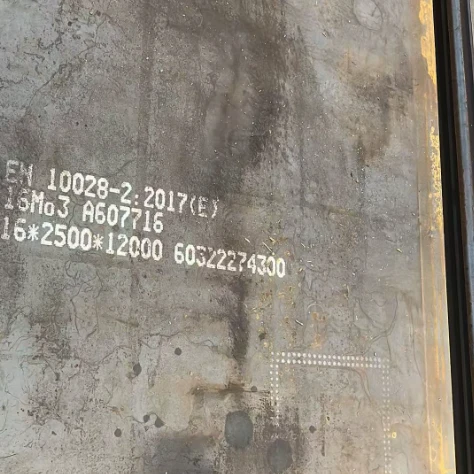
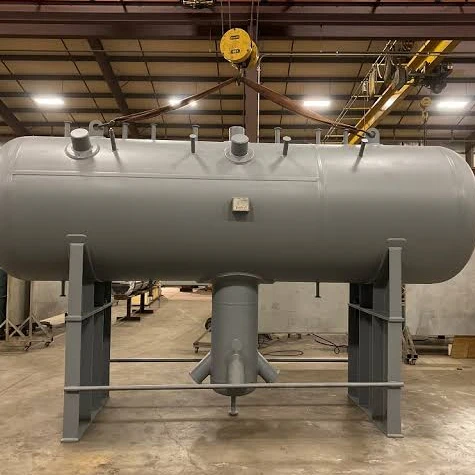
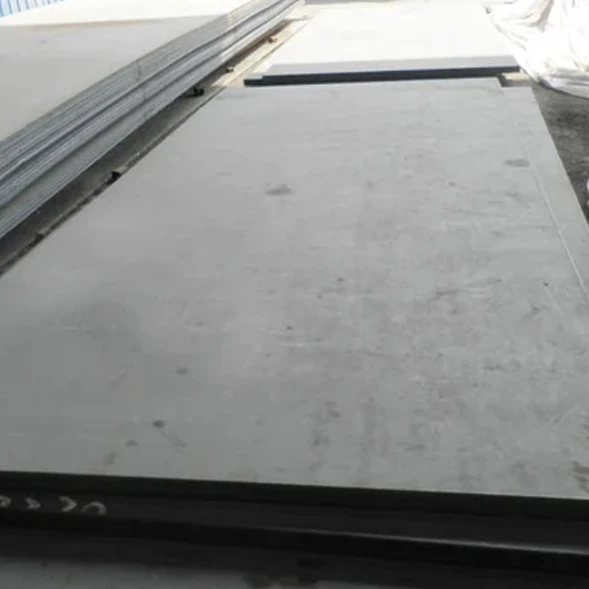
16Mo3 pressure vessel steel plate is a molybdenum-alloyed steel widely used for boilers, pressure vessels, heat exchangers and elevated-temperature process equipment.
In addition to conventional yield strength, tensile strength and high-temperature properties, some thick welded pressure-vessel structures also require improved through-thickness properties.
For these applications, 16Mo3 steel plate can be specified with Z15, Z25 or Z35 through-thickness quality according to EN 10164. These Z-quality classes are mainly used to improve through-thickness ductility and reduce the risk of lamellar tearing in highly restrained welded joints.
What Do Z15, Z25 and Z35 Mean in 16Mo3 Steel Plate?
Z15, Z25 and Z35 are through-thickness quality classes defined in EN 10164. They are not steel plate thicknesses and they are not ordinary longitudinal elongation values.
The Z value is determined by a tensile test performed in the direction perpendicular to the plate surface. After the specimen fractures, the reduction of area is calculated using the change in cross-sectional area.
The basic equation is:
Z = (S₀ − Sᵤ) / S₀ × 100%
where:
S₀ = original cross-sectional area;
Sᵤ = minimum cross-sectional area after fracture.
The higher the Z value, the greater the required plastic deformation capability in the thickness direction.
16Mo3 Z15 Pressure Vessel Steel Plate
16Mo3 Z15 pressure vessel steel plate is the first Z-quality level specified by EN 10164. It requires a minimum average reduction of area of 15%.
Z15 is normally considered when a welded pressure-vessel component has measurable through-thickness loading but does not require the highest Z-direction ductility level.
It may be specified for pressure-vessel shells, welded attachments or moderately restrained joints where the project specification requires additional through-thickness performance beyond standard 16Mo3 plate.
However, Z15 should not be considered an automatic requirement for every 16Mo3 plate. The need for Z15 should be determined according to plate thickness, joint geometry, weld size, structural restraint and the applicable design specification.
16Mo3 Z25 Pressure Vessel Steel Plate
16Mo3 Z25 pressure vessel steel plate requires an average through-thickness reduction of area of at least 25%, while the minimum individual value is 15%.
Compared with Z15, Z25 provides a significantly higher guaranteed level of through-thickness ductility.
For thick pressure-vessel plate, nozzle connections, reinforcement areas and welded structures with greater restraint, Z25 may be selected when the design requires better resistance to lamellar tearing.
In practical engineering, Z25 is often positioned between standard Z15 quality and the stricter Z35 requirement.
16Mo3 Z35 Pressure Vessel Steel Plate
16Mo3 Z35 pressure vessel steel plate represents the highest of the three standard Z-quality classes specified in EN 10164.
The average reduction of area must be at least 35%, and no individual test value may be below 25%.
Because of this stricter requirement, Z35 is generally used when pressure-vessel components are subject to severe through-thickness stress, very high weld restraint or particularly critical welded joint conditions.
Typical examples may include heavy nozzle-to-shell joints, cruciform joints, thick reinforcement plates and other highly restrained pressure-vessel connections.
Why Does 16Mo3 Pressure Vessel Steel Need Z-Direction Properties?
During 16Mo3 steel plate rolling, some non-metallic inclusions may become elongated in the rolling direction and distributed approximately parallel to the plate surface.
Under normal in-plane loading, this may not cause a problem. However, when a welded joint produces tensile stress perpendicular to the plate surface, these regions can become potential crack initiation points.
If the joint is highly restrained, cracks may propagate approximately parallel to the plate surface. This phenomenon is known as lamellar tearing.
Therefore, through-thickness properties become especially important for:
- thick pressure vessel shells;
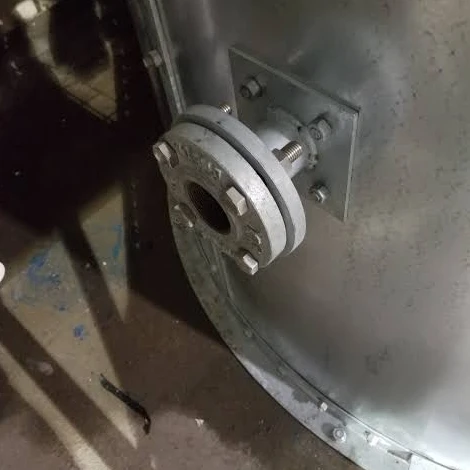
- nozzle-to-shell connections;
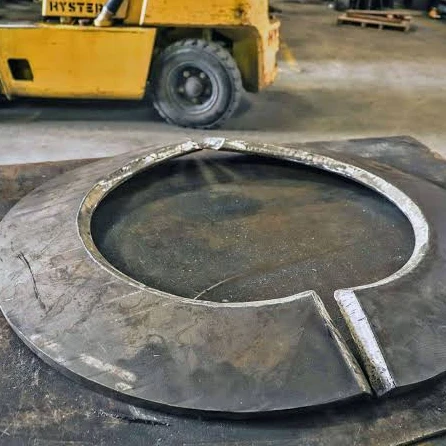
- reinforcement pads;
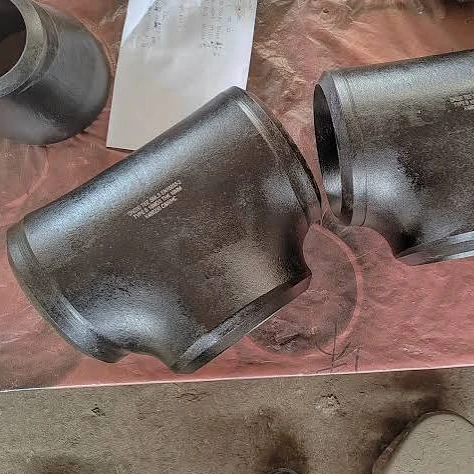
- T-joints;
- cruciform joints;
- heavy welded supports;
- highly restrained thick welded plates.
EN 10164 also specifies internal soundness requirements, and notes that ultrasonic testing alone does not provide complete information about susceptibility to lamellar tearing.
Mechanical Properties of 16Mo3 Pressure Vessel Steel Plate
Z15, Z25 and Z35 are additional through-thickness requirements. They do not replace the basic mechanical-property requirements of 16Mo3 under EN 10028-2. The base yield strength and tensile strength of 16Mo3 pressure vessel steel plate still depend on plate thickness.
| Plate Thickness | Yield Strength ReH Min. | Tensile Strength Rm | Elongation A Min. |
|---|---|---|---|
| 5–16 mm | 275 MPa | 440–590 MPa | 22% |
| >16–40 mm | 270 MPa | 440–590 MPa | 22% |
| >40–60 mm | 260 MPa | 440–590 MPa | 22% |
| >60–100 mm | 240 MPa | 430–580 MPa | 22% |
| >100–150 mm | 220 MPa | 420–570 MPa | 22% |
For 16Mo3 in the normalized or normalized-rolled condition, EN 10028-2 data published by ArcelorMittal give a minimum impact energy of 31 J at +20°C for the applicable plate range.
Does Z35 Mean Higher Yield Strength Than Z15?
No. Z35 does not mean that the conventional yield strength is automatically higher than Z15. For example, if two plates are both 40 mm thick and both meet EN 10028-2 16Mo3 requirements, their base yield-strength requirement is determined by the 16Mo3 thickness range.
The difference is that the Z35 plate must also satisfy the additional EN 10164 requirement of at least 35% average reduction of area, while a Z15 plate only needs 15% average reduction of area.
Therefore:
16Mo3+N Z35 = 16Mo3 base properties + normalized delivery condition + Z35 through-thickness requirement.
High-Temperature Properties of 16Mo3 Pressure Vessel Steel
For boiler and pressure-vessel applications, room-temperature mechanical properties are only part of the material evaluation.
16Mo3 is specifically used where elevated-temperature strength is important. For plate in the 5–16 mm thickness range, published EN 10028-2 data give the following minimum 0.2% proof-strength values.
| Temperature | Rp0.2 Min. |
|---|---|
| 50°C | 273 MPa |
| 100°C | 264 MPa |
| 150°C | 250 MPa |
| 200°C | 233 MPa |
| 250°C | 213 MPa |
| 300°C | 194 MPa |
| 350°C | 175 MPa |
| 400°C | 159 MPa |
| 450°C | 147 MPa |
| 500°C | 141 MPa |
These data show that the minimum proof strength decreases progressively as service temperature increases. Therefore, when selecting 16Mo3 Z15, Z25 or Z35 high-temperature pressure vessel steel plate, operating temperature must still be considered together with plate thickness and Z-quality.
How to Choose Z15, Z25 or Z35 for 16Mo3?
The Z grade should be selected according to the actual welded structure rather than simply choosing the highest level.
For moderate through-thickness loading, Z15 may be sufficient if permitted by the design specification.
For thicker plates or more highly restrained welded joints, Z25 may be required.
For critical thick welded structures with severe through-thickness loading, Z35 may be specified.
The main factors that should be considered include:
- plate thickness;
- weld size;
- joint configuration;
- degree of restraint;
- through-thickness stress;
- pressure-vessel design code;
- consequences of weld failure.
Gnee supplies 16Mo3 pressure vessel steel plate, 16Mo3 boiler steel plate and high-temperature pressure vessel steel plate for boiler, heat-exchanger, petrochemical and pressure-equipment projects.
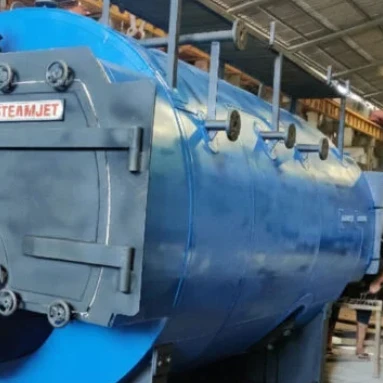
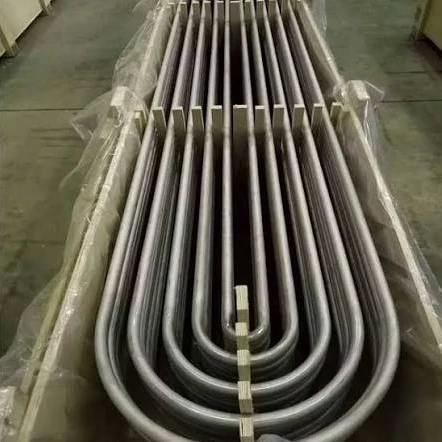
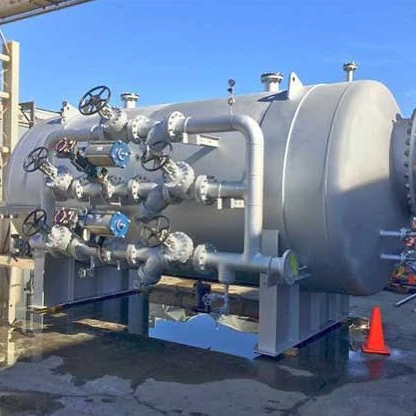
For projects requiring 16Mo3+N Z15, 16Mo3+N Z25 or 16Mo3+N Z35, we can review plate thickness, dimensions, Z-direction quality, EN 10164 testing, UT requirements, EN 10204 3.1/3.2 certification and additional inspection requirements before quotation.
If your project involves thick pressure-vessel shells, nozzle connections, T-joints, cruciform joints or highly restrained welds, send us the required 16Mo3 grade, delivery condition, Z quality, dimensions, quantity and inspection requirements so that the correct production and testing route can be confirmed.
Contact now to get 16Mo3 Z15, Z25 and Z35 Pressure Vessel Steel Plate Quote