


S500Q is a high-strength quenched and tempered structural steel that complies with the European standard EN 10025 - 6, and its material number is 1.8924. It features a good combination of strength, toughness and weldability, and is a key material in many heavy-duty equipment and large-scale engineering projects.
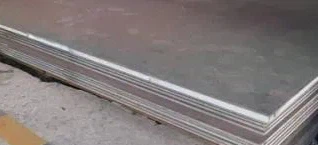
Chemical Composition (mass%, maximum values unless specified)
The chemical composition of S500Q is scientifically proportioned to balance its mechanical properties and processing performance. Harmful elements are strictly restricted, and trace alloying elements are added to optimize its structure. The key components are as follows: C ≤0.20, Si ≤0.80, Mn ≤1.70, P ≤0.025, S ≤0.015. It also contains alloying elements such as Cr ≤1.50, Ni ≤2.0, Mo ≤0.70, Cu ≤0.50, and B ≤0.005. For grain-refining, it must contain at least 0.015% of grain-refining elements such as Nb (≤0.06), Ti (≤0.05), V (≤0.12) or Zr (≤0.15), which can effectively refine the grain structure and enhance the strength and toughness of the steel.
Mechanical Properties
The mechanical properties of S500Q will slightly decrease as the plate thickness increases, but they all maintain high performance standards. The specific key indicators are shown in the table below:
| Thickness Range (mm) | Minimum Yield Strength (MPa) | Tensile Strength (MPa) | Minimum Elongation (%) | Minimum Impact Energy (-20°C, J) |
|---|---|---|---|---|
| 3 - 50 | 500 | 590 - 770 | 17 | 30 (longitudinal); 27 (transverse) |
| 50 - 100 | 480 | 590 - 770 | 17 | 30 (longitudinal); 27 (transverse) |
| 100 - 150 | 440 | 540 - 720 | 17 | 30 (longitudinal); 27 (transverse) |
| At 0°C, its longitudinal impact energy can reach 40J and the transverse one is 30J, which further confirms its good toughness in relatively low-temperature environments. |
Core Advantages
Outstanding strength and plasticity balance: With a minimum elongation rate of 17%, it can undergo a certain degree of plastic deformation while bearing heavy loads, avoiding sudden brittle fracture and ensuring the safety and stability of structural parts during use.
Excellent weldability: Its carbon equivalent is controlled at a maximum of 0.47%. By adopting standard welding processes, firm and reliable weld joints can be formed. The strength of the welded joints can reach more than 90% of that of the base metal, which facilitates the assembly of large structural parts.
Strong process adaptability: It can be smoothly processed through common processes such as cutting, bending, and drilling. After quenching and tempering heat treatment, it has stable performance, which can meet the processing needs of different structural designs in various industries.
Typical Applications
Relying on its excellent comprehensive performance, S500Q is widely used in multiple high-demand fields. In engineering machinery, it is used to manufacture crane booms, excavator arms and hydraulic supports, which can reduce the weight of components by 25%-30% compared with ordinary steel while ensuring load-bearing capacity. In bridge engineering, it is applied to the load-bearing structures and connecting parts of long-span bridges, improving the overall stability and durability of the bridges. In the mining and energy fields, it is used to make the chassis of heavy dump trucks and the pressure steel pipes of hydropower stations. It also plays an important role in the manufacturing of offshore wind power installation equipment and heavy truck chassis.
Equivalent Grades
S500Q has corresponding equivalent grades in different European standard systems, which is convenient for material selection in cross-border projects. For example, it corresponds to STE500V in the German DIN standard, E500TR in the French AFNOR standard, and FEE500V in the old European standard. In China, it is roughly equivalent to Q500D in the national standard, providing a convenient option for domestic enterprises to substitute materials.
What distinguishes S500Q from S500QL in performance and application?
The key difference lies in the low-temperature impact performance requirements. S500Q needs to meet the impact toughness test at -20°C, while S500QL has a stricter low-temperature requirement and must pass the impact test at -40°C. In terms of applications, S500Q is suitable for general cold regions or ordinary high-load scenarios such as general engineering machinery and urban bridge structures. S500QL is more suitable for extremely cold areas or low-temperature operating environments like offshore equipment and alpine region engineering projects.
What preheating and post-weld measures are required for welding S500Q thick plates?
For S500Q thick plates over 50mm, preheating to 80 - 120°C before welding is necessary. This can reduce the temperature gradient between the weld and the base metal and avoid cold cracks caused by rapid cooling. It is recommended to use low-hydrogen welding consumables during welding to reduce hydrogen content in the weld seam. After welding, stress relief heat treatment can be carried out by heating to 550 - 600°C for heat preservation and slow cooling, which eliminates internal residual stress and improves the stability of the weld joint performance.
When is it necessary to customize S500Q with Z-direction performance, and what grades are available?
Customizing Z-direction performance is necessary when S500Q is used in components that bear through-thickness tensile stress, such as the welding joints of crane booms and the pressure-bearing parts of hydropower station pipelines. These parts are prone to lamellar tearing under complex stresses. The common customized Z-direction grades are Z15, Z25 and Z35, which correspond to the minimum thickness-direction section shrinkage rates of 15%, 25% and 35% respectively. Higher Z grades can better enhance the anti-tearing ability of the steel plate.
How to improve the corrosion resistance of S500Q in outdoor or humid environments?
S500Q is not stainless steel and is prone to rust in outdoor or humid environments. To improve its corrosion resistance, surface treatment can be carried out first, such as spraying anti-corrosion paint or applying a zinc coating through hot-dip galvanizing. For equipment in more harsh humid environments like offshore areas, a composite protection method combining anti-corrosion primer and topcoat can be adopted. Additionally, regular maintenance and inspection of the protective layer during use can also effectively extend its service life.
What quality inspection standards should be followed when S500Q is used for key bridge components?
When S500Q is used for key bridge components, it should first comply with the EN 10025 - 6 standard for mechanical property testing, including yield strength, tensile strength and impact energy detection. For internal quality, ultrasonic inspection should be performed in accordance with the EN 10160 standard to ensure there are no internal defects such as cracks and inclusions. Moreover, third-party inspection agencies are usually required to issue inspection reports to verify that the steel plates meet the requirements of bridge engineering for material purity and performance stability.