


ASTM A662 Grade C is a type of carbon-manganese-silicon steel plate specifically designed for pressure vessels used in moderate and lower temperature services, known for its good weldability and mechanical properties, often used in industries like oil & gas and chemical processing.
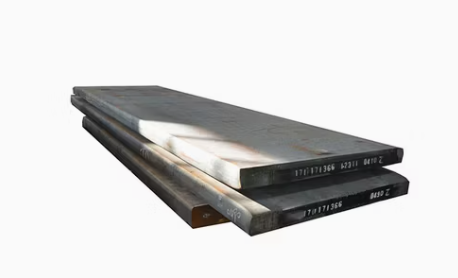
|
ASTM A662 Grade CChemical Composition |
|||||||
|
Grade |
The Element Max (%) |
||||||
|
C |
Si |
Mn |
P |
S |
Al |
N |
|
|
A662 Grade C |
0,24 |
0.13-0.55 |
0.92-1.72 |
0,035 |
0,035 |
|
|
|
Nb |
V |
Ti |
Cu |
Cr |
Ni |
Mo |
|
|
|
|
|
|
|
|
|
|
|
Grade |
|
ASTM A662 Grade CMechanical Property |
||
|
Thickness |
Yield |
Tensile |
Elongation |
|
|
A662 Grade C |
mm |
Min Mpa |
Mpa |
Min % |
|
6-50 |
295 |
480-620 |
22% |
|
|
50-200 |
295 |
480-620 |
18% |
|
 applications
Petrochemical Industry: As a special steel for medium and low-temperature pressure vessels, it is mainly used in manufacturing key equipment such as reactors, heat exchangers, separators, spherical storage tanks, as well as oil and gas and liquefied petroleum gas (LPG) storage tanks. It can work stably at -30℃ and above, resist medium pressure and corrosion, and ensure the safe and reliable operation of petrochemical production processes.
Power Energy Industry: Suitable for manufacturing high-temperature and high-pressure equipment such as power station boiler drums and nuclear reactor pressure vessels. It can withstand alternating high and low temperature working conditions, and ensure the structural integrity and long-term safe operation of equipment in power production (thermal power, nuclear power) processes by virtue of its excellent strength and fatigue resistance.
Low-Temperature Storage and Transportation Field: Used in manufacturing storage and transportation containers for low-temperature media such as liquid ammonia, liquid nitrogen, and liquefied petroleum gas (LPG). It is suitable for working scenarios from -20℃ to -45℃ and meets the strict requirements of low-temperature storage and transportation for material toughness and sealing performance.
Water Conservancy and Hydropower Field: Applicable to the processing of pressure-bearing components such as high-pressure water pipes and water turbine volutes of hydropower stations. It maintains good mechanical properties even in low-temperature water environments, ensuring the stable operation and reliability of water conservancy and power generation facilities.
application conditions
Temperature Conditions: Suitable for medium and low-temperature working environments, with a minimum service temperature of -45℃ and a maximum operating temperature not exceeding 345℃. It can maintain stable mechanical properties under alternating temperature conditions, avoiding brittle fracture or performance degradation caused by extreme temperature changes.
Pressure Requirements: Designed for medium and low-pressure working scenarios, with a maximum allowable working pressure (MAWP) matching the thickness of the steel plate. It is applicable to pressure-bearing equipment with a working pressure generally ranging from 0.6MPa to 10MPa, ensuring structural safety under specified pressure loads.
Medium Compatibility: Compatible with non-corrosive or weakly corrosive media, such as oil, gas, water, liquid ammonia, and liquefied petroleum gas (LPG). It is not suitable for strong corrosive environments (e.g., strong acid, strong alkali, high-salt media) unless additional anti-corrosion treatment is applied.
Welding Process Conditions: Requires appropriate welding processes (e.g., arc welding, gas shielded welding) and matching welding materials. Preheating before welding (usually 50-100℃) and post-weld heat treatment are recommended to eliminate welding stress and ensure the weld joint has equivalent strength and toughness to the base metal.
Structural Design Requirements: The structural design of equipment using A662 Grade C shall comply with relevant industry standards (e.g., ASME Section VIII). It shall avoid sharp corners and stress concentration areas to prevent local fatigue damage during long-term service.
advantages
Excellent Low-Temperature Toughness: It maintains high toughness and ductility even at -45℃, effectively avoiding brittle fracture in low-temperature working environments such as low-temperature storage and transportation and cold-region engineering, which is crucial for the safety of pressure-bearing equipment.
Outstanding Mechanical Strength: As a carbon-manganese-silicon alloy steel, it has excellent tensile strength and yield strength. It can stably bear medium and low pressure loads for a long time, meeting the strength requirements of key components in petrochemical, power and hydropower industries.
Good Weldability: It has good compatibility with common welding processes (arc welding, gas shielded welding, etc.). With proper preheating and post-weld heat treatment, the weld joint can achieve strength and toughness equivalent to the base metal, reducing welding difficulties and ensuring the structural integrity of welded equipment.
Cost-Effective Performance: Compared with high-alloy low-temperature steels, it has lower production and procurement costs while meeting the performance requirements of medium and low-temperature pressure-bearing scenarios, helping enterprises control project costs without compromising safety and reliability.
Stable Corrosion Resistance (Under Specific Conditions): It has good resistance to non-corrosive and weakly corrosive media (oil, gas, water, etc.). With simple anti-corrosion treatment, it can adapt to most industrial working environments and has a long service life.
For more details about GNEE's steel products, contact us at beam@gneesteelgroup.com. We look forward to working with you.
What is A662 Grade C?
A662 Grade C is a carbon-manganese steel plate specified by ASTM standards, mainly used for pressure vessels and low-temperature service. It has good toughness and weldability, suitable for moderate pressure and low-temperature environments.
What are the main chemical components of A662 Grade C?
The main chemical components include carbon (C) ≤0.20%, manganese (Mn) 0.70-1.35%, phosphorus (P) ≤0.035%, sulfur (S) ≤0.035%, silicon (Si) 0.15-0.40%, and trace other elements.
What is the minimum service temperature of A662 Grade C?
The minimum service temperature of A662 Grade C is -29°C (-20°F). It maintains good toughness and structural stability at this temperature, avoiding brittle fracture in low-temperature applications.
What are the typical mechanical properties of A662 Grade C?
Typically, its tensile strength is 485-620 MPa, yield strength ≥290 MPa, elongation ≥23% in 2 inches. It also has excellent impact toughness, especially at low temperatures.
What industries is A662 Grade C commonly used in?
It is widely used in petrochemical, chemical, power generation, and pressure vessel manufacturing industries, especially for equipment operating in low-temperature and moderate-pressure conditions.
Is A662 Grade C weldable?
Yes, A662 Grade C has good weldability. Proper preheating (usually 60-150°C) and post-weld heat treatment are recommended to ensure weld quality and avoid cold cracks.
What standards does A662 Grade C comply with?
A662 Grade C complies with the ASTM A662 standard, which is an American Society for Testing and Materials specification for carbon-manganese steel plates for pressure vessels.
What is the difference between A662 Grade C and Grade A?
The main difference lies in strength and toughness. Grade C has higher yield and tensile strength than Grade A, and better low-temperature toughness, suitable for more demanding service conditions.
What thickness ranges are available for A662 Grade C plates?
A662 Grade C plates are commonly available in thicknesses from 6mm to 150mm. Thicker plates may require additional heat treatment to ensure uniform mechanical properties.
Does A662 Grade C require heat treatment?
It depends on thickness and application. Thin plates (≤12mm) may be used as-rolled, while thicker plates or those for severe environments need normalizing or stress-relief heat treatment.