


Are you comparing S275JR and S355JR steel for your next project? At GNEE, we are manufacturers with over 20 years of experience in producing high-quality structural steel.

S275JR
S275JR and S355JR are low-alloy steel materials under the EN10025-2 standard, and while both offer reliable strength and durability, they have key differences that can impact your project requirements.
In this article, we will explore the chemical composition and mechanical properties of S275JR and S355JR steel, helping you decide which is best suited for your specific needs. Read on to understand the differences and choose the right material for your construction projects.
What is the Difference Between S275JR and S355JR Steel?
S275JR and S355JR are both used in structural steel applications, but the key difference lies in their yield strength and chemical composition.
S275JR: Yield strength of 275 MPa
S355JR: Yield strength of 355 MPa
The higher the yield strength, the stronger the material. Therefore, S355JR is stronger and more suitable for heavy-duty applications.
Chemical Composition Comparison: S275JR vs S355JR Steel
| Grade | C (t≤16mm) | Si | Mn | P | S | Cu | N |
|---|---|---|---|---|---|---|---|
| S275JR | 0.24 max | - | 1.60 max | 0.045 max | 0.045 max | 0.60 max | 0.014 max |
| S355JR | 0.27 max | 0.6 | 1.70 max | 0.045 max | 0.045 max | 0.60 max | 0.014 max |
S355JR contains slightly more Carbon (0.27%) than S275JR (0.24%), contributing to its higher strength. The addition of Silicon in S355JR enhances its overall strength and formability.
Mechanical Properties Comparison: S275JR vs S355JR Steel
| Grade | Yield Strength ReH (N/mm²) | Tensile Strength Rm (N/mm²) | Elongation A (%) | Impact Energy at -20℃ (J min) |
|---|---|---|---|---|
| S275JR | 275 | 410-560 | 23 | 27 |
| S355JR | 355 | 470-630 | 22 | 27 |
S355JR offers a higher yield strength (355 N/mm²) compared to S275JR (275 N/mm²), making it ideal for more demanding applications.
S275JR provides a higher elongation (23%) compared to S355JR (22%), which could be beneficial for applications requiring more flexibility.
Key Applications of S275JR and S355JR Steel
Both S275JR and S355JR steel are widely used in construction and engineering, with applications such as:
S275JR: Ideal for light-to-medium structural applications, such as bridges, buildings, and general fabrication.
S355JR: Best for heavy-duty structural components, including cranes, machinery, and bridges that require high strength.
Both S275JR and S355JR steel offer great value for structural projects, but if your project requires higher strength and durability, S355JR is the better option. At GNEE, we offer a wide range of steel products, including both S275JR and S355JR, to meet your project needs.
Need more information or the latest prices? Contact us today for a full product specification list, and let us help you find the right steel for your application.
Contact us for the latest S275JR steel price list!
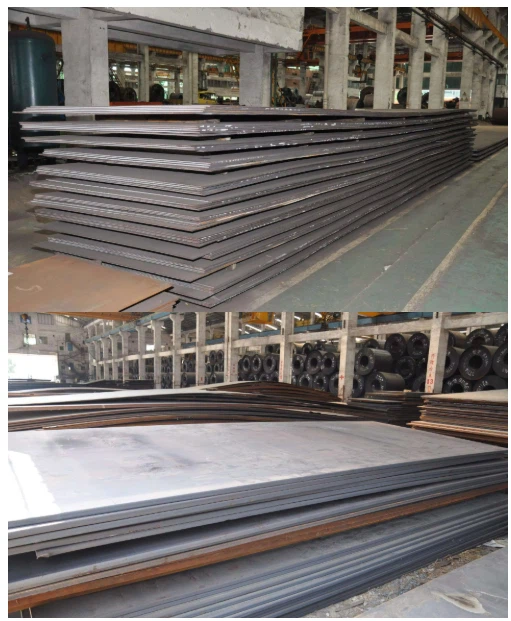
What is material S275JR?
S275JR grade steel is a readily weldable low carbon manganese steel with good impact resistance. This material is commonly supplied in the untreated or normalised condition. Machinability of this material is similar to that of mild steel.
What is S275JR equivalent in China?
S275JR EN 10025 equivalent steel material in China is Q275 steel. S275JR EN 10025 equivalent steel Q275 is a Chinese carbon structural steel, whose minimum yield strength is 275 MPa.
Is S275JR hot rolled?
The 2500 x 1250 x 6mm Hot Rolled Plate – S275JR is a structural steel plate produced to BS EN 10025-2 standards. Manufactured using the hot rolling process, this plate offers excellent formability, weldability, and strength, making it suitable for a wide range of fabrication and structural applications.
What does S235JR stand for?
The letter S stands for that the steel plate is structural. The number 235 indicates steel's yield strength. The letter JR means that the steel grade has undergone a Charpy impact test and is of high quality. The S235JR is a specification given to it, with each symbol indicating something different.