


When choosing the right steel for your construction project, understanding the differences between commonly used materials like ASTM A36, S275JR, and S235JR is essential.

S275JR
These mild steel grades are widely used for their excellent strength and versatility. GNEE, as a certified steel supplier, offers top-quality ASTM A36, S275JR, and S235JR steels with competitive prices and immediate stock availability.
In this article, we compare their chemical composition, mechanical properties, and performance differences to help you select the best material for your needs.
Chemical Composition of ASTM A36, S275JR, and S235JR Steel
The chemical composition of a steel grade plays a critical role in its strength, durability, and weldability. Here is a comparison of the key elements in ASTM A36, S275JR, and S235JR steel:
| Grade | C (t ≤ 16mm) | Si | Mn | P | S | Cr | Ni | Cu | Mo | N | Other |
|---|---|---|---|---|---|---|---|---|---|---|---|
| ASTM A36 | 0.26 max | 0.40 max | - | 0.04 max | 0.05 max | - | - | - | - | 0.20 min | - |
| S235JR | 0.19 max | - | 1.5 max | 0.045 max | 0.045 max | - | - | - | - | 0.60 max | 0.014 max |
| S275JR | 0.24 max | - | 1.6 max | 0.045 max | 0.045 max | - | - | - | - | 0.60 max | 0.014 max |
Mechanical Properties of ASTM A36, S275JR, and S235JR Steel
The mechanical properties of steel determine its suitability for various construction applications. Here's a detailed comparison:
| Grade | Yield Strength (ReH) (N/mm²) (t ≤ 16mm) min | Tensile Strength (Rm) (N/mm²) (3mm ≤ t ≤ 16mm) | Elongation (A) (%) (3mm ≤ t ≤ 40mm) min | Charpy V Test (Temperature/°C) | Impact Energy (Longitudinal)/J min |
|---|---|---|---|---|---|
| ASTM A36 | 250 | 400-550 | 23 | - | - |
| S235JR | 235 | 360-510 | 26 | 20 | 27 |
| S275JR | 275 | 410-560 | 23 | 20 | 27 |
ASTM A36 vs S275JR vs S235JR: Key Differences
| Property | ASTM A36 | S275JR | S235JR |
|---|---|---|---|
| Carbon Content | Higher (0.26 max) | Lower (0.24 max) | Lower (0.19 max) |
| Yield Strength | 250 N/mm² | 275 N/mm² | 235 N/mm² |
| Tensile Strength | 400-550 N/mm² | 410-560 N/mm² | 360-510 N/mm² |
| Elongation | 23% | 23% | 26% |
| Impact Energy | - | 27 J | 27 J |
ASTM A36 is a good choice for general construction applications where weldability and formability are key, but it has lower tensile strength and yield strength compared to the others.
S275JR offers better mechanical properties overall, especially in terms of strength, making it suitable for heavier load-bearing structures.
S235JR is more ductile, making it ideal for flexible applications that require better elongation.
When deciding between ASTM A36, S275JR, and S235JR steel, consider the requirements of your project. If you need a cost-effective solution for lighter applications, ASTM A36 is a great choice. However, for higher strength and impact resistance, S275JR and S235JR offer superior performance.
Contact us for the latest price list and availability of ASTM A36, S275JR, and S235JR steel!
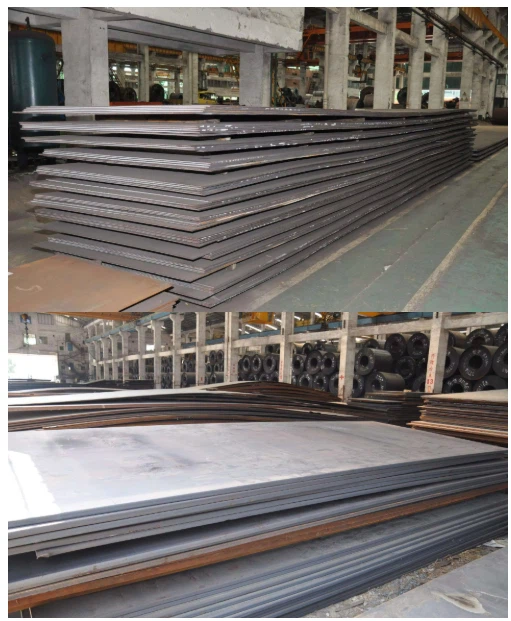
What is material S275JR?
S275JR grade steel is a readily weldable low carbon manganese steel with good impact resistance. This material is commonly supplied in the untreated or normalised condition. Machinability of this material is similar to that of mild steel.
What is S275JR equivalent in China?
S275JR EN 10025 equivalent steel material in China is Q275 steel. S275JR EN 10025 equivalent steel Q275 is a Chinese carbon structural steel, whose minimum yield strength is 275 MPa.
Is S275JR hot rolled?
The 2500 x 1250 x 6mm Hot Rolled Plate – S275JR is a structural steel plate produced to BS EN 10025-2 standards. Manufactured using the hot rolling process, this plate offers excellent formability, weldability, and strength, making it suitable for a wide range of fabrication and structural applications.
What does S235JR stand for?
The letter S stands for that the steel plate is structural. The number 235 indicates steel's yield strength. The letter JR means that the steel grade has undergone a Charpy impact test and is of high quality. The S235JR is a specification given to it, with each symbol indicating something different.