


What is SA387 Grade 22 Class 2?
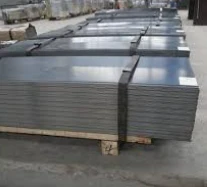
SA387 Grade 22 Class 2 is a specific grade of chrome-molybdenum (Cr-Mo) alloy steel plate designed for high-temperature and high-pressure service. It is primarily used in the construction of pressure vessels, boilers, and reactors in industries like oil refineries, petrochemical plants, and power generation.
ASTM A387 Gr.22 CL.2 Alloy Steel Plates Equivalent Grades
| COUNTRY | EU EN |
USA - | Germany DIN,WNr |
Japan JIS |
France AFNOR |
England BS |
Italy UNI |
China GB |
Sweden SS |
| STANDARDS | 10CrMo9-10 | A387Gr.22 Gr.P22 |
10CrMo9-10 | SCMV4 | 10CD9-10 12CD9-10 |
622 622Gr.31 |
10CrMo9-10 12CrMo9-10 |
12CrMo | 2218 |
| COUNTRY | Poland PN |
Czechia CSN |
Austria ONORM |
Kazakhstan GOST |
Inter ISO |
| STANDARDS | 10H2M | 15313 | 10CrMo9-10KW | 10KH2M | F34 P34 TS34 |
ASTM A387 Grade 22 CL.2 Alloy Steel Plates Chemical Composition
| Grade | C | Mn | P | S | Si | Cr | Mo |
| A387 Gr.22 | 0.05-0.15 | 0.30-0.60 | 0.035 | 0.035 | 0.50 max | 2.00-2.50 | 0.90-1.10 |
ASTM A387 Gr 22 CL.2 Alloy Steel Plates Mechanical Properties
| Class | Tensile (MPa) | Yield (MPa) | Elong. (50mm) | Elong. (200mm) | Reduc'n of Area* |
| Class 1 | 415 - 585 | 205 min | 18% min | - | 40% min |
| Class 2 | 515 - 690 | 310 min | 18% min | - | 40% min |
Applications of A387 Gr.22 Class 2 Alloy Steel Plate
ASTM A387 Grade 22 pressure vessel steel is widely used in petroleum, chemical industry, power station, boiler, etc, used to make the reactor, heat exchanger, separator, spherical tank, liquefied gas, nuclear reactor pressure vessel, boiler steam drum steam, liquefied petroleum, hydropower station, high pressure pipe.
Benefits of A387 Gr.22 Class 2 Steel Plate
| Feature | Details / Data |
|---|---|
| High Strength & Efficiency | Yield strength ≥ 310 MPa, Tensile strength 515–690 MPa, elongation ≥ 18–22%. |
| High Performance | Maintains mechanical properties at temperatures up to 550°C. |
| Longer Life Span | Excellent resistance to oxidation, corrosion, and thermal fatigue, reducing maintenance costs. |
| Flawless Finish | Hot-rolled plates with tight dimensional tolerances and smooth surfaces. |
| Durable | High creep strength and wear resistance under continuous load. |
| Corrosion Resistant Body | Chromium and molybdenum alloying provides enhanced corrosion resistance in sour gas and high-temperature environments. |
| High Temperature Resistant Body | Retains toughness and structural integrity in medium- and high-temperature service conditions. |
| Good Weldability | Can be welded using standard methods with proper preheat and post-weld heat treatment (PWHT), minimizing risk of cracking. |
1. What is SA387 Grade 22 Class 2?
SA387 Grade 22 Class 2 is a specification for chromium-molybdenum alloy steel plates primarily used in pressure vessels and other high-temperature service applications.
2. What is the chemical composition of SA387 Grade 22 Class 2?
Its typical composition includes chromium (2.00-2.50%), molybdenum (0.90-1.10%), with carbon, manganese, phosphorus, sulfur, and silicon making up the remainder.
3. What are the mechanical properties of SA387 Gr 22 Cl 2?
Key mechanical properties include a minimum tensile strength of 515 MPa (75 ksi) and a minimum yield strength of 310 MPa (45 ksi) for plates over 65mm thick.
4. What is the difference between SA387 Grade 22 Class 1 and Class 2?
The primary difference is heat treatment; Class 2 material is required to be supplied in the normalized and tempered condition, while Class 1 does not have this mandatory requirement, affecting its strength and microstructure.
5. What is the maximum service temperature for SA387 Grade 22?
SA387 Grade 22 is commonly used for service temperatures up to approximately 550°C (1022°F), but specific limits depend on the pressure and stress conditions.
6. Is SA387 Grade 22 Class 2 equivalent to any other material grade?
Yes, it is broadly equivalent to ASTM A387 Gr22 Cl2, ASME SA387 Gr22 Cl2, and the common wrought material grade UNS K21590.
7. How to weld SA387 Grade 22 Class 2 steel?
Welding typically requires pre-heat and post-weld heat treatment (PWHT). Common filler metals include AWS E9015-B3 for SMAW or corresponding grades for other processes to match the base metal's properties.
8. What is the heat treatment for SA387 Gr22 Cl2?
SA387 Grade 22 Class 2 plates are supplied in the normalized (at 1650-1750°F) and tempered (at 1250-1350°F) condition to achieve the required mechanical properties.
9. Where is SA387 Grade 22 Class 2 commonly used?
It is extensively used in the fabrication of pressure vessels, boilers, and reactors for the power generation, petrochemical, and oil & gas industries, especially for components exposed to high temperatures and pressures.
10. What are the hardness requirements for SA387 Grade 22 Class 2?
While the ASTM/ASME specification does not mandate a specific hardness, it is typically controlled during heat treatment. A common requirement in service is to maintain a maximum hardness, often 225 Brinell (HBW) or lower, to prevent issues like hydrogen-induced cracking.
Full specification and details are available on request. The above information is provided for guidance purposes only. For specific design requirements please contact our technical sales staff.
