


An ASTM A36 H beam size chart is a standardized reference table that lists the dimensions, weight, and structural properties of H-shaped (wide flange) steel beams manufactured according to the ASTM A36/A36M specification.
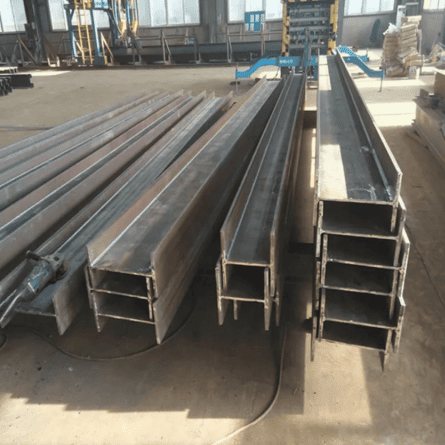
ASTM A36 H beam
It is an essential tool for engineers, fabricators, and project managers to quickly select the right beam size based on load requirements, structural design, and cost efficiency.
For any construction or steel structure project, understanding the ASTM A36 H beam size chart ensures accurate material selection, structural safety, and optimized performance.
Understanding ASTM A36 H Beam
Before diving into the size chart, it is important to understand the material itself.
ASTM A36 H beam is a hot-rolled structural steel section made from low-carbon steel. It is widely used due to its:
- Moderate strength
- Excellent weldability
- Good machinability
- Cost-effectiveness
This makes it ideal for general structural applications where ultra-high strength is not required.
What Information Does an ASTM A36 H Beam Size Chart Include?
A typical ASTM A36 H beam size chart provides both geometric dimensions and mechanical/sectional properties.
1. Section Designation
Example: W24 × 104
- W = Wide flange beam
- 24 = Nominal depth (inches)
- 104 = Weight per foot (lb/ft)
This designation helps users quickly identify the beam size and weight.
2. Key Dimensions
| Parameter | Description |
|---|---|
| Depth (h) | Total height of the beam |
| Flange Width (b) | Width of the top and bottom flanges |
| Web Thickness (tw) | Thickness of the vertical section |
| Flange Thickness (tf) | Thickness of the flange |
These dimensions determine the geometry and load-bearing capacity of the beam.
3. Sectional Properties
The ASTM A36 H beam size chart also includes critical structural parameters:
| Property | Function |
|---|---|
| Sectional Area | Indicates material volume |
| Weight (lb/ft) | Important for cost and transport |
| Moment of Inertia (Ix, Iy) | Resistance to bending |
| Section Modulus (Wx, Wy) | Strength under bending stress |
These values are essential for structural calculations and engineering design.
Why the ASTM A36 H Beam Size Chart Is Important
1. Accurate Beam Selection
Engineers use the chart to match beam size with load requirements, avoiding underdesign or overdesign.
2. Improved Structural Safety
By referencing properties like moment of inertia and section modulus, designers ensure the structure can safely handle loads.
3. Cost Optimization
Choosing the correct size from the ASTM A36 H beam size chart helps reduce:
- Material waste
- Transportation costs
- Overall project budget
4. Standardization and Compatibility
- Because ASTM A36 follows strict standards, the size chart ensures:
- Interchangeability across suppliers
- Compliance with international construction codes
ASTM A36 H Beam Sizes
|
Designation |
Dimensions |
Static Parameters |
|||||||
|
Moment of Inertia |
Section Modulus |
||||||||
|
Imperial |
Depthh (in) |
Widthw (in) |
Web Thicknesss (in) |
Sectional Area(in2) |
Weight(lb/ft) |
Ix(in4) |
Iy(in4) |
Wx(in3) |
Wy(in3) |
|
(in x lb/ft) |
|||||||||
|
W 27 x 178 |
27.8 |
14.09 |
0.725 |
52.3 |
178 |
6990 |
555 |
502 |
78.8 |
|
W 27 x 161 |
27.6 |
14.02 |
0.660 |
47.4 |
161 |
6280 |
497 |
455 |
70.9 |
|
W 27 x 146 |
27.4 |
14 |
0.605 |
42.9 |
146 |
5630 |
443 |
411 |
63.5 |
|
W 27 x 114 |
27.3 |
10.07 |
0.570 |
33.5 |
114 |
4090 |
159 |
299 |
31.5 |
|
W 27 x 102 |
27.1 |
10.02 |
0.515 |
30.0 |
102 |
3620 |
139 |
267 |
27.8 |
|
W 27 x 94 |
26.9 |
10 |
0.490 |
27.7 |
94 |
3270 |
124 |
243 |
24.8 |
|
W 27 x 84 |
26.7 |
9.96 |
0.460 |
24.8 |
84 |
2850 |
106 |
213 |
21.2 |
|
W 24 x 162 |
25 |
13 |
0.705 |
47.7 |
162 |
5170 |
443 |
414 |
68.4 |
|
W 24 x 146 |
24.7 |
12.9 |
0.650 |
43.0 |
146 |
4580 |
391 |
371 |
60.5 |
|
W 24 x 131 |
24.5 |
12.9 |
0.605 |
38.5 |
131 |
4020 |
340 |
329 |
53.0 |
|
W 24 x 117 |
24.3 |
12.8 |
0.55 |
34.4 |
117 |
3540 |
297 |
291 |
46.5 |
|
W 24 x 104 |
24.1 |
12.75 |
0.500 |
30.6 |
104 |
3100 |
259 |
258 |
40.7 |
|
W 24 x 94 |
24.1 |
9.07 |
0.515 |
27.7 |
94 |
2700 |
109 |
222 |
24.0 |
|
W 24 x 84 |
24.1 |
9.02 |
0.470 |
24.7 |
84 |
2370 |
94.4 |
196 |
20.9 |
|
W 24 x 76 |
23.9 |
9 |
0.440 |
22.4 |
76 |
2100 |
82.5 |
176 |
18.4 |
|
W 24 x 68 |
23.7 |
8.97 |
0.415 |
20.1 |
68 |
1830 |
70.4 |
154 |
15.7 |
|
W 24 x 62 |
23.7 |
7.04 |
0.430 |
18.2 |
62 |
1550 |
34.5 |
131 |
9.8 |
|
W 24 x 55 |
23.6 |
7.01 |
0.395 |
16.2 |
55 |
1350 |
29.1 |
114 |
8.3 |
|
W 21 x 147 |
22.1 |
12.51 |
0.720 |
43.2 |
147 |
3630 |
376 |
329 |
60.1 |
|
W 21 x 132 |
21.8 |
12.44 |
0.650 |
38.8 |
132 |
3220 |
333 |
295 |
53.5 |
|
W 21 x 122 |
21.7 |
12.39 |
0.600 |
35.9 |
122 |
2960 |
305 |
273 |
49.2 |
|
W 21 x 111 |
21.5 |
12.34 |
0.550 |
32.7 |
111 |
2670 |
274 |
249 |
44.5 |
|
W 21 x 101 |
21.4 |
12.29 |
0.500 |
29.8 |
101 |
2420 |
248 |
227 |
40.3 |
|
W 21 x 93 |
21.6 |
8.42 |
0.580 |
27.3 |
93 |
2070 |
92.9 |
192 |
22.1 |
|
W 21 x 83 |
21.4 |
8.36 |
0.515 |
24.3 |
83 |
1830 |
81.4 |
171 |
19.5 |
|
W 21 x 73 |
21.2 |
8.3 |
0.455 |
21.5 |
73 |
1600 |
70.6 |
151 |
17.0 |
|
W 21 x 68 |
21.1 |
8.27 |
0.430 |
20.0 |
68 |
1480 |
64.7 |
140 |
15.7 |
|
W 21 x 62 |
21 |
8.24 |
0.400 |
18.3 |
62 |
1330 |
57.5 |
127 |
13.9 |
|
W 21 x 57 |
21.1 |
6.56 |
0.405 |
16.7 |
57 |
1170 |
30.6 |
111 |
9.4 |
|
W 21 x 50 |
20.8 |
6.53 |
0.380 |
14.7 |
50 |
984 |
24.9 |
94.5 |
7.6 |
|
W 21 x 44 |
20.7 |
6.5 |
0.350 |
13.0 |
44 |
||||
Typical Applications Based on Size Chart Selection
Using the ASTM A36 H beam size chart, different beam sizes are selected for various applications:
- Light structures → Smaller beams (e.g., W21 × 44)
- Medium-load buildings → Mid-size beams (e.g., W24 × 104)
- Heavy structures → Large beams (e.g., W27 × 178)
Applications include:
- Building frameworks
- Steel columns and beams
- Bridges and platforms
- Equipment supports
How to Read an ASTM A36 H Beam Size Chart Efficiently
To effectively use the chart:
- Identify the required load and span
- Check moment of inertia (Ix) for bending resistance
- Verify section modulus (Wx) for strength
- Confirm weight and dimensions for cost and installation
This step-by-step approach ensures optimal material selection.
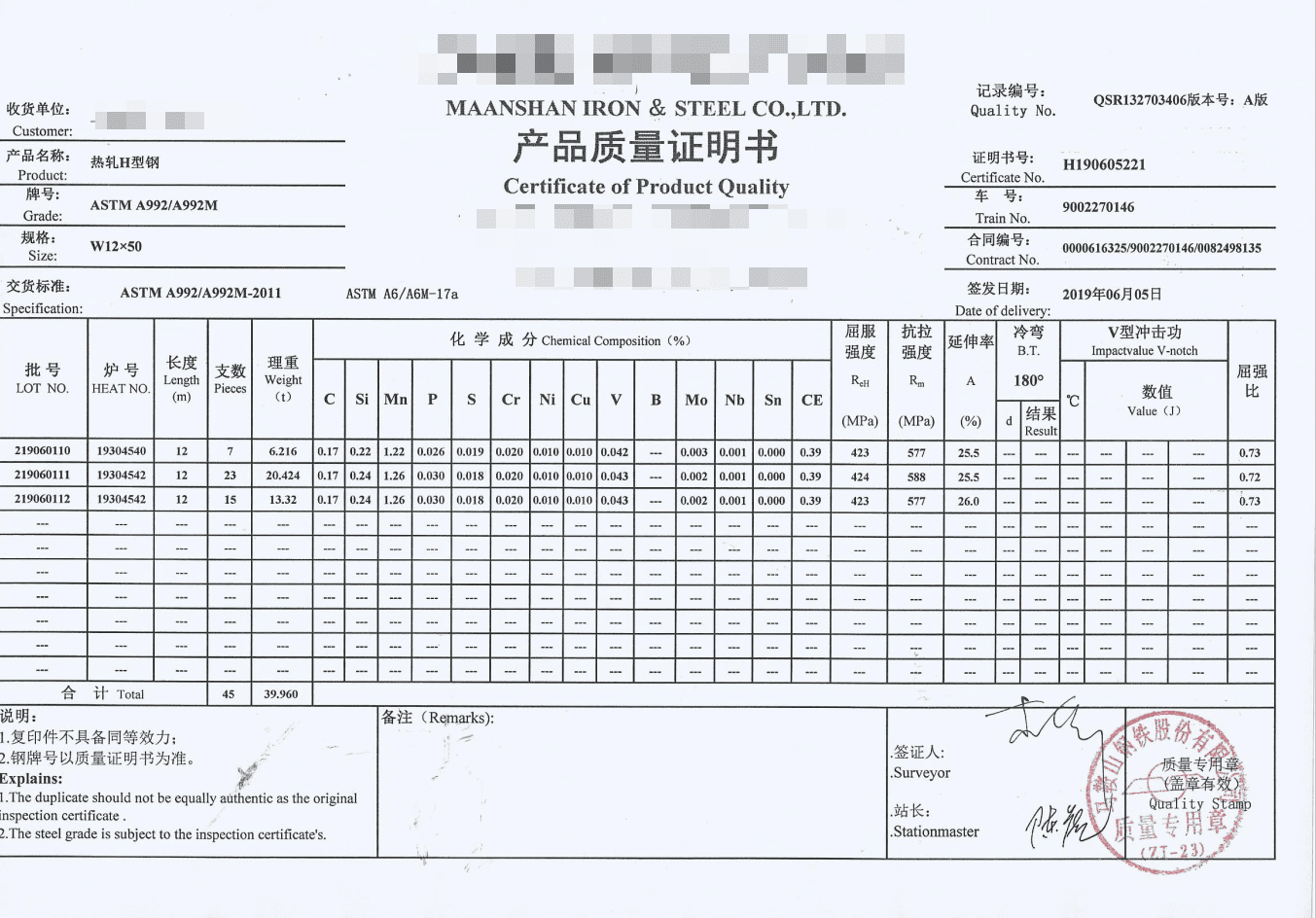
The ASTM A36 H beam size chart is more than just a table-it is a critical engineering tool that connects design requirements with real-world structural performance.
- By understanding and using this chart correctly, you can:
- Improve structural reliability
- Optimize material usage
- Reduce overall project costs
As a professional steel supplier, we provide:
- Full ASTM A36 H beam size charts and technical support
- Wide range of W series, HEA, HEB, and custom sizes
- Fast delivery and global export service
Contact us today to get detailed ASTM A36 H beam specifications and a competitive quotation for your project!
Contact now to get A36 H Beam Quote

1. What is the difference between H beam and I beam?
H beams have wider flanges and thicker webs, providing better load-bearing capacity and stability compared to traditional I beams.
2. What is the yield strength of ASTM A36 H beam?
ASTM A36 steel typically has a minimum yield strength of 36 ksi (≈250 MPa), making it suitable for general structural applications.
3. How to choose the correct H beam size?
Selection depends on:
Load requirements
Span length
Structural design standards
Engineers usually refer to H beam size charts and load tables for accurate selection.
4. Can ASTM A36 H beams be galvanized?
Yes. ASTM A36 H beams can be hot-dip galvanized to improve corrosion resistance, especially in outdoor or humid environments.
5. Are custom H beam sizes available?
Yes. Many manufacturers support bespoke dimensions and specifications to meet project-specific requirements.