


What factors influence the price of SA204 Grade B?
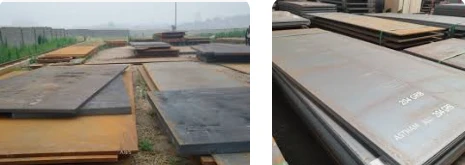
SA204 Grade B is an alloy steel plate standardized under the ASME Boiler and Pressure Vessel Code (Section II, Part A). It is a molybdenum steel specifically designed for moderate to high-temperature service in welded pressure vessels, particularly boiler drums and shells.
The price of SA204 Grade B steel plate is influenced by a combination of factors, ranging from global commodity markets to specific manufacturing and purchasing requirements. While similar to other pressure vessel steels, its status as a molybdenum-bearing alloy steel introduces a key specific driver.
1. Raw Material & Commodity Costs (Primary Market Drivers)
Molybdenum (Mo) Price: This is the most distinctive and significant factor. As a defined molybdenum alloy (0.45–0.60%), its cost is directly linked to the global price of ferromolybdenum. Mo prices can be volatile, driven by mining output and demand from the aerospace and high-strength alloy sectors.
Steel Scrap & Iron Ore: Provide the base cost for the iron and carbon content.
Energy Costs: The normalizing heat treatment is energy-intensive and adds a variable cost component.
2. Manufacturing & Processing Costs
Alloying: The precise addition of molybdenum during steelmaking increases cost compared to a basic carbon steel.
Heat Treatment: The mandatory normalizing (or normalizing and tempering) process adds furnace time, energy, and handling costs.
Testing & Certification: While not as extensive as cryogenic steels, standard mechanical testing (tensile, chemistry) and the provision of a Mill Test Report (MTR) are included. If Charpy impact testing is specified (an optional requirement), it adds significant cost.
Mill Capacity & Order Volume: Production runs for specific alloy plates are smaller than for commodity carbon steel, leading to higher unit setup costs. Large tonnage orders secure better pricing.
3. Purchaser Specifications & Requirements
Impact Testing: If the application requires Charpy V-Notch toughness certification (e.g., for low startup temperatures), this optional test must be specified and adds a notable premium.
Special Requirements: Additional costs arise from:
Stricter Chemistry Limits (e.g., lower Phosphorus/Sulfur).
Non-Destructive Testing (NDT) like Ultrasonic Testing (UT).
Third-party inspection.
Special packaging or marking.
4. Product Dimensions & Logistics
Thickness & Width: Thicker plates (> 4 inches) and extra-wide plates often command a premium due to more complex rolling and heat treatment to ensure uniformity.
Order Quantity: Larger volumes reduce the cost per ton.
Supply Chain Path: Buying directly from a mill is cheaper for large volumes. Purchasing from a steel service center adds a markup but offers smaller quantities and value-added processing.
Processing Services: Costs for cutting, drilling, or edge preparation.
Transportation: Freight costs for heavy plate are significant.
Summary: Price Driver Hierarchy
| Factor Category | Specific Cost Drivers |
|---|---|
| 1. Commodity Price | Molybdenum (Mo) Price (Primary Alloy Driver) |
| 2. Product Dimensions | Plate thickness, Plate width, Order quantity |
| 3. Purchaser Specifications | Impact testing (if required), Supplementary tests (UT), Special chemistry |
| 4. Manufacturing Process | Alloying, Normalizing heat treatment, Standard testing |
| 5. Supply Chain | Supplier (Mill vs. Service Center), Freight, Geographic location |
Relative Cost Context: SA204 Grade B is more expensive than carbon steel pressure vessel plates (e.g., SA516 Gr. 70) due to its molybdenum content. However, it is generally less expensive than chromium-molybdenum alloy steels (e.g., SA387 Gr.11/22) due to the absence of chromium.
For an accurate quote, provide full specifications: "ASME SA-204 Grade B, Thickness, Impact Test Requirements (if any), and any Supplementary Requirements (e.g., S1, S5, UT)."
1.What is SA204 Grade B?
SA204 Grade B is a molybdenum alloy steel plate designed for service in welded boilers and other pressure vessels operating at moderate to high temperatures.
2.What is the chemical composition of SA204 Grade B?
Its composition includes Molybdenum (0.45-0.60%), Carbon (max 0.20%), Manganese (0.55-0.85%), Silicon (0.15-0.40%), and controlled Phosphorus and Sulfur.
3.What are the mechanical properties of SA204 Grade B?
For plates up to 2 inches thick, key properties include a minimum tensile strength of 65-85 ksi (450-585 MPa) and a minimum yield strength of 37 ksi (255 MPa).
4.Is SA204 Grade B a carbon steel or alloy steel?
It is classified as an alloy steel due to its intentional and specified molybdenum content, which provides enhanced strength at elevated temperatures.
5.What is the primary application of SA204 Grade B?
It is primarily used for parts of boilers and pressure vessels where moderate elevated temperature strength and resistance to creep are required.
6.What is the maximum service temperature for SA204 Grade B?
It is commonly used for service temperatures up to approximately 850°F (454°C) in applications such as boiler drums and shells.
7.How does SA204 Grade B compare to SA204 Grade A and C?
Grade B has higher molybdenum content than Grade A, providing better elevated temperature strength. Grade C has even higher molybdenum content (0.90-1.10%) for the highest strength.
8.Is SA204 Grade B suitable for hydrogen service?
It can be used in certain hydrogen service applications, but its suitability depends on specific temperature, pressure, and hydrogen partial pressure conditions. Often, chrome-molybdenum steels like SA387 are preferred for severe service.
9.What is the heat treatment for SA204 Grade B?
SA204 Grade B plates are typically supplied in the normalized or normalized and tempered condition to achieve the required mechanical properties.
10.Can SA204 Grade B be welded easily?
Yes, it has good weldability. Welding should follow standard practices for low-alloy steels, including proper preheat and post-weld heat treatment (PWHT) for thicker sections to maintain properties.
Full specification and details are available on request. The above information is provided for guidance purposes only. For specific design requirements please contact our technical sales staff.
