


ASME SA 387 Grade 12 Class 2 is a chromium-molybdenum (Cr-Mo) low alloy steel plate, standardized for high-temperature pressure vessels and boilers, offering excellent corrosion/oxidation resistance due to its chromium content, along with good weldability and strength, with "Class 2" indicating higher tensile/yield strength requirements than Class 1. This material is vital for demanding oil, gas, and petrochemical applications, often supplied normalized and tempered (N+T) for enhanced performance.

SA 387 Gr.12 Plate Price per kg
| Min (Price in INR) | Max (Price in INR) |
|---|---|
| 130 | 185 |
SA 387 Gr 12 Equivalent Material
| COUNTRY | USA | EUROPEAN | GERMANY | ENGLAND | FRANCE | RUSSIA |
| STANDARDS | ASME | EN 10028 | DIN | BS | AFNOR 36206 | GOST |
| Grade 12 | SA387 | 13CrMo4-5 | 13CrMo44 | 620B | 15CD2.05 | 12KHM |
SA 387 Gr 12 Cl 2 Chemical Composition
| Grade | C | Mn | P | S | Si | Cr | Mo | V |
| SA 387 Gr.12 | 0.05 - 0.17 | 0.40 - 0.65 | 0.025 | 0.025 | 0.15 - 0.40 | 1.00 - 1.50 | 0.45 - 0.60 | - |
ASME SA387 Gr 12 CL.2 Alloy Steel Plates Mechanical Properties
| Class | Tensile (MPa) | Yield (MPa) | Elong. (50mm) | Elong. (200mm) | Reduc'n of Area* |
| Class 2 | 450 - 585 | 275 min | 22% min | 19% min | - |
Applications For SA387 Gr.12 Class 2 Alloy Steel Plate
Weldable Pressure Vessels and Industrial Boilers.
Sour Service Environments
Numerous Applications
Gas Applications
Benefits of SA 387 Grade 12 Class 2 Steel Plate
High Strength & Efficiency
High Performance
Longer Life Span
Flawless Finish
Durable
Corrosion Resistant Body
High Temperature Resistant Body
Good Weldability
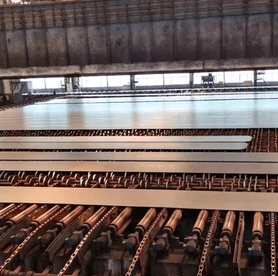
Processing Flow Overview
1.Material Preparation
Material Selection: Procure alloy steel plates complying with ASME SA 387 Grade 12 Class 2 (Cr 1.00–1.50%, Mo 0.44–0.69%), accompanied by valid mill certificates.
Inspection: Verify chemical composition and mechanical properties (e.g., tensile strength, yield strength, impact toughness) against the standard requirements.
2.Cutting & Forming
Cutting: According to design drawings, cut plates into required shapes (plates, shells, heads, etc.) using plasma, flame, or sawing methods.
Forming: Form flat plates into cylinders or curved sections using rolling or hydraulic presses, ensuring high precision and avoiding stress concentration.
3.Welding
Groove Preparation: Precision machining of V‑groove or U‑groove for butt joints.
Welding Process: Use TIG, MIG/MAG, or SAW (Submerged Arc Welding) with filler metals matching the base material (e.g., AWS A5.5 E9018‑B3).
Interpass Control: Strictly control weld bead temperature and interpass temperature.
4.Heat Treatment
Post‑Weld Heat Treatment (PWHT): A critical step where welded components are heated to a specific temperature (typically 600–700°C), held for a predetermined duration, and then slowly cooled to relieve residual welding stress and improve microstructure.
Normalizing: Apply to certain materials or welds to refine grain structure.
5.Machining
Perform facing, chamfering, and other finishing operations to ensure assembly accuracy.
6.Inspection & Testing
Non‑Destructive Testing (NDT): Conduct Radiographic Testing (RT) and Ultrasonic Testing (UT) on welds to detect internal defects.• Surface Inspection: Use Magnetic Particle Testing (MT) or Penetrant Testing (PT) to check for surface cracks.• Mechanical Property Testing: Conduct tensile and Charpy V‑notch impact tests on samples to ensure compliance with design requirements.• Hydrostatic / Pneumatic Testing: Perform pressure testing on vessels to verify integrity.
Contact us at beam@gneesteelgroup.com for pricing, technical support, or customized solutions. We are always ready to support your project.
What is SA 387 GR 12 Cl 2 equivalent material?
The Equivalent materials of Sa 387 Gr 12 are BS 620B, UNS K11757, A387 / SA 387, DIN 13 CRMO 44, and EN 3 CRMO 45.
What is grade 12 steel?
Send Enquiry. Engineered for use in elevated temperature service, is a chrome molybdenum carbon alloy steel for use in weldable pressure vessels and industrial boilers.
What quality control and inspection requirements apply to SA 387 Grade 12 Class 2?
The specification requires: Chemical composition analysis (spectroscopic or wet chemical), Mechanical property testing (tensile, impact, hardness), Ultrasonic inspection (per ASME Section V, Article 4) for internal defects, Visual inspection of surface quality, and Heat treatment verification to confirm compliance with temperature requirements.
Can SA 387 Grade 12 Class 2 be used in corrosive environments?
It has moderate corrosion resistance due to its Cr-Mo content, suitable for mild corrosive environments (e.g., steam, natural gas). However, it is not recommended for highly corrosive media (e.g., acids, saltwater) without additional protection (such as coating or cladding). For corrosive service, higher alloyed grades (e.g., SA 387 Grade 22 or 91) may be preferred.
What is the equivalent international standard for SA 387 Grade 12 Class 2?
Equivalent standards include: EN 10028-2: P235GH (similar but not identical), GB/T 19189: 12Cr1MoVg (Chinese standard, close Cr-Mo composition), and JIS G 3103: STBA 12 (Japanese standard for Cr-Mo steel plates for pressure vessels).
What is the density of SA 387 Grade 12 Class 2?
The density is approximately 7.85 g/cm³ (0.284 lb/in³), the same as most low-alloy steels. This value is used for weight calculations in structural and equipment design.
Does SA 387 Grade 12 Class 2 require PWHT after welding?
Yes, PWHT is mandatory for most applications. The recommended PWHT temperature is 620-675°C (1150-1250°F), with a holding time based on plate thickness (typically 1 hour per 25 mm of thickness). PWHT reduces residual welding stresses, improves ductility, and minimizes the risk of hydrogen-induced cracking.
What is the difference between ASME SA 387 and ASTM A 387?
ASME SA 387 and ASTM A 387 are technically identical in terms of chemical composition and mechanical properties. The only difference is their application scope: ASME SA 387 is part of the ASME Boiler and Pressure Vessel Code (BPVC), used for equipment certified to ASME standards. ASTM A 387 is a general-purpose standard for industrial applications not requiring ASME certification. Manufacturers often produce material that complies with both standards.
What heat treatment is required for SA 387 Grade 12 Class 2?
The mandatory heat treatment for SA 387 Grade 12 Class 2 is normalizing and tempering. Normalization is performed at a temperature of 890-940°C (1635-1725°F), followed by air cooling. Tempering is conducted at a minimum temperature of 620°C (1150°F), with sufficient holding time to ensure uniform temperature throughout the plate, then cooled in air or water.