


A572 Grade 50 is a common, high-strength, low-alloy (HSLA) structural steel with a minimum yield strength of 50 ksi (50,000 psi), known for its excellent strength-to-weight ratio, making it ideal for bridges, heavy construction, truck frames, and poles, as it provides significant strength in lighter profiles compared to standard A36 steel. It's readily weldable and formable, often replacing older grades, and is used in beams, channels, angles, and plates for demanding applications.
Key Properties
Yield Strength: Minimum 50 ksi (50,000 psi)
Tensile Strength: Minimum 65 ksi (65,000 psi)
Type: High-Strength Low-Alloy (HSLA) Columbium-Vanadium Steel
Weldability:
Good, similar to A36 steel
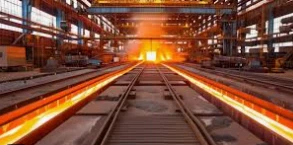
What are the main applications of A572 Grade 50 ?
A572 Grade 50 is a workhorse high-strength low-alloy (HSLA) steel, prized for its excellent strength-to-cost ratio and good weldability. Its main applications span a wide range of structural and construction projects where higher strength than A36 steel is needed without the premium cost of more advanced alloys.
Here are its primary applications:
1. Building & Structural Construction
Structural Framing: Wide-flange beams (W-shapes), columns, and channels for commercial, industrial, and institutional buildings. (Note: For W-shapes, ASTM A992, which is very similar and often interchangeable with A572 Gr. 50, is now the dominant specification).
Trusses and Bracing: Angles, tees, and hollow structural sections (HSS) used in roof trusses and lateral bracing systems.
Base Plates, Gussets, and Connection Elements: Plate material is extensively used for these critical connection points.
2. Bridge Construction
Primary Members: Girders, stringers, and floor beams.
Secondary Components: Cross-frames, diaphragms, and bearing stiffeners.
3. Transportation Infrastructure
Transmission & Utility Towers: Lattice structures for power lines and communication towers.
Light Pole & Signal Mast Arms: Where wind loads require higher strength.
Heavy Vehicle Frames & Trailers: For dump trucks, flatbeds, and transport equipment.
4. Industrial & Heavy Equipment
Support Structures: Frames and platforms for machinery, conveyor systems, and heavy equipment.
Bins, Hoppers, and Chutes: In mining and aggregate processing.
Crane Runways & Access Structures.
Why A572 Grade 50 is Chosen for These Applications:
Cost-Effective Strength: Provides a 50 ksi minimum yield strength-nearly 40% stronger than A36 (36 ksi)-for a modest price premium (~10-25% more than A36). This allows for lighter, more efficient designs.
Excellent Fabricability: It is readily welded, cut, and formed using standard shop practices, making it ideal for fabrication.
Wide Availability: It is produced in the broadest range of structural shapes (W-beams, channels, angles, plates) and is stocked globally by service centers.
Proven Performance: It is a mature, well-understood material with extensive coverage in U.S. design codes (AISC, AASHTO).
Key Distinction: Unlike more specialized steels (like A514 "T1" steel), A572 Grade 50 is the go-to material for general high-strength structural applications where extreme strength (e.g., 100 ksi) or special properties like abrasion resistance are not required. It strikes the optimal balance between performance, cost, and ease of use for the vast majority of constructed projects.
1. What is A572 Grade 50 steel used for?
A572 Grade 50 is commonly used in structural applications like building frames, bridges, transmission towers, and construction equipment where higher strength than A36 steel is needed.
2. What is the yield strength of A572 Grade 50?
The minimum yield strength of A572 Grade 50 is 50 ksi (345 MPa).
3. What is the difference between A572 Grade 50 and A36?
The main difference is strength: A572 Grade 50 has a higher yield strength (50 ksi vs. 36 ksi) and is a high-strength low-alloy (HSLA) steel, while A36 is a mild carbon steel.
4. Can A572 Grade 50 be welded?
Yes, it has good weldability using common methods like shielded metal arc welding (SMAW) and gas metal arc welding (GMAW), though proper procedures should be followed.
5. What is the chemical composition of A572 Grade 50?
It typically contains elements like carbon (max 0.23%), manganese (max 1.35%), phosphorus, sulfur, and may include small amounts of columbium, vanadium, or nitrogen for strengthening.
6. Is A572 Grade 50 corrosion resistant?
No, it is not a corrosion-resistant grade. For outdoor or corrosive environments, it usually requires protective coatings like paint or galvanizing.
7. What are the available forms of A572 Grade 50?
It is widely available in structural shapes (beams, channels, angles), plates, bars, and sheets.
8. What is the equivalent of A572 Grade 50 in European standards?
The closest European equivalent is S355JR or S355J2 according to EN 10025-2, though exact matching depends on thickness and impact requirements.
9. How does A572 Grade 50 compare to A992 steel?
A992 is a newer, more tightly controlled structural steel primarily for wide-flange shapes, with similar yield strength (50-65 ksi) but stricter chemical and mechanical limits.
10. What is the price of A572 Grade 50 compared to A36?
A572 Grade 50 typically costs 10-25% more than A36 due to its higher strength and alloy content, but prices vary with market conditions and order size.
Full specification and details are available on request. The above information is provided for guidance purposes only. For specific design requirements please contact our technical sales staff.
