


A516 Grade 70 is a pressure vessel steel plate specified by ASTM, intended for moderate and lower temperature service. It offers good strength and notch toughness, and is readily weldable. This grade is widely used in boilers, storage tanks, and other pressure-containing equipment where reliable performance under pressure is essential.
Chemical Composition
|
Element |
Composition (% by weight) |
|---|---|
|
Carbon (C) |
0.27 max |
|
Manganese (Mn) |
0.85–1.20 |
|
Phosphorus (P) |
0.035 max |
|
Sulfur (S) |
0.035 max |
|
Silicon (Si) |
0.15–0.40 |
|
Aluminum (Al) |
0.02 min (for killed steel) |
|
Iron (Fe) |
Balance |
Mechanical Properties
|
Property |
Value |
|---|---|
|
Tensile Strength |
485–620 MPa (70–90 ksi) |
|
Yield Strength (min) |
260 MPa (38 ksi) |
|
Elongation (min, 200 mm) |
17% |
|
Elongation (min, 50 mm) |
21% |
|
Hardness (HB, typical) |
140–200 HB |
|
Impact Toughness (Charpy V-notch) |
Meets ASTM requirements at -46°C |
Physical Properties
|
Property |
Value |
|---|---|
|
Density |
7.85 g/cm³ |
|
Melting Point |
~1510°C |
|
Thermal Conductivity |
50 W/m·K (at 20°C) |
|
Specific Heat Capacity |
470 J/kg·K |
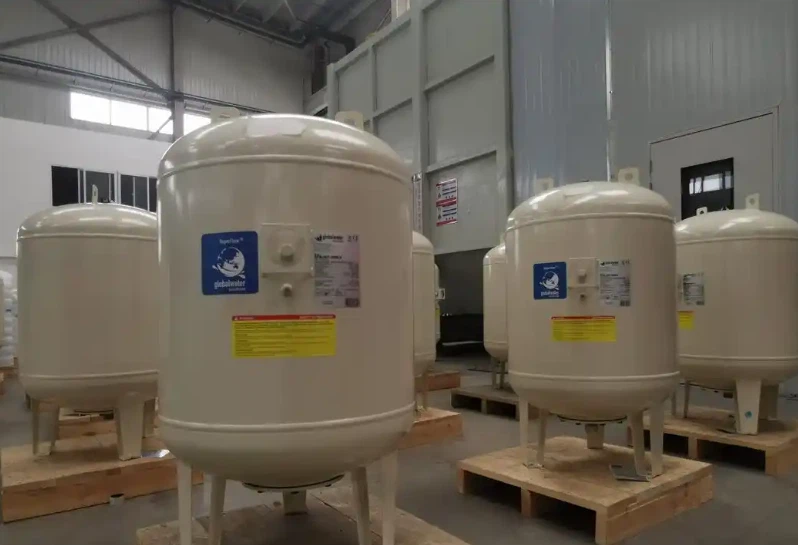 Primary Industrial Applications
Oil, Gas & Petrochemical: Used for critical containment and processing units, including separators, distillation columns, refinery columns, and high-pressure refinery piping.
Power Generation: Vital for constructing industrial boilers, steam drums, turbine casings, and condensers where thermal stability is required.
Storage & Transport: Standard material for API 650 and 620 storage tanks, LNG storage (due to impact toughness at -46°C), railroad tank cars, and cargo containers.
Heavy Infrastructure: Found in bridges, high-rise buildings, transmission poles, and lighting standards due to its load-bearing capacity and durability.
Manufacturing & Construction: Utilized in heavy-duty construction equipment, structural tubing, automotive parts, and specialized components like pipe shoes, gussets, and base plates.
Specialized Service Use
Low-Temperature Service: Ideal for environments as cold as -45°C (-50°F), making it suitable for arctic pipelines and cryogenic fittings.
Sour Service (NACE): When processed to meet NACE MR0175/MR0103 standards, it is used in "sour" environments containing hydrogen sulfide (𝐻2𝑆) to resist hydrogen-induced cracking (HIC).
Renewable Energy: Employed in hydroelectric penstock pipes and components for large-scale energy storage systems.
Why Choose Us
You can get the perfect material according to your requirement at the least possible price.
We also offer Reworks, FOB, CFR, CIF, and door to door delivery prices. We suggest you to do deal for shipping which will be quite economical.
The materials we provide are completely verifiable, right from raw material test certificate to the final dimensional statement.(Reports will show on requirement)
We guarantee to give a response within 24hours(usually in the same hour)
You can get stock alternatives, mill deliveries with minimizing manufacturing time.
We are fully dedicated to our customers. If it will not possible to meet your requirements after examining all options, we will not mislead you by making false promises which will create good customer relations.
Full specification and details are available on request. The above information is provided for guidance purposes only. For specific design requirements please contact our technical sales staff.
What is the hardness standard for A516 Grade 70?
The Brinell hardness (HB) is ≤187. Excessively high hardness will reduce the toughness and weldability of the steel plate. If the hardness exceeds the standard, tempering treatment is required to reduce the hardness to ensure that the material performance meets the equipment manufacturing requirements.
How to judge the authenticity of A516 Grade 70 steel plates?
It can be done by verifying the steel mill's quality certificate (material list), testing chemical composition and mechanical properties, checking steel plate marks (standard number, grade, specification), and conducting non-destructive testing if necessary to eliminate counterfeit and shoddy products.
Is A516 Grade 70 suitable for manufacturing low-temperature pressure vessels?
It is suitable for low-temperature pressure vessels at -30℃ and above. If the working temperature is lower than -30℃, ASTM A516 Grade 70 LT (low-temperature grade) material should be selected, which has better low-temperature impact toughness and can resist the risk of low-temperature brittle fracture.
What are the bending performance requirements for A516 Grade 70 steel plates?
In the bending test, after the sample is bent 180°, there shall be no cracks, delamination and other defects at the bent part. The bending radius is adjusted according to the thickness of the steel plate (generally 3-5 times the plate thickness) to ensure that the steel plate has good processing and forming properties.
Is heat treatment required after welding A516 Grade 70?
Generally, no heat treatment is required after welding thin plates (≤12mm) or simple joints; for thick plates, complex joints or use in harsh working conditions, stress relief tempering (550-620℃) is required to eliminate welding stress and prevent cracks.
What are the application scenarios of A516 Grade 70 in petroleum refining equipment?
It is applied to equipment such as atmospheric distillation towers, vacuum distillation towers, reactors, heat exchangers and storage tanks in petroleum refining, adapting to the medium and low temperature, pressure-bearing working conditions in the refining process, and can withstand slight corrosion of oil media.
Are there grain size requirements for A516 Grade 70?
Yes, the grain size is generally not coarser than Grade 5 (evaluated in accordance with ASTM E112 standard). Fine grains can improve the toughness, strength uniformity and weldability of the steel plate, and avoid increased low-temperature brittleness due to coarse grains.
What is the dimensional tolerance standard for A516 Grade 70 steel plates?
The thickness tolerance is implemented in accordance with ASTM A6/A6M standards, and the common tolerance grades are Class A or Class B; the width and length tolerances are determined according to the delivery status (cut edge/mill edge), which must meet the requirements for dimensional accuracy in equipment manufacturing.
What is the difference between A516 Grade 70 and ASTM A36 materials?
A36 is a general carbon structural steel with a yield strength of 250MPa, suitable for ordinary structural parts; Grade 70 is a special steel for pressure vessels with a yield strength of 260MPa, higher low-temperature toughness and purity, suitable for pressure-bearing working conditions.
What are the storage and transportation precautions for A516 Grade 70?
During storage, it is necessary to prevent moisture and corrosion, avoid outdoor exposure to rain or contact with corrosive media; during transportation, it must be fixed firmly to prevent collision and deformation of the steel plate, and handled with care during loading and unloading to protect the surface quality from damage.