


The relationship between S690Q's mechanical properties and its application is not a simple one-way selection, but a dialectical interplay. Each key property indicator dictates where the steel can be used, while the application scenario dictates which properties are most critical. Understanding this is key to safe and efficient design.
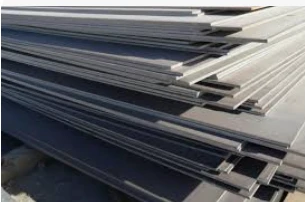
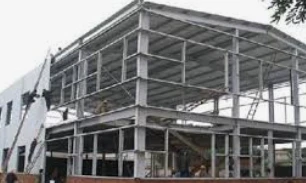
Below is a detailed analysis of this relationship, mapping specific mechanical properties to the demands of real-world structural applications.
1. Primary Mechanical Properties & Their Governing Influence
These are the standard minimum values from EN 10025-6, but their implications are what matter for application.
| Property | Typical Value (EN 10025-6) | What It Means for Application |
|---|---|---|
| Yield Strength (ReH) | ≥ 690 MPa | The core enabler for efficiency. Allows for significantly smaller cross-sectional areas compared to S355 (~50% less area for same force). Governs static strength, buckling resistance (slenderness), and is the basis for plastic design. |
| Tensile Strength (Rm) | 770 - 940 MPa | Indicates reserve strength beyond yield. The Rm/ReH ratio (yield-to-tensile ratio, ~1.1-1.4) is important for plastic hinge formation and ductile failure mode. A lower ratio (closer to 1) is generally better for ductility. |
| Elongation at Fracture (A) | ≥ 14% (on 5.65√So) | Macroscopic ductility. Ensures the material can undergo significant plastic deformation and warning before fracture. Critical for energy dissipation in seismic zones, impact loading, and structural redundancy. |
| Impact Toughness (KV) | ≥ 30-45 J at -40°C / -60°C | The gatekeeper for critical applications. This is not a "strength" property, but a fracture-safety property. It determines the steel's resistance to brittle fracture at service temperatures, especially in the presence of notches, cracks, or stress concentrations. |
2. Derived & Implied Properties for Application
Stiffness (Modulus of Elasticity, E)
~210 GPa (Same as all steel) Crucial: Despite its high strength, S690Q has the same stiffness as mild steel. Members are more slender, making serviceability (deflection, vibration) and overall stability the dominant design constraints, not strength. Weldability (via CEV) From chemical composition (C, Mn, etc.) Governs the complexity and cost of fabrication. A lower CEV allows for less pre-heat, fewer post-weld checks. Poor weldability can negate material benefits by requiring expensive procedures. Fatigue Strength Governed by detail category in codes (e.g., EN 1993-1-9) High static strength does NOT equal high fatigue strength. Welded details on S690Q often fall into the same categories as lower-grade steels. Post-weld treatments (HFMI) are essential to unlock superior fatigue performance. HAZ Softening Consequence of the Q&T process The weld's Heat-Affected Zone has lower yield strength (~550 MPa). This "soft zone" must be accounted for in highly loaded, welded connections, as it can become the weak link.
3. Application Scenario Analysis: Matching Properties to Demand
Here's how these properties dictate or limit use in specific large-scale scenarios.
Scenario A: High-Rise Building Core & Megacolumns
Demand: Extreme axial compression, resistance to global buckling, premium on floor space (small footprint), good fire resistance.
Property Match:
690 MPa Yield Strength is perfectly suited. It allows for smaller, higher-capacity columns, maximizing usable floor area.
Toughness (-40°C) is required due to thick plates and high constraint, preventing brittle fracture initiation.
Critical Limitation: Deflection and Stability. The slenderness of S690Q members means bracing and stiffness-driven design become paramount. Fire design is more challenging as high-strength steel loses strength faster at high temperatures.
Scenario B: Long-Span Bridges (Truss Chords, Arches)
Demand: High tensile/compressive forces, excellent fatigue resistance, outdoor weathering (low-temperature service), weldability for complex nodes.
Property Match:
High Strength-to-Weight directly reduces dead load, enabling longer spans.
Low-Temperature Toughness (-60°C for S690QL1) is non-negotiable for fracture safety in cold climates.
Critical Limitation: Fatigue at Welded Nodes. This is the Achilles' heel. Without HFMI treatment, the fatigue strength of as-welded details is poor. Hybrid design (using S690Q for chords, S355 for diagonals with easier connections) is often optimal.
Scenario C: Heavy-Lifting & Mobile Crane Booms
Demand: Maximum strength-to-weight ratio for mobility and capacity, excellent fatigue resistance under variable loads, high toughness for dynamic/safety-critical use.
Property Match:
690 MPa Yield is the primary driver for lightweight, high-capacity design.
Good Ductility (Elongation A%) ensures plastically deforming before catastrophic failure-a critical safety feature.
Perfect Fit: This is arguably the ideal scenario for S690Q. The structures are fabricated in controlled factory conditions, use minimal field welding, and are designed for high cyclic performance from the outset.
Scenario D: Offshore Platforms & Jacket Legs
Demand: Resistance to cyclic wave loading (fatigue), low-temperature toughness in Arctic waters, through-thickness properties (Z-quality) to resist lamellar tearing at complex welded joints, corrosion resistance.
Property Match & Challenge:
Strength & Toughness are essential.
This is a severe test. The combination of thick plates, high constraint, complex welded nodes, and seawater corrosion pushes all S690Q's limitations. It requires:
Highest subgrade (QL1) for toughness.
Z-quality plates (ultra-low sulfur) to prevent lamellar tearing.
Extreme care in welding and extensive post-weld treatment (HFMI, grinding).
Often, a more weldable, slightly lower-grade steel like S500/S550 may be chosen over S690Q for easier fabrication and reliability.
4. Synthesis: The Decision Matrix for Using S690Q
The choice to use S690Q boils down to a series of trade-offs:
| Use S690Q WHEN these are PRIMARY: | Be Cautious / Avoid S690Q WHEN these DOMINATE: |
|---|---|
| 1. Strength/Weight Criticality: Where reducing dead load or member size is paramount (tall buildings, long spans, mobile equipment). | 1. Deflection/Stiffness Critical Design: When serviceability, not strength, governs member size (many beams, floors). You won't benefit from the high strength. |
| 2. Dominant Static Loading: For members primarily under high axial tension/compression (columns, truss chords). | 2. Complex, Highly Constrained Welded Joints: If the design is a "spaghetti junction" of welded thick plates, the HAZ and residual stress problems may outweigh benefits. |
| 3. Controlled Fabrication Environment: Where welding can be precisely managed, and post-weld treatments applied. | 3. Severe, Untreated Fatigue Loading: Unless you commit to HFMI/grinding of all critical welds. |
| 4. Low-Temperature Service is Required: Its guaranteed toughness makes it a safe choice. | 4. Fire Resistance is a Governing Factor: The high-strength loss rate may require excessive fire protection. |
| 5. Strategic Hybrid Design: Using it selectively in key high-stress members within a milder steel framework. | 5. Budget/Expertise is Limited: Fabrication and QA/QC costs are significantly higher than for S355. |
Conclusion
The mechanical properties of S690Q define a high-performance material envelope. Successfully deploying it is not about simply substituting it for S355, but about designing a system that exploits its strengths (high strength, good toughness) while systematically mitigating its weaknesses (stiffness, weld HAZ, untreated fatigue).
The most powerful application strategy is system-centric: use S690Q where its strength is fully mobilized (highly stressed axial members), design connections to minimize its fabrication penalties (prefer bolts, simple weld details), and implement post-weld enhancements to unlock its full potential. In the right scenario-a stiffness-controlled, strategically welded, fatigue-managed structure-S690Q is a transformative material. In the wrong one, it is an expensive and risky complication.