


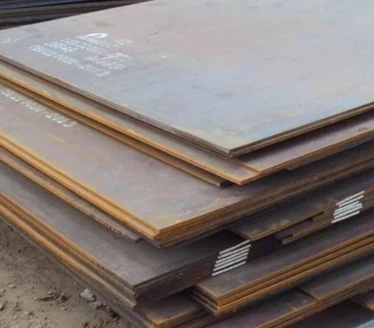
SA516 Grade 65 (or ASME SA-516 Grade 65) is a high-quality carbon steel plate specifically designed for use in welded pressure vessels and boilers operating at moderate and lower temperatures.
Equivalent Specifications and Standards
|
Standard |
Description |
|
ASTM/ASME |
A/SA516 - Grade 65 |
|
DIN Standard |
DIN 17155 17 MN 4 |
|
British Standard |
BS1501-224-460A/B |
|
European Norm |
EN10028 P295GH |
Chemical Composition
|
Composition |
Percentage % |
Composition |
Percentage % |
|
C |
0.08/0.20 |
Cu |
0.3 |
|
Si |
0.4 |
Ni |
0.3 |
|
Mn |
0.9/1.5 |
Mo |
0.08 |
|
P |
0.03 |
Nb |
0.01 |
|
S |
0.03 |
Ti |
0.03 |
|
Al |
0.02 |
V |
0.02 |
|
Cr |
0.3 |
|
|
Mechanical Properties
|
Properties |
Value |
|
Tensile Strength (N/mm2) |
460/580 |
|
Yield Stress/ min (N/mm2) |
295 |
SA516 Grade 65 Advantages
Excellent Mechanical Properties: It has high tensile strength (448-586MPa) and yield strength (≥290MPa), with good toughness even at low temperatures (-45℃), effectively resisting brittle fracture and adapting to complex load conditions.
Superior Weldability: With low carbon equivalent (CE≤0.43%), it is easy to weld by common methods (arc welding, gas welding, etc.) without obvious welding cracks, reducing processing difficulty and cost.
Good Pressure and Temperature Adaptability: Suitable for medium-low temperature (≤450℃) and high-pressure working environments, maintaining stable performance under long-term load, and widely used in pressure vessels and boilers.
Reliable Quality and Standard Compliance: Strictly in line with ASTM/ASME standards, with standardized production and testing processes, ensuring stable material performance and batch consistency, and high safety in industrial applications.
Cost-Effective: Compared with high-alloy steels, it has lower production and processing costs while meeting core industrial requirements, achieving a balance between performance and economy.
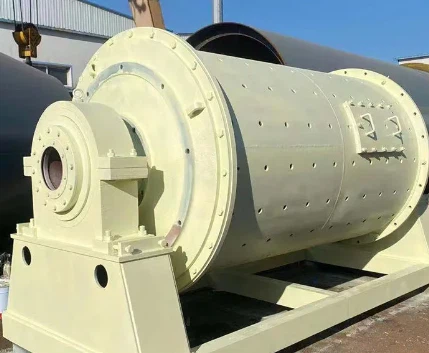
SA516 Grade 65 Core Applications
1. Petrochemical Industry High-Pressure Core Equipment
Applied in manufacturing high-pressure reactors, hydrogenation separators and high-pressure gas storage tanks for hydrogen, LPG and other media, perfectly adapting to the medium-high pressure, medium-low temperature working conditions of oil refining and natural gas processing, and ensuring the structural stability of core process equipment.
2. ASME-Compliant Boiler & Pressure Vessel Components
Widely used to produce pressure-bearing parts of power station boilers and Class 2/3 auxiliary pressure vessels of nuclear power plants, in line with ASME boiler and pressure vessel codes, and can stably bear medium-low temperature and high-pressure long-term loads.
3. API Standard Low-Temperature Pressure Storage Tanks
Fabricated into large-scale storage tanks meeting API 650/620 standards, especially for low-temperature and pressure-sensitive medium storage such as liquefied petroleum gas, relying on excellent low-temperature toughness to reduce the risk of medium leakage and storage tank brittle fracture.
4. Metallurgy & Heavy Machinery Pressure-Bearing Vessels
Used to make high-pressure water descaling system pressure tanks and heavy machinery hydraulic pressure vessels, with strong resistance to high-pressure liquid impact and dynamic-static alternating loads, effectively extending the service life of metallurgical and heavy machinery equipment.
5. Process Industry Medium-Low Pressure Bearing Equipment
Adopted in the pharmaceutical, food refining and sugar manufacturing industries to produce various medium-low pressure bearing equipment, meeting the industry's strict requirements for material welding performance and structural stability of pressure-bearing components.

Packing
1.Seaworthy Packaging: We use strong, durable materials such as wooden pallets or crates to ensure the steel plates are securely packed for long sea voyages, preventing damage from movement.
2.Waterproof Wrapping: P420M is covered with high-quality waterproof materials to protect it from moisture and corrosion during transport, especially in humid environments.
3.Edge and Surface Protection: We apply edge protectors and use padded coverings to safeguard the steel from scratches and dents, ensuring that the material's surface and edges remain intact.
4.Custom Labeling and Marking: All shipments are clearly labeled with handling instructions and customer-specific requirements, facilitating smooth customs clearance and proper storage upon arrival.
If you want to learn more about GNEE's products, you can send an email to beam@gneesteelgroup.com. We are more than happy to assist you.
What heat treatment processes are usually applied to SA516 Grade 65?
Common heat treatments for SA516 Grade 65 include normalizing (heating to 890-940°C, holding, then air cooling) and tempering if needed. These processes refine the grain structure and enhance toughness and strength.
What is the difference between SA516 Grade 65 and SA516 Grade 70?
The main difference is tensile/yield strength: Grade 65 has 450/290 MPa, Grade 70 has 485/310 MPa. Grade 70 is stronger but similar in chemical composition and weldability, used for higher-pressure applications.
Is SA516 Grade 65 resistant to corrosion? What precautions are needed?
It has basic corrosion resistance to mild environments but not to strong corrosives (acids, alkalis). Precautions include coating, galvanizing, or using corrosion inhibitors, especially in harsh industrial or marine environments.
What is the elongation requirement of SA516 Grade 65?
SA516 Grade 65 requires a minimum elongation of 21% in a 200 mm (8 in) gauge length. This ensures the material has good ductility, allowing it to deform without breaking under stress.
What applications is SA516 Grade 65 not suitable for?
It's not suitable for high-temperature (above 450°C) or strong corrosive environments (e.g., concentrated acids, seawater without protection). It also isn't ideal for applications requiring ultra-high strength or wear resistance.
How to inspect the quality of SA516 Grade 65 plates?
Quality inspection includes chemical composition analysis (spectroscopy), mechanical property tests (tensile, impact, hardness), non-destructive testing (ultrasonic, radiographic, magnetic particle) to detect defects.
What is the hardness range of SA516 Grade 65?
The typical Brinell hardness (HB) range of SA516 Grade 65 is 137-187. This moderate hardness balances strength and ductility, making it easy to machine and weld while maintaining structural integrity.
Can SA516 Grade 65 be machined easily?
Yes, it has good machinability due to its moderate hardness and ductility. Common machining processes like turning, milling, drilling, and grinding can be applied with standard tools and proper cutting parameters.
What is the density of SA516 Grade 65?
The density of SA516 Grade 65 is approximately 7.85 g/cm³ (0.283 lb/in³), the same as most carbon steels. This density is used for weight calculation in equipment design and manufacturing.
What is the thermal conductivity of SA516 Grade 65?
The thermal conductivity of SA516 Grade 65 is about 45 W/(m·K) at room temperature. This good thermal conductivity makes it suitable for heat transfer applications in boilers and heat exchangers.