


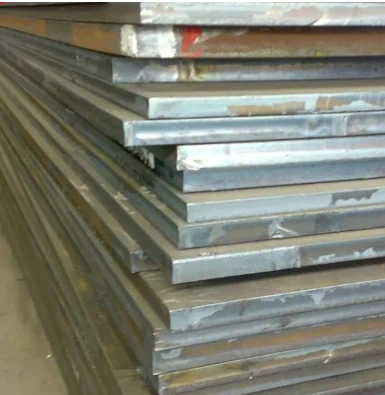
 SA516 Grade 65 (or ASME SA-516 Grade 65) is a high-quality carbon steel plate specifically designed for use in welded pressure vessels and boilers operating at moderate and lower temperatures.
Key Specifications
Standards: Complies with ASME SA-516 and ASTM A516.
Heat Treatment: Plates thicker than 1.5 inches (40 mm) must be normalized to improve notch toughness and grain structure. Thinner plates are often supplied "as-rolled" unless otherwise specified.
Mechanical Properties of ASME SA516 Grade 65
| Description | Grade 65 |
|---|---|
| Tensile strength (ksi) | 65-85 |
| Tensile strength (MPa) | 450-585 |
| Yield strength (ksi) | 35 |
| Yield strength (MPa) | 240 |
| Elongation in 200mm (min)(%) | 19 |
| Elongation in 50mm (min) (%) | 23 |
Chemical Composition of ASME SA516 Grade 65
| Carbon (C) | % |
| 12.5mm or less 12.5 - 50mm 50 - 100mm 100 - 200mm > 200mm |
0.24 0.26 0.28 0.29 0.29 |
Manganese (Mn) |
% |
| 12.5mm or less • Heat Analysis : • Product Analysis : Over 12.5mm • Heat Analysis : • Product Analysis : |
0.85-1.20 0.79-1.30 0.85-1.20 0.79-1.30 |
Phosphorus (P) |
% |
| (max) | 0.035 |
Sulphur (S) |
% |
| (max) | 0.035 |
Silicon (Si) |
% |
| • Heat Analysis : • Product Analysis : |
0.15-0.40 0.13-0.45 |
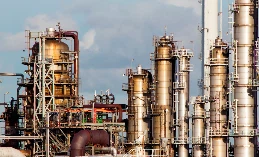
SA516 Grade 65 Core Applications
1. Petrochemical Industry High-Pressure Core Equipment
Applied in manufacturing high-pressure reactors, hydrogenation separators and high-pressure gas storage tanks for hydrogen, LPG and other media, perfectly adapting to the medium-high pressure, medium-low temperature working conditions of oil refining and natural gas processing, and ensuring the structural stability of core process equipment.
2. ASME-Compliant Boiler & Pressure Vessel Components
Widely used to produce pressure-bearing parts of power station boilers and Class 2/3 auxiliary pressure vessels of nuclear power plants, in line with ASME boiler and pressure vessel codes, and can stably bear medium-low temperature and high-pressure long-term loads.
3. API Standard Low-Temperature Pressure Storage Tanks
Fabricated into large-scale storage tanks meeting API 650/620 standards, especially for low-temperature and pressure-sensitive medium storage such as liquefied petroleum gas, relying on excellent low-temperature toughness to reduce the risk of medium leakage and storage tank brittle fracture.
4. Metallurgy & Heavy Machinery Pressure-Bearing Vessels
Used to make high-pressure water descaling system pressure tanks and heavy machinery hydraulic pressure vessels, with strong resistance to high-pressure liquid impact and dynamic-static alternating loads, effectively extending the service life of metallurgical and heavy machinery equipment.
5. Process Industry Medium-Low Pressure Bearing Equipment
Adopted in the pharmaceutical, food refining and sugar manufacturing industries to produce various medium-low pressure bearing equipment, meeting the industry's strict requirements for material welding performance and structural stability of pressure-bearing components.

Key Manufacturing & Processing Technologies for SA516 Grade 65
Normalizing Heat Treatment
The core process for homogenizing microstructure, conducted at 880–920℃ followed by air cooling. Eliminates internal stress, refines ferrite-pearlite grains, and enhances low-temperature toughness and mechanical property uniformity across the plate.
Controlled Rolling & Forming
Adopts low-temperature controlled rolling for precise thickness and shape control. Cold/hot forming processes (bending, pressing) are optimized to avoid work hardening, ensuring the material retains its pressure-bearing performance after forming.
Standardized Welding Processes
Compatible with common welding methods (GMAW, SMAW, SAW) with no preheating for thin plates; mild preheating (100–150℃) for thick plates only. Low carbon equivalent ensures no cold cracks, guaranteeing weld joint strength matching the base metal.
Strict Non-Destructive Testing
Covers ultrasonic testing (UT) for internal defects, magnetic particle testing (MT) for surface flaws, and Charpy impact testing. All plates pass mill test per ASTM/ASME standards to verify performance and defect-free quality.
Contact us at beam@gneesteelgroup.com for pricing, technical support, or customized solutions. We are always ready to support your project.
Does SA516 Grade 65 require preheating before welding?
Preheating is often recommended, especially for thick plates (over 25 mm) or in low-temperature environments. Typical preheating temperature is 60-150°C (140-302°F) to prevent cold cracking and improve weld quality.
What post-weld heat treatment (PWHT) is needed for SA516 Grade 65?
PWHT usually involves stress relieving at 595-650°C (1100-1200°F), holding for a specific time, then cooling slowly. This reduces welding residual stress, improves weld toughness, and prevents cracking.
What is the modulus of elasticity of SA516 Grade 65?
The modulus of elasticity of SA516 Grade 65 is approximately 200 GPa (29×10⁶ psi) at room temperature. This parameter indicates the material's stiffness, crucial for structural design calculations.
Can SA516 Grade 65 be used in offshore oil and gas platforms?
Yes, it can be used in offshore platforms for pressure vessels and storage tanks, but must be protected against corrosion (e.g., anti-corrosion coating, cathodic protection) due to the harsh marine environment.
What is the difference between SA516 Grade 65 and A36 steel?
SA516 Grade 65 is pressure vessel steel with higher tensile/yield strength (450/290 MPa vs A36's 400/250 MPa) and better low-temperature toughness, while A36 is general structural steel for non-pressure applications.
What is the maximum carbon content allowed in SA516 Grade 65?
The maximum carbon content allowed in SA516 Grade 65 is 0.28%. Controlling carbon content is critical to ensure good weldability and low-temperature toughness, avoiding brittleness.
Is SA516 Grade 65 available in coil form?
It's mainly available as plates, but can also be supplied as coils for specific applications. Coils are typically used for manufacturing small-diameter pressure vessels or components via rolling and welding.
What is the fatigue strength of SA516 Grade 65?
The fatigue strength of SA516 Grade 65 is approximately 170-200 MPa for 10⁷ cycles at room temperature. This makes it suitable for applications with cyclic loads, such as reciprocating pressure vessels.
What standards should be followed when welding SA516 Grade 65?
Welding should follow ASME Section IX (Welding and Brazing Qualifications). It includes selecting appropriate welding consumables (e.g., E7018 electrodes), preheating, PWHT, and non-destructive testing of welds.
What are the advantages of using SA516 Grade 65 in pressure vessel manufacturing?
Its advantages include excellent low-temperature toughness, good weldability and machinability, high tensile/yield strength, compliance with ASME standards, and cost-effectiveness, ensuring safe and reliable pressure vessel operation.