


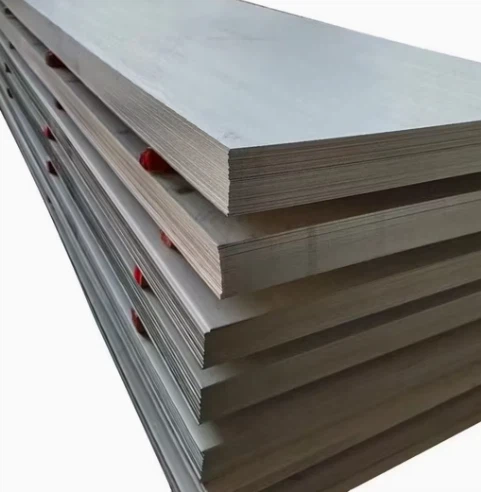
Q345R is a grade of pressure vessel steel plate specified in the Chinese national standard GB 713, widely used in the fabrication of boilers, pressure vessels, and other pressure-bearing equipment that require good strength, toughness, and weldability; in English technical documents, it is commonly referred to as "Q345R pressure vessel steel plate" or "Q345R grade pressure vessel steel plate (GB standard)", and since it is a China-specific designation, there is no direct equivalent grade in international standards such as ASTM or EN, though it is often compared to grades like ASTM A516 Grade 70 or EN 10028-2 P355GH in engineering practice.
International Equivalents
In global engineering projects, Q345R is frequently compared to or substituted with:
USA (ASTM/ASME): ASTM A516 Grade 70 or ASME SA516 Gr.70.
Europe (EN 10028): P355GH.
International: ISO 9328 P355GH.
Q345R Chemical composition%
|
Grade |
C % |
Si % |
Mn % |
Cu % |
Ni % |
Cr% |
Mo % |
V % |
|
Q345R |
0.20 |
0.55 |
1.2-1.7 |
0.30 |
0.30 |
0.30 |
0.08 |
0.050 |
|
Ti % |
Alt % |
P % |
S % |
Nb |
|
|
|
|
|
0.030 |
0.020 |
0.025 |
0.010 |
0.050 |
|
|
|
Q345R Mechanical Property
|
Grade |
Thickness(mm) |
Min Yield |
Tensile |
Elongation |
Min Impact Energy |
|
|
|
|
|
|
|
Degree |
Min J |
|
Q345R |
3-16 |
345Mpa |
510-640 Mpa |
21% |
0 |
41J |
|
16-36 |
325Mpa |
500-630 Mpa |
21% |
0 |
41J |
|
|
36-60 |
315 Mpa |
490-620 Mpa |
21% |
0 |
41J |
|
|
60-100 |
305 Mpa |
490-620 Mpa |
20% |
0 |
41J |
|
|
100-150 |
285 Mpa |
480-610 Mpa |
20% |
0 |
41J |
|
|
150-250 |
265 Mpa |
470-600 Mpa |
20% |
0 |
41J |
|
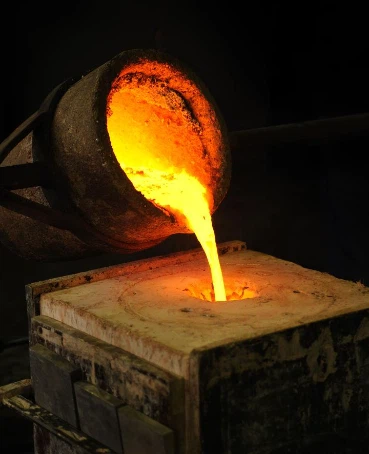 Processes Adopted for Q345R Steel
Smelting Process:
Adopts converter or electric arc furnace smelting combined with LF (Ladle Furnace) refining and VD (Vacuum Degassing) treatment. This process effectively reduces harmful impurities (P, S ≤ 0.025%) and gas content (H, O, N), ensures uniform chemical composition, and improves the purity and internal quality of the steel.
Rolling Process:
Applies controlled rolling and controlled cooling (TMCP) technology. The steel is rolled at a specific temperature range, followed by rapid cooling, which refines the grain structure, enhances mechanical properties (strength and toughness), and ensures stable performance across the plate thickness.
Welding Process:
Commonly uses shielded metal arc welding (SMAW), gas metal arc welding (GMAW), and submerged arc welding (SAW). Pre-welding preheating (60-150℃) and post-weld heat treatment (PWHT) are required for thick plates to eliminate welding stress, prevent cold cracks, and ensure weld joint quality matching the base metal.
Inspection and Testing Process:
Includes chemical composition analysis, mechanical property testing (tensile, impact, bending), and non-destructive testing (ultrasonic UT, radiography RT, magnetic particle MT). These processes fully verify the steel's quality and ensure it meets GB 713 standards and application requirements.
Why Choose Us :
You can get the perfect material according to your requirement at the least possible price.
We also offer Reworks, FOB, CFR, CIF, and door to door delivery prices. We suggest you to do deal for shipping which will be quite economical.
The materials we provide are completely verifiable, right from raw material test certificate to the final dimensional statement.(Reports will show on requirement)
We guarantee to give a response within 24hours(usually in the same hour)
You can get stock alternatives, mill deliveries with minimizing manufacturing time.
We are fully dedicated to our customers. If it will not possible to meet your requirements after examining all options, we will not mislead you by making false promises which will create good customer relations.
If you have project requirements for Q345R, we welcome your inquiry. GNEE maintains a large inventory of commonly used high strength steel grades for your selection.For detailed mechanical properties, chemical composition, and technical data, as well as free samples, please contact our factory immediately. We offer competitive prices, stable quality, and professional service. Email:beam@gneesteelgroup.com.
What are the chemical composition characteristics of Q345R steel?
Q345R mainly contains C, Si, Mn as basic elements, with strict control of P and S impurities. It may also contain trace alloying elements like V, Nb, Ti to improve its strength and toughness, meeting pressure vessel safety standards.
What standards does Q345R steel comply with?
Q345R complies with the Chinese national standard GB/T 713-2014 "Boiler and Pressure Vessel Steel Plates". This standard specifies its chemical composition, mechanical properties, inspection methods and delivery requirements.
What is the maximum thickness of Q345R steel plates that can be supplied?
The maximum supply thickness of Q345R steel plates is usually 200mm, but it can be customized according to user needs. Thicker plates may require special rolling and heat treatment processes to ensure uniform performance.
What is the hardness range of Q345R steel after normalizing?
After normalizing, the hardness of Q345R steel is usually between 137 HB and 179 HB. This hardness range balances strength and toughness, making it easy to process and weld, and suitable for pressure vessel manufacturing.
What non-destructive testing methods are commonly used for Q345R pressure vessels?
Common non-destructive testing methods for Q345R pressure vessels include ultrasonic testing (UT) for internal defects, radiographic testing (RT) for weld quality, and magnetic particle testing (MT) for surface cracks.
What impact toughness requirements does Q345R steel have?
Q345R requires a transverse impact energy Akv ≥ 34 J at 20℃ (standard temperature). For low-temperature use, the impact test temperature is lowered, and the Akv value still needs to meet the standard to avoid brittle fracture.
What is the minimum yield strength of Q345R steel?
The minimum yield strength of Q345R steel is 345 MPa, which is the core index that defines its grade. This strength ensures it can withstand certain pressure and load without permanent deformation in pressure-bearing applications.
What are the requirements for welding Q345R steel?
Welding Q345R requires matching low-alloy steel electrodes, controlling preheating temperature (usually 80-150℃) and interpass temperature. Post-weld heat treatment is necessary to eliminate residual stress and prevent cold cracks.
What is the tensile strength range of Q345R steel?
The tensile strength of Q345R steel ranges from 470 MPa to 630 MPa. This range ensures the steel has sufficient strength to resist tensile loads in pressure-bearing equipment operation, ensuring structural safety.
Can Q345R steel be used in low-temperature environments? If yes, what is the applicable temperature range?
Yes, Q345R can be used in low-temperature environments. Its general applicable low-temperature range is -20℃ to room temperature. For lower temperatures, it needs to pass additional low-temperature impact tests to ensure toughness.