


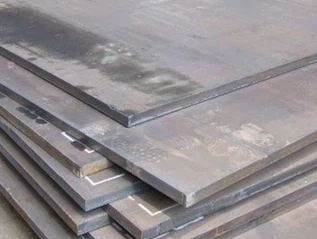
 P355GH is a widely recognized pressure vessel steel grade explicitly specified in the European standard EN 10028-2, which governs steels for pressure equipment. As a non-alloy, fine-grain structural steel, it boasts excellent comprehensive performance, including superior toughness that resists brittle fracture, outstanding weldability compatible with various common welding processes, and reliable high-temperature resistance that maintains structural stability under medium-temperature operating conditions. These inherent advantages make it a preferred material in the manufacturing of pressure vessels, boilers, and related equipment across petrochemical, power generation, and chemical industries.
P355GH Chemical Composition
|
Grade |
The Element Max (%) |
||||||
|
C |
Si |
Mn |
P |
S |
Al(min) |
N |
|
|
P355GH |
0.10-0.22 |
0.60 |
1.10-1.70 |
0.025 |
0.015 |
0.020 |
0.012 |
|
Cr |
Cu |
Mo |
Nb |
Ni |
Ti |
V |
|
|
0.30 |
0.30 |
0.08 |
0.040 |
0.30 |
0.03 |
0.02 |
|
Mechanical Properties:
| Type | Thickness (mm) | Yield Strength MPa (min) |
Tensile Strength MPa |
Elongation % (min) |
Impact Energy (KV J) (min) |
Impact Energy (KV J) (min) |
Impact Energy (KV J) (min) |
|---|---|---|---|---|---|---|---|
| -20° | 0° | +20° | |||||
| Normalized | ≤ 16 |
355 | 510 - 650 | 21 | 27 | 34 | 40 |
| 16> to ≤40 | 345 | 510 - 650 | 21 | 27 | 34 | 40 | |
| 40> to ≤60 | 335 | 460 - 580 | 21 | 27 | 34 | 40 | |
| 60> to ≤100 | 315 | 490 - 630 | 21 | 27 | 34 | 40 | |
| 100> to ≤150 | 295 | 480 - 630 | 21 | 27 | 34 | 40 | |
| 150> to ≤250 | 280 | 470 - 630 | 21 | 27 | 34 | 40 |
P355GH Steel Application Conditions
P355GH is engineered for steady performance under specific thermal and pressure conditions, with its application scope strictly matched to its material properties. Key application conditions are as follows:
Temperature Range: It is primarily used in moderate to high-temperature working environments, with a continuous operating temperature of -20°C to 400°C. The steel maintains excellent toughness at low temperatures to avoid brittle fracture, and its structural stability and mechanical strength remain uncompromised under long-term high-temperature heating, without obvious performance degradation caused by thermal aging.
Pressure Bearing Requirements: Suitable for medium and high-pressure working conditions of pressure-bearing equipment, adapting to the pressure fluctuations in industrial systems such as boilers and pressure vessels. It can bear stable design pressure and resist instantaneous pressure shocks, meeting the pressure resistance standards of European EN pressure vessel steel for static and dynamic load-bearing scenarios.
Working Medium & Environment: Applicable to equipment in contact with common industrial media including water, steam, oil, natural gas and general chemical fluids. It has good resistance to mild corrosive media and thermal fatigue caused by alternating cold and heat, and is suitable for dry, humid and other conventional industrial working environments (excluding strong acid, strong alkali and other severe corrosive conditions).
Welding & Fabrication Condition: It is used in welded structural components of pressure equipment, requiring conventional arc welding processes and no complex preheating or post-weld heat treatment under normal fabrication conditions, which is compatible with standard industrial production and processing requirements of pressure-bearing parts.
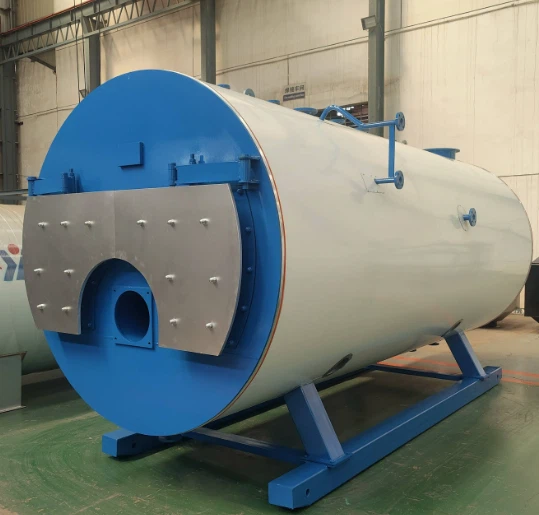 P355GH Steel Applications
P355GH is a versatile pressure vessel steel compliant with European EN standards, widely applied in industries requiring stable performance under moderate to high temperatures and pressure. Its key applications are as follows:
Boiler Manufacturing: It is a core material for boiler pressure parts, such as drum shells, water wall tubes, superheater headers and downcomers. These components operate under long-term high-temperature (up to 400°C) and high-pressure conditions, and P355GH's excellent thermal fatigue resistance and weldability ensure safe and reliable operation, meeting the strict requirements of power plant and industrial boiler systems.
Pressure Vessels: It is extensively used to fabricate pressure vessels in petrochemical, chemical and pharmaceutical industries. These vessels store or transport media like oil, gas, chemicals and steam, where P355GH's stable mechanical properties and corrosion resistance prevent leakage and deformation, adapting to harsh working environments with alternating temperature and pressure.
Heat Exchangers: It serves as a key material for heat exchanger tubes, tube sheets and shells. Heat exchangers are critical for energy transfer in power generation, refrigeration and industrial processing. P355GH's good thermal conductivity and toughness ensure efficient heat exchange while withstanding thermal stress, reducing maintenance costs and extending service life.
Advantages of P355GH Steel
P355GH is a preferred material for pressure-bearing equipment in multiple industries due to its comprehensive performance advantages. The key advantages are as follows:
Excellent Mechanical Properties: It has stable tensile strength, yield strength and high toughness, especially maintaining good impact resistance at low temperatures (-20°C). This enables it to withstand long-term high-temperature and high-pressure conditions without brittle fracture, ensuring the safe operation of pressure vessels and boilers.
Superior Weldability: It is compatible with common arc welding processes (MIG/MAG, TIG, SMAW) without complex preheating or post-weld heat treatment for general applications. The weld joints have high strength and good toughness, reducing fabrication difficulty and production costs.
Good Formability: It performs well in both hot and cold forming processes. With excellent plastic deformability at high temperatures and moderate cold workability, it can be easily shaped into various components (shells, headers, heads) to meet diverse manufacturing needs of industrial equipment.
Stable Thermal Stability: It has strong resistance to thermal fatigue and thermal aging, maintaining structural and performance stability under long-term continuous high-temperature (up to 400°C) operation. It is not prone to performance degradation, extending the service life of equipment.
Wide Applicability & Standard Compliance: Compliant with European EN standards, it is suitable for multiple media (water, steam, oil, etc.) and industries (petrochemical, power generation, etc.). Its mature supply chain and standardized processing make it cost-effective and widely available.
For more details about GNEE's steel products, contact us at beam@gneesteelgroup.com. We look forward to working with you.
Which standard defines P355GH?
P355GH is defined by the European standard EN 10028-2, which specifies technical delivery conditions for non-alloy and alloy steels for pressure purposes, covering chemical composition, mechanical properties and testing requirements.
What are the main chemical compositions of P355GH?
The main chemical compositions of P355GH include C (≤0.20%), Si (≤0.55%), Mn (1.00-1.60%), P (≤0.025%), S (≤0.015%), and trace elements like N, Cu, Ni, Cr, Mo to ensure its performance.
Can P355GH be used in low-temperature environments?
P355GH has good low-temperature toughness, generally suitable for environments above -20°C. For lower temperatures, it needs to pass impact tests to ensure it can resist brittle fracture and meet application requirements.
How to test the impact toughness of P355GH?
The impact toughness of P355GH is tested by Charpy V-notch impact test. Samples are taken from the material, and the impact energy is measured at specified temperatures (usually 20°C or -20°C) to evaluate its toughness.
What is the thickness range of P355GH plates?
P355GH plates are commonly available in thickness ranging from 5 mm to 200 mm. For thicker plates, additional heat treatment and testing may be required to ensure uniform mechanical properties throughout the cross-section.
What is the difference between P355GH and P355NH?
The main difference lies in toughness requirements. P355NH is normalized steel with higher notch toughness at low temperatures (-20°C), while P355GH is hot-rolled or normalized steel, suitable for medium-temperature pressure applications.
What are the minimum mechanical properties of P355GH?
P355GH has a minimum yield strength of 355 MPa (at 16-40 mm thickness), minimum tensile strength of 470-630 MPa, minimum elongation of 21%, and good impact toughness at room and low temperatures.
What is the tensile strength range of P355GH?
The tensile strength of P355GH ranges from 470 MPa to 630 MPa, which is higher than ordinary structural steel. This makes it suitable for bearing medium pressure and ensuring structural stability in pressure vessel applications.
What is the maximum operating temperature of P355GH?
The maximum continuous operating temperature of P355GH is typically around 400-450°C. Beyond this range, its mechanical properties may degrade, affecting the safety and service life of pressure vessels.