


P460QL1 is a kind of weldable fine - grained steel for European standard pressure vessels, which is produced in the quenched and tempered state and complies with the standard EN10028 - 6. Each letter and number in its grade has a specific meaning: "P" stands for pressure vessel steel, "460" indicates that the lower limit of its yield strength is 460MPa, "Q" represents the quenched and tempered heat treatment state, and "L1" means it has excellent impact toughness at a low temperature of - 40°C.
This steel has outstanding comprehensive properties, including good plasticity, toughness, cold bending performance and weldability. Its chemical composition is strictly controlled, with the maximum carbon content of 0.18% and the maximum sulfur and phosphorus contents of 0.010% and 0.020% respectively. In terms of mechanical properties, when the thickness of the steel plate is between 6 - 50mm, its tensile strength ranges from 550MPa to 720MPa, and the elongation is at least 19%. It is widely used in the petroleum, chemical, power station and boiler industries to manufacture spherical storage tanks above 50 cubic meters, low - temperature pressure vessels, reactors, heat exchangers and other key equipment and components.
Common specifications and dimensions of P460QL1
Thickness range: Typically supplied in thicknesses from 6 mm to 150 mm, with some producers able to offer plates up to 200 mm for special applications.
Width range: Commonly available in widths from 1500 mm to 4000 mm, depending on the rolling mill capacity.
Length range: Standard lengths are usually between 6000 mm and 12000 mm, with longer lengths available on request.
Plate sizes: Common stock sizes include 1500×6000 mm, 2000×6000 mm, 2500×12000 mm, and 3000×12000 mm, though custom sizes can be produced.
Tolerances: Thickness tolerances generally comply with EN 10028-2, with tighter tolerances available for special requirements. Width and length tolerances follow mill standards.
Form: Primarily supplied as flat plates, but can also be provided as slabs, sheets, or cut-to-size blanks according to customer specifications.
|
P460QL1 Chemical Composition |
|||||||
|
Grade |
The Element Max (%) |
||||||
|
C |
Si |
Mn |
P |
S |
N |
B |
|
|
P460QL1 |
0.18 |
0.50 |
1.70 |
0.020 |
0.010 |
0.015 |
0.005 |
|
Mo |
Cu |
Nb |
Ni |
Ti |
V |
Zr |
|
|
0.50 |
0.3 |
0.05 |
0.5 |
0.03 |
0.06 |
0.05 |
|
|
Grade |
P460QL1 Mechanical Property |
|||
|
Thickness |
Yield |
Tensile |
Elongation |
|
|
P460QL1 |
mm |
Min Mpa |
Mpa |
Min % |
|
6-50 |
460 |
550-720 |
19% |
|
|
50-100 |
440 |
550-720 |
19% |
|
|
100-150 |
400 |
500-670 |
19% |
|
applications
Pressure vessels and storage tanks: P460QL1 is widely used in the fabrication of pressure vessels, including spherical tanks, cylindrical tanks, and large storage tanks for oil, gas, and chemical products. Its high yield strength and good low-temperature toughness make it suitable for operating conditions with high internal pressure and low ambient temperatures.
Petrochemical and chemical equipment: It is used to manufacture reactors, heat exchangers, separators, and other key equipment in refineries, chemical plants, and gas processing facilities. The steel's excellent weldability and resistance to brittle fracture ensure the reliability and safety of these critical components.
Power industry applications: P460QL1 is applied in the construction of boilers, pressure parts of steam generators, and high-pressure pipelines in thermal power plants and nuclear power plants. It can withstand high temperatures and pressures while maintaining good mechanical properties.
Offshore and marine structures: Due to its good toughness at low temperatures and high strength, P460QL1 is used in offshore platforms, FPSO units, and other marine structures exposed to harsh environments such as low temperatures, high winds, and corrosive seawater.
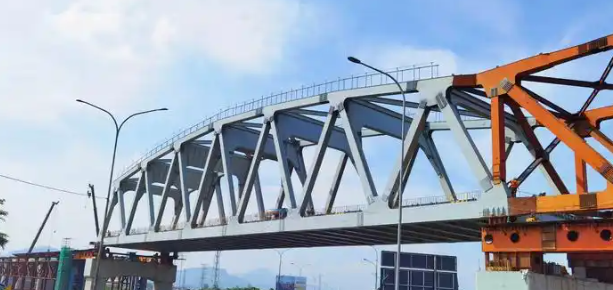
General heavy engineering: It is also used in heavy machinery, large-diameter pipes, and structural components that require high strength, good weldability, and excellent impact resistance, such as in the construction of bridges, cranes, and mining equipment.
pplication conditions
Temperature range: P460QL1 is designed for service in low to moderate temperature environments. It maintains good toughness at temperatures as low as -40°C, making it suitable for cold climates and low-temperature process equipment. However, its long-term use at temperatures above 350°C is generally not recommended to avoid loss of strength and toughness.
Pressure requirements: This steel is suitable for high-pressure applications, typically used in pressure vessels and components operating at pressures from medium to high levels. Its minimum yield strength of 460 MPa ensures sufficient resistance to internal and external pressures, providing structural integrity under demanding loading conditions.
Welding and fabrication conditions: P460QL1 requires appropriate welding procedures to maintain its mechanical properties. Preheating may be necessary for thick plates to prevent cold cracking, especially in low-temperature environments. Interpass temperature control and post-weld heat treatment (PWHT) are often applied to reduce residual stresses and improve toughness in the heat-affected zone.
Environmental conditions: It is suitable for use in various industrial environments, including petrochemical plants, refineries, power stations, and offshore installations. However, in highly corrosive environments such as those with chloride or acidic media, additional corrosion protection measures (e.g., coatings, linings, or cathodic protection) are required to ensure long-term durability.
Loading and structural conditions: P460QL1 is used in structures subjected to static, cyclic, and dynamic loads. It is suitable for heavy engineering applications where high strength, good fatigue resistance, and resistance to brittle fracture are essential, such as in large storage tanks, reactors, and pressure-containing components.
 processing
Cutting and blanking: P460QL1 can be cut using flame cutting, plasma cutting, or laser cutting. For thick plates, flame cutting is commonly used, but proper preheating and post-cutting cooling control are needed to prevent thermal cracking. Plasma and laser cutting offer higher precision and faster speeds for medium and thin plates.
Forming and bending: The steel has good cold and hot formability. Cold bending is suitable for plates with moderate thickness, but the minimum bend radius should be respected to avoid cracking. Hot forming is recommended for complex shapes or thick plates, typically performed at temperatures between 800°C and 1100°C, followed by controlled cooling to maintain mechanical properties.
Welding procedures: P460QL1 is weldable by standard methods such as SMAW, GMAW, FCAW, and SAW. Preheating is often required for plates thicker than 25 mm or in low-temperature environments to reduce hydrogen-induced cracking. Interpass temperature should be controlled below 250°C, and post-weld heat treatment (PWHT) may be applied to improve toughness and reduce residual stresses.
Machining: The steel has satisfactory machinability, allowing turning, milling, drilling, and grinding operations. However, due to its high strength, appropriate cutting tools and parameters are necessary to ensure efficiency and tool life. Coolants are recommended to reduce heat and improve surface finish.
Heat treatment: P460QL1 is supplied in the quenched and tempered (Q&T) condition. Additional heat treatment is generally not required, but stress relief annealing may be performed after heavy fabrication or welding to enhance dimensional stability and reduce residual stresses.
Surface treatment and protection: To improve corrosion resistance, surfaces can be cleaned by shot blasting or pickling, followed by coatings such as epoxy, polyurethane, or anti-corrosive paint. In marine or highly corrosive environments, additional protection like cathodic protection may be applied.
Full specification and details are available on request. The above information is provided for guidance purposes only. For specific design requirements please contact our technical sales staff.
What is P460QL1?
P460QL1 is a kind of quenched and tempered alloy structural steel. It is mainly used in low-temperature pressure vessel and boiler manufacturing, with excellent low-temperature toughness, high strength and good weldability to adapt to harsh working environments.
What are the main chemical components of P460QL1?
The main chemical components of P460QL1 include C (carbon), Si (silicon), Mn (manganese), P (phosphorus), S (sulfur), Cr (chromium), Ni (nickel), Mo (molybdenum), etc., with strict content limits to ensure its performance.
What is the minimum yield strength of P460QL1?
The minimum yield strength of P460QL1 is 460 MPa. This high yield strength enables it to bear large loads and pressures, making it suitable for manufacturing high-pressure equipment and structural parts in industrial fields.
What is the application temperature range of P460QL1?
P460QL1 is suitable for working environments with temperatures ranging from -20℃ to 350℃. Its excellent low-temperature toughness ensures that it will not brittle fracture at low temperatures, and it can maintain stability at medium and high temperatures.
Is P460QL1 easy to weld?
Yes, P460QL1 has good weldability. Before welding, it is necessary to preheat appropriately according to the plate thickness, and control the welding parameters and post-weld heat treatment to avoid welding defects and ensure the welding joint strength.
Which standards does P460QL1 comply with?
P460QL1 complies with the European standard EN 10028-3. This standard specifies the technical requirements, test methods, inspection rules and other contents of quenched and tempered pressure vessel steels, ensuring product quality and safety.
What is the tensile strength range of P460QL1?
The tensile strength range of P460QL1 is 570-720 MPa. This strength index is an important basis for judging whether it can meet the use requirements of various mechanical structures and pressure vessels.
What are the main application fields of P460QL1?
P460QL1 is widely used in petroleum, chemical, power, boiler, pressure vessel and other fields. It is used to manufacture pressure vessels, boilers, pipelines, storage tanks and other key components that bear pressure and low-temperature environments.
Does P460QL1 need heat treatment after processing?
It depends on the processing method and application scenario. For important components, post-processing heat treatment (such as tempering) is usually required to eliminate internal stress, improve toughness and ensure the dimensional stability of the workpiece.
What is the impact toughness requirement of P460QL1?
At -20℃, the impact energy of P460QL1 shall not be less than 34 J (Charpy V-notch test). This ensures that the material has sufficient toughness to resist impact loads in low-temperature environments.