


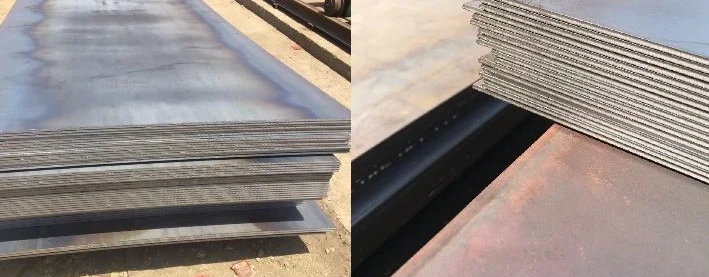
SA662 Grade C is a low-alloy carbon steel plate compliant with ASTM/ASME standards, primarily designed for pressure vessels and structural components. It boasts excellent weldability, moderate strength and toughness, making it well-suited for low-temperature service scenarios.
SA662GrC Pressure Vessel Steel Plate Chemical Composition:
|
Grade |
C |
Mn≥ |
Si |
P |
S |
|
SA662 Grade C |
0.24 |
0.13-0.45 |
0.79-1.62 |
0.035 |
0.035 |
SA662GrC Pressure Vessel Quality Steel Mechanical Properties:
|
Grade |
Tensile Strength(MPa) |
Yield Strength(MPa) |
% Elongation in 2 in.(50mm) min |
Impacting Test Temperature(°C) |
|
SA662 Grade C |
480-620 |
295 |
20 |
-20,40,-60 |
SA662 Grade C Common Dimensions (Unit: mm)
|
Parameter |
Common Range |
Typical Supply Range |
Standard Tolerance (per ASME SA20/SA20M) |
|
Thickness |
6–300 |
10–120 (most used for pressure vessels) |
±0.5 mm (common); ±0.05 mm (thin plates ≤0.75 mm) |
|
Width |
1500–4050 |
2000–3200 (mainstream) |
±10 mm |
|
Length |
3000–15000 |
4000–12000 (regular) |
±20 mm |
Typical Application Specifications
10×2000×8000: Small low-temperature storage tanks
20×2500×10000: Petrochemical pipeline components
40×3000×12000: LNG transport equipment pressure vessels
60×3200×12000: Offshore platform low-temperature structural parts

SA662 Grade C Process Characteristics
Controlled Chemical Composition Process: Adopts precise ingredient control technology to strictly limit impurity content (such as sulfur, phosphorus) and optimize alloy element ratio, laying a solid foundation for excellent low-temperature toughness and mechanical properties, which is consistent with ASTM SA662 standard requirements.
Standard Heat Treatment Process: Typically undergoes normalization (880-920℃ heating, air cooling) or thermomechanical processing, which refines grain structure, improves material uniformity, and achieves a balanced match of strength and toughness to avoid brittle fracture at low temperatures.
Feasible Cutting & Forming Process: Suitable for flame, plasma and laser cutting; thick plates (≥25mm) need preheating (50-100℃) to prevent cold cracking. Cold/hot forming is available, with controlled bending radius and hot forming temperature (900-1100℃) to ensure forming quality.
Strict Welding Process: Requires low-hydrogen welding methods (SMAW/GTAW/GMAW) and matching welding materials (e.g., E7018 electrode). Preheating (80-150℃) and post-weld tempering (550-620℃) are mandatory to eliminate stress and ensure joint toughness.
Reliable Machining Process: Features good machinability for turning, milling and drilling. Reasonable cutting parameters and sharp tools are recommended to avoid work hardening and surface damage, ensuring machining accuracy and surface quality.
Get an valued quotation for SA662 GRADE C, Contact GNEE Steel.
What are the main chemical components of SA662 Grade C?
The main chemical components include C (≤0.20%), Mn (0.70-1.00%), Si (0.15-0.40%), P (≤0.035%), S (≤0.035%), and trace amounts of other elements, ensuring its mechanical and chemical properties.
What is the minimum yield strength of SA662 Grade C?
SA662 Grade C has a minimum yield strength of 290 MPa (42 ksi). This yield strength ensures the material has good load-bearing capacity and deformation resistance under working conditions.
What is the applicable temperature range of SA662 Grade C?
SA662 Grade C is suitable for service temperatures ranging from -29°C (-20°F) to 343°C (650°F). It maintains stable mechanical properties within this range, avoiding brittle fracture or performance degradation.
What are the main applications of SA662 Grade C?
SA662 Grade C is widely used in manufacturing low-temperature pressure vessels, boilers, storage tanks, pipelines, and structural components in petrochemical, power generation, and chemical industries due to its good comprehensive properties.
Does SA662 Grade C require impact testing?
Yes, SA662 Grade C requires Charpy V-notch impact testing. The minimum impact energy is 27 J (20 ft-lb) at -29°C (-20°F), ensuring the material has sufficient toughness in low-temperature environments.
What is the maximum thickness of SA662 Grade C plates usually supplied?
SA662 Grade C plates are usually supplied with a maximum thickness of 150 mm (6 inches). Thicker plates may require special heat treatment and inspection to ensure uniform mechanical properties throughout the thickness.
What standard does SA662 Grade C comply with?
SA662 Grade C complies with the ASTM A662/A662M standard, which is formulated by the American Society for Testing and Materials (ASTM) for low-alloy carbon steel plates for pressure vessels and structural purposes.
What is the elongation requirement of SA662 Grade C?
SA662 Grade C requires a minimum elongation of 22% in the tensile test. This high elongation indicates good ductility, allowing the material to undergo plastic deformation without breaking under external force.
What is the minimum tensile strength of SA662 Grade C?
The minimum tensile strength of SA662 Grade C is 485 MPa (70 ksi). This strength level enables it to withstand certain pressure and load, making it suitable for pressure vessel manufacturing and related structural applications.