


P275NH is a normalized, weldable fine-grain steel per EN 10028-3 (Mat. No. 1.0487), with min. yield strength 275MPa. It suits high-temp pressure equipment like boilers and reactors, boasting good formability and reliable quality.
Mechanical Properties
| Grade | Type | Thickness (mm) | Yield Strength MPa (min) |
Tensile Strength MPa |
Elongation % (min) |
|---|---|---|---|---|---|
| P275 NH | Normalized | ≤ 16 | 275 | 390 - 510 | 24 |
Chemical Composition
| P275 NH | |
|---|---|
| C | 0.16 |
| Si | 0.40 |
| Mn | 0.80 to 1.50 |
| P | 0.025 |
| S | 0.015 |
| Al | 0.020 |
| N | 0.012 |
| Cr | 0.30 |
| Cu | 0.30 |
| Mo | 0.08 |
| Nb | 0.05 |
| Ni | 0.50 |
| Ti | 0.03 |
| V | 0.05 |
Key Processing Technologies
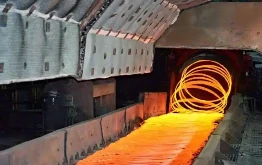
Normalization Treatment:As a normalized steel, P275NH must undergo normalization (heating to 890-950℃, holding adequately, then air cooling). This refines its grain structure, ensures min. yield strength 275MPa, and enhances toughness for high-temp pressure service.
Forming Process:It features good cold and hot formability. Cold forming (bending, stamping) is feasible at room temp without excessive force; hot forming (heating to 700-1050℃) suits complex shapes like boiler drums, with post-forming stress relief if needed.
Welding Operation:Weldability is excellent. Recommended processes include SMAW, GMAW, GTAW. Preheat to 80-150℃ (based on thickness) to avoid cracks; post-weld heat treatment (550-650℃) optimizes joint performance without strength loss.
Finishing & Inspection:Post-processing includes grinding to remove burrs. Strict ultrasonic inspection is mandatory per EN 10028-3 to detect internal defects, ensuring product reliability for pressure vessel and boiler applications.
P275NH Applications
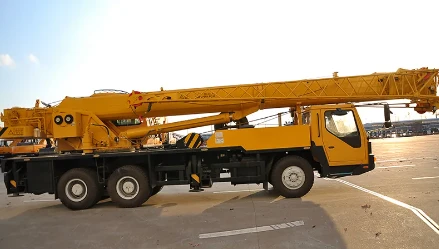
Boiler and Pressure Vessel Manufacturing:As the primary application field, it is widely used to fabricate key components such as boiler drums, steam headers, heat exchangers, and high-pressure storage tanks. Its excellent high-temperature stability and pressure resistance meet the safe operation requirements of equipment under thermal and pressure loads.
Petrochemical Industry:Applied in the production of oil and gas processing equipment, including separators, reaction vessels, and pipeline fittings (flanges, valves). It can resist mild corrosion from petrochemical media and adapt to harsh working environments such as high temperature and high pressure in refineries.
Power Generation Industry:Suitable for manufacturing thermal power generation equipment (e.g., high-pressure water supply pipes, turbine casings) and hydropower station pressure components. It ensures long-term stable operation of power equipment under continuous high-temperature working conditions.
Other Industrial Fields:Used in nuclear power auxiliary equipment (non-core pressure parts), marine engineering structures (pressure cabins), and food processing high-temperature sterilization equipment. It also serves in bridge and building steel structures that require high strength and toughness.
Why Choose Us :
You can get the perfect material according to your requirement at the least possible price.
We also offer Reworks, FOB, CFR, CIF, and door to door delivery prices. We suggest you to do deal for shipping which will be quite economical.
The materials we provide are completely verifiable, right from raw material test certificate to the final dimensional statement.(Reports will show on requirement)
We guarantee to give a response within 24hours(usually in the same hour)
You can get stock alternatives, mill deliveries with minimizing manufacturing time.
We are fully dedicated to our customers. If it will not possible to meet your requirements after examining all options, we will not mislead you by making false promises which will create good customer relations.
Full specification and details are available on request. The above information is provided for guidance purposes only. For specific design requirements please contact our technical sales staff.
How to distinguish P275NH from other similar steels like P265NH?
The main difference is yield strength: P275NH (275MPa min) is higher than P265NH (265MPa min). Both meet EN 10028-2, but P275NH is preferred for higher load-bearing pressure vessel applications.
What surface treatment methods are suitable for P275NH?
Common surface treatments for P275NH include sandblasting, pickling, phosphating, and painting. These methods remove rust and scale, improve corrosion resistance, and prepare the surface for welding or coating.
Does P275NH have corrosion resistance? Can it be used in corrosive environments?
P275NH has basic atmospheric corrosion resistance but is not suitable for strong corrosive environments (e.g., acidic/alkaline media). It needs anti-corrosion coatings or linings if used in such harsh conditions to extend service life.
What is the delivery condition of P275NH?
P275NH is usually delivered in the normalized condition (symbol: N), as specified in EN 10028-2. The delivery document must include chemical composition, mechanical properties, heat treatment records, and inspection reports.
Can P275NH be used for low-temperature pressure vessels?
It can be used for low-temperature applications down to -20°C, thanks to its qualified impact toughness at that temperature. For lower temperatures (below -20°C), low-temperature-specific steels like P275NL1 are more appropriate.
What welding consumables are recommended for P275NH?
Recommended welding consumables: manual arc welding uses E43XX or E50XX electrodes, gas metal arc welding uses ER70S-6 wires, and submerged arc welding uses H08MnA wires with SJ101 fluxes, matching the base metal's properties.
What is the elongation requirement of P275NH?
P275NH has a minimum elongation of 24% (for gauge length 50mm). This high elongation ensures good ductility, allowing the material to deform plastically without fracture under load or pressure fluctuations.
Are there any restrictions on the forming process of P275NH?
P275NH can undergo cold forming (e.g., bending, rolling) and hot forming. For cold forming, avoid excessive deformation to prevent cracks; for hot forming, control temperature between 800-1100°C and cool properly afterward.
What is the hardness range of P275NH after normalizing?
After normalizing, P275NH has a Brinell hardness (HB) range of 110-170. This moderate hardness balances strength and toughness, facilitating machining and welding operations.
Can P275NH be subjected to post-weld heat treatment (PWHT)?
Yes, PWHT is feasible for P275NH, typically at 550-650°C for stress relief. It reduces welding residual stresses, improves material toughness, and minimizes the risk of cracking in pressure vessel service.