


When selecting A36 H Beam, the manufacturing process-hot rolled or welded-plays a critical role in determining structural stability, durability, and cost.
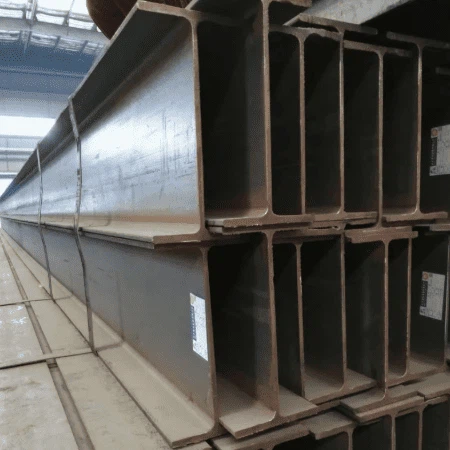
A36 H Beam
Although both types are widely used, their internal structure and performance differ significantly. Understanding these differences helps buyers choose the most suitable A36 H Beam for long-term structural reliability.
Structural Integrity of Hot Rolled A36 H Beam
Hot rolled A36 H Beam is formed in one continuous rolling process without welding seams, which ensures a highly uniform internal structure.
Key advantages include:
- No weak points caused by welding joints
- Consistent mechanical properties throughout the section
- Better load distribution across the beam
This makes hot rolled A36 H Beam the preferred choice for projects requiring high structural stability and safety.
Flexibility of Welded A36 H Beam
Welded A36 H Beam is manufactured by assembling steel plates into an H shape through welding. This production method provides greater flexibility in size and design.
Key features include:
- Customizable dimensions (especially large sizes)
- Suitable for non-standard engineering designs
- Adaptable to special structural requirements
- Welded A36 H Beam is ideal when standard sizes cannot meet project needs.
Residual Stress Control in A36 H Beam
Residual stress is an important factor affecting long-term performance.
- Hot rolled A36 H Beam → Lower residual stress due to uniform rolling
- Welded A36 H Beam → Higher residual stress due to thermal welding cycles
| Type | Residual Stress Level | Impact |
|---|---|---|
| Hot Rolled A36 H Beam | Low | Better dimensional stability |
| Welded A36 H Beam | Higher | Possible deformation risk |
Lower residual stress means better structural stability over time.
Fatigue Resistance of A36 H Beam
In dynamic load environments such as bridges or machinery structures, fatigue resistance is critical.
Hot rolled A36 H Beam has no weld seams → better fatigue performance
Welded A36 H Beam may develop fatigue cracks at weld joints if not properly controlled
For vibration or cyclic loading conditions, hot rolled A36 H Beam is more reliable.
Cost Efficiency of A36 H Beam
Cost is always a key decision factor in steel procurement.
| Type | Cost Level | Reason |
|---|---|---|
| Hot Rolled A36 H Beam | Lower | Mass production efficiency |
| Welded A36 H Beam | Higher | Additional fabrication processes |
For standard applications, hot rolled A36 H Beam provides better cost-performance ratio.
Application Suitability of A36 H Beam
Different project types require different beam solutions:
Hot Rolled A36 H Beam
- Building structures
- Industrial plants
- Warehouses
- General construction
Welded A36 H Beam
- Large-span structures
- Customized engineering projects
- Special design requirements
- Selecting the right type ensures both performance and cost optimization.
Both manufacturing methods have their advantages, but the choice depends on your project priorities:
- Choose hot rolled A36 H Beam for stability, durability, and cost efficiency
- Choose welded A36 H Beam for flexibility and custom sizing
In most standard structural applications, hot rolled A36 H Beam remains the more practical and reliable solution.
If you are looking for a reliable A36 H Beam supplier, choosing the right partner is just as important as choosing the right product. Stable quality, accurate dimensions, and consistent mechanical performance are critical to ensuring your project runs smoothly without delays or rework.
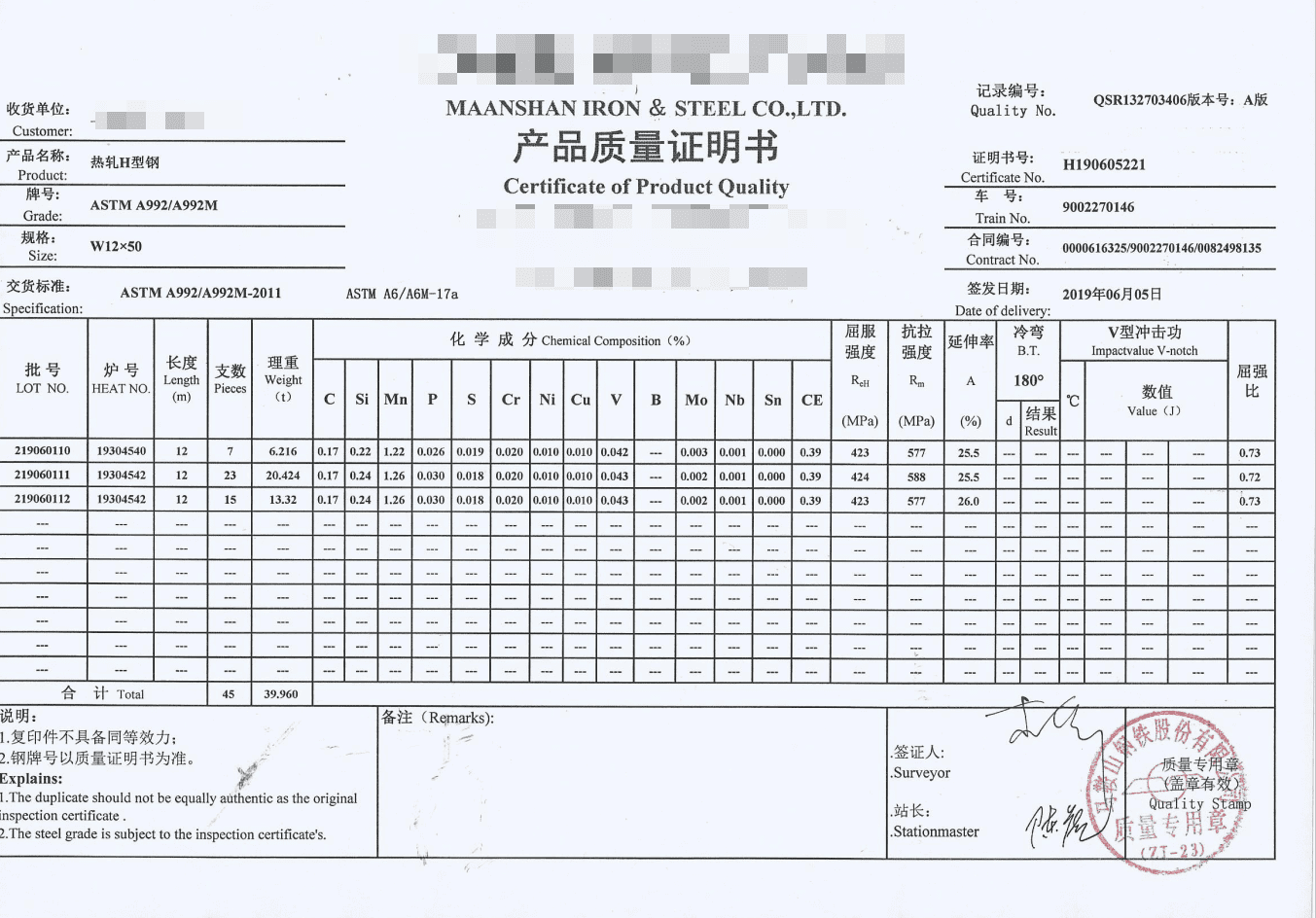
We specialize in supplying both hot rolled and welded A36 H Beam, covering a full range of standard sizes as well as customized solutions for large or complex structural projects. Whether your application requires high stability or flexible design, we can provide the most suitable option.
With strict quality control, fast production cycles, and global export experience, we help customers reduce procurement risks while improving overall project efficiency. Our team can also provide technical support to assist you in selecting the most cost-effective beam specification.
Contact now to get A36 H Beam Quote
Contact us today to get a competitive quote and professional support for your A36 H Beam requirements. Let us help you build stronger and more efficient structures.

What is A36 grade of steel?
A36 is a low carbon steel. Low carbon steels are classified by having less than 0.3% carbon by weight. This allows A36 steel to be easily machined, welded, and formed, making it extremely useful as a general-purpose steel. The low carbon also prevents heat treatment from having much of an effect on A36 steel.
Is A36 equivalent to SS400?
ASTM A36 is commonly considered equivalent to SS400 (a JIS G3101 standard) because it shares similar properties suitable for general structural use. Applications: Bridges, ships, vehicles, and other structural applications. Applications: Structural shapes, plates, and bars used in construction and fabrication.
What is the hardness of A36 in HB?
A36 steel hardness depends on the heat treatment. But it's usually around 119-162 Brinell hardness (HB).
What does A36 stand for?
A36 is designated by its mechanical properties instead of its chemical properties. In the American Society for Testing Materials (ASTM) system, the A stands for ferrous metal, while the 36 refers to its minimum yield strength of 36,000 PSI.
What is another name for A36 steel?
A36 is the most commonly used mild/hot-rolled steel. It is known as a mild carbon steel. A36 carbon steel's strength, formability, and excellent welding properties make it suitable for a large variety of applications, including welding, fabricating, and bending.