


Q355B steel is exceptionally versatile and serves as the default, high-quality structural steel for the vast majority of modern buildings and engineering structures. Its balanced properties of strength, weldability, and cost make it suitable for virtually all structural applications except those with the most extreme demands.
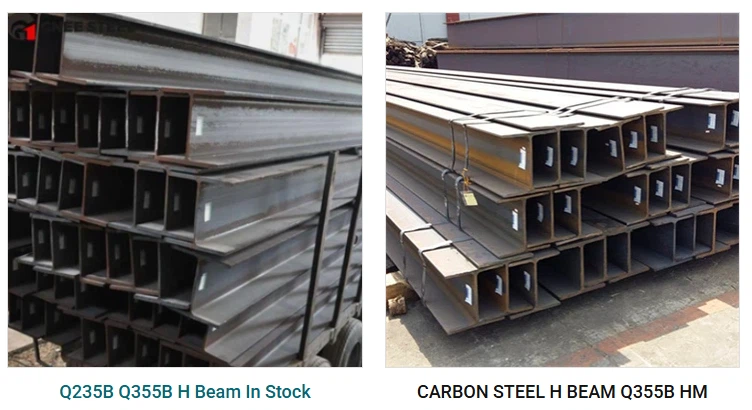
Here is a detailed categorization of the structures it is commonly used in:
1. Building Structures (Architecture & Construction)
High-Rise & Super-Tall Buildings:
Use: Primary load-bearing frames, including columns, core walls, and transfer girders in the lower to mid-level floors. It provides the necessary strength to support gravity loads and resist lateral wind forces.
Industrial Buildings & Warehouses:
Use: Portal frames, roof trusses, crane runways, and supporting columns. Its high strength allows for longer spans and supports heavy overhead cranes.
Commercial & Public Buildings:
Use: Shopping malls, airports, stadiums, convention centers. Used in long-span roof structures, atriums, and grandstand frames where strength and economy are critical.
Multi-Story Residential & Office Buildings:
Use: Composite steel-concrete beams, floor decks, and structural frames.
2. Bridge Engineering
Road and Railway Bridges:
Use: Main girders (plate girders, box girders), cross beams, bracing systems, and deck supporting members. It is the most common material for medium to long-span highway and railway bridges due to its excellent strength-to-weight ratio.
Pedestrian Bridges & Overpasses.
3. Heavy Machinery & Industrial Equipment
Construction Machinery: Frames and booms for excavators, cranes, and bulldozers.
Mining Equipment: Support structures for conveyors, crushers, and hoists.
Power Plant Structures: Boiler supports, turbine platforms, and heavy-duty pipe racks.
Material Handling: Frames for large gantry cranes, shipyard goliaths, and stacking machines.
4. Transportation Infrastructure
Transmission & Communication Towers: Lattice towers for power lines and telecommunication.
Lighting Masts & High-Mast Poles: For highways, stadiums, and ports.
Vehicle Chassis & Frames: For heavy-duty trucks, buses, and special transport vehicles.
5. Other Engineering Structures
Storage Tanks & Silos: For bulk solids and liquids (when designed per relevant pressure vessel/silo codes, though other grades may be preferred for critical weldments).
Supporting Structures: For conveyors, heavy industrial pipelines, and offshore platform topsides (non-splash zone).
Why Q355B is the "Go-To" Choice for These Structures:
Code Compliance: It is fully compliant and widely specified in all major design codes (e.g., Chinese GB 50017, European Eurocode 3, American AISC 360).
Economic Optimization: It offers the best balance between material cost and load-bearing capacity. Using a lower grade (Q235) would require more material; using a higher grade (Q460) often provides no economic benefit as design is often governed by stiffness/deflection, not strength.
Fabrication Friendly: Excellent weldability and formability simplify construction and reduce fabrication costs.
Reliable Supply: Produced globally in massive quantities, ensuring availability and price stability.
Limitations & When Not to Use Q355B
Despite its versatility, Q355B may be unsuitable or require supplemental testing for:
Extreme Low-Temperature Service: For structures operating consistently below -20°C (e.g., in arctic regions, LNG facilities), Q355D, Q355E, or specialized low-temperature steels are required for guaranteed toughness.
Seismic-Critical Moment Frames in High-Seismicity Zones: While often acceptable, some stringent seismic codes may require steels with higher toughness (like Q355C/D) or stricter quality control for plastic hinge zones.
Very Heavy-Walled, Highly Restrained Welded Connections: Where lamellar tearing is a risk, Q355B with Z-directional properties (Z15, Z25, Z35) must be specified.
Fatigue-Critical Details under Severe Cyclic Loading: While used in bridges, for extremely high-cycle fatigue applications, steels with better internal cleanliness and toughness (like Q355GJ or Q355q) might be specified.
Summary
Q355B is the standard, all-purpose structural steel suitable for the primary load-bearing systems in over 80-90% of modern steel structures, including skyscrapers, bridges, factories, and stadiums. Its selection is driven by a proven track record of safety, economy, and ease of construction. For the remaining 10-20% of applications involving extreme environments, exceptional loads, or specific durability requirements, engineers selectively upgrade to higher-performance grades within the same family (like Q355C/D/E) or to different steel categories altogether.