


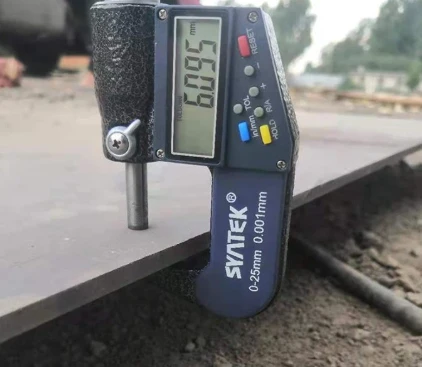
 P355QL1 is a quenched and tempered (QT) weldable fine-grain steel grade defined under the EN 10028-6 standard. It is specifically designed for use in pressure vessels, boilers, and industrial piping systems, offering excellent weldability and high resistance to brittle fracture.
Key Characteristics
Steel Number: 1.8868.
Designation: The "P" stands for pressure purposes, "355" refers to the minimum yield strength (in MPa), "Q" indicates the quenched and tempered heat treatment, and "L1" signifies high impact toughness at low temperatures down to -40°C.
Standardization: Complies with EN 10028-6 (flat products for pressure purposes) and EN 10222-4 (steel forgings for pressure purposes).
Weldability: It is highly weldable using standard processes (SMAW, GMAW, SAW). Preheating is generally not required unless working in temperatures below 5°C or with very thick sections.
Chemical Composition and Mechanical Property
| Grade | C% | SI% | Mn% | P% | S% | N% | B% | Cr% | Mo% | Cu% | Nb% | Ni% | Ti% | V% | Zr% |
| P355QL1 | 0.16 | 0.4 | 1.5 | 0.02 | 0.01 | 0. 015 | 0.005 | 0.3 | 0.25 | 0.3 | 0.05 | 0.5 | 0.03 | 0.06 | 0.05 |
| Steel Grade | Yield Strength, for product in mm, Mpa | Tensile Strength, Mpa | Elongation, %, min | ||||
| P355QL1 | t≤50 | 50<t≤100 | 100<t≤150 | t≤100 | 100<t≤150 | 22 | |
| 355 | 335 | 315 | 490-630 | 450-590 | |||
 Processing Characteristics of P355QL1
Mature Quenching and Tempering Process:
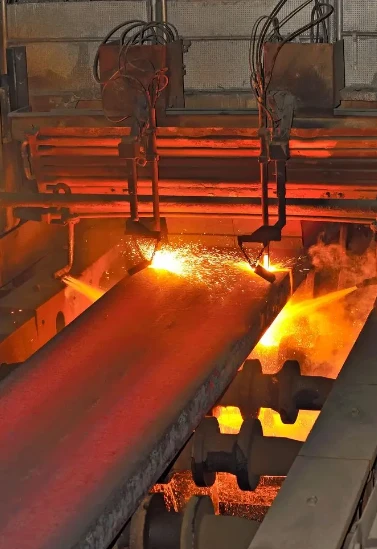
Adopts the core quenching and tempering process of "quenching + high-temperature tempering". The quenching temperature is controlled at 880-950℃, and the tempering temperature at 550-680℃. Through precise temperature control and holding time adjustment, the grain structure is refined, ensuring the steel obtains uniform strength-toughness matching. The yield strength stably reaches above 355MPa, while ensuring the -50℃ low-temperature impact toughness meets the standard.
Strong Compatibility in Forming Processing:
The hot forming temperature is suitable for 1100-1200℃. Within this range, the steel has excellent plasticity and can realize various forming operations such as bending, stamping, and rolling. Air cooling after forming can retain the core mechanical properties without additional heat treatment remediation, which is suitable for the processing of complex components such as large pressure vessels and pipelines.
Easy-to-Control Welding Process:
Preheating at 80-150℃ is required before welding according to the plate thickness (when >25mm). Common methods such as shielded metal arc welding and gas metal arc welding can be adopted. The grain growth in the heat-affected zone is controllable during welding. Post-weld stress relief heat treatment (if necessary) can reduce residual stress, avoid cold cracking, and the performance of the weld joint has high matching degree with the base material.
Excellent Machinability:
Due to its fine grains and uniform hardness (HB200-250), the tool wear during cutting is small. Turning, milling, drilling and other processing can be completed with conventional cutting parameters without special tools or complex process adjustments. The processing efficiency is high, and the surface roughness of the workpiece is easy to meet the standard.
Good Adaptability of Surface Treatment Process:
The steel surface is easy to carry out shot blasting derusting and phosphating treatment, and the adhesion of primer and topcoat is strong. Anti-corrosion coating processes can be matched according to application scenarios (such as oil and gas, chemical environments). After treatment, the corrosion resistance is significantly improved, extending the service life of components.
High Controllability in Production Process:
In the smelting stage, low phosphorus (≤0.025%) and low sulfur (≤0.010%) control are adopted, combined with microalloying elements such as niobium and vanadium to refine grains. The rolling process adopts controlled rolling and controlled cooling technology to ensure uniform performance in the thickness direction of the steel, no internal defects, and strong batch stability.
advantages
Excellent Low‑Temperature Toughness: As an L1 grade steel, P355QL1 maintains high impact resistance at temperatures down to -50°C, making it ideal for cold‑climate and cryogenic applications where brittle fracture must be avoided.
High Strength and Good Toughness Balance: With a minimum yield strength of 355 MPa, it provides strong load‑bearing capacity while retaining good ductility and toughness, ensuring reliable performance under high pressure and dynamic loads.
Superior Weldability: The steel's low carbon content and refined microstructure contribute to excellent weldability. It can be readily welded using common methods with appropriate preheating and post‑weld procedures, minimizing the risk of cracking.
Good Hardenability and Uniform Properties: Thanks to its chemical composition and quenched‑and‑tempered treatment, P355QL1 exhibits uniform hardness and strength across thick sections, ensuring consistent performance in large structures.
Enhanced Fatigue and Creep Resistance: Its fine‑grained structure improves resistance to fatigue and creep, making it suitable for long‑term operation in power plants and pressure vessels.
Wide Applicability: The combination of strength, toughness, and weldability allows P355QL1 to be used in diverse industries, including oil and gas, chemical processing, and power generation.
 applications
Pressure Vessels and Boilers: P355QL1 is extensively used in the fabrication of pressure vessels and boilers operating under severe conditions. Its ability to maintain toughness at temperatures as low as -50°C makes it suitable for equipment handling liquefied gases, refrigerants, and other substances that demand high reliability in cold environments.
Oil and Gas Industry: The material is commonly employed in the construction of storage tanks, separators, heat exchangers, and pipeline components for onshore and offshore oil and gas projects. Its combination of high yield strength and good impact resistance ensures structural integrity even in harsh offshore climates.
Chemical Processing Equipment: Due to its low carbon content and controlled impurities, P355QL1 is ideal for reactors, columns, and other chemical processing equipment that require resistance to stress corrosion and stable performance under varying temperatures and pressures.
Power Generation Systems: It is used in the manufacturing of components for thermal power plants, including boiler drums, headers, and pressure parts, where high-temperature strength and fatigue resistance are essential.
Cryogenic Equipment: P355QL1's low-temperature toughness (L1 grade) makes it a preferred choice for cryogenic storage tanks and transportation systems handling liquefied natural gas (LNG) and other cryogenic fluids.
Heavy Engineering and Structural Components: The steel is also utilized in heavy machinery, large-diameter pipes, and structural parts that require high strength and toughness, particularly in cold regions.
Full specification and details are available on request. The above information is provided for guidance purposes only. For specific design requirements please contact our technical sales staff.
Can P355QL1 be used in cold climates?
Yes, P355QL1 is well-suited for cold climates due to its excellent low-temperature toughness. It resists brittle fracture even at -20°C, making it ideal for outdoor equipment, storage tanks, and pipelines in regions with harsh winter conditions where other steels might fail.
How is P355QL1 inspected after fabrication?
After fabrication, P355QL1 components are inspected using methods such as ultrasonic testing, radiography, and magnetic particle inspection. These checks ensure that welds and material structure are free from defects. Visual inspection and dimensional checks are also performed to meet quality standards.
What are the advantages of using P355QL1 in pressure vessels?
P355QL1 offers high strength, good toughness, and excellent weldability, making it ideal for pressure vessels. Its low-temperature performance ensures safety in cold environments, while its fine-grained structure provides consistent mechanical properties. It also allows for lighter designs compared to standard carbon steel.
What are the storage requirements for P355QL1 plates?
P355QL1 plates should be stored in a dry, covered area to prevent moisture and corrosion. They should be elevated off the ground and protected from contaminants. Proper labeling and documentation ensure traceability, which is essential for compliance with industry standards and quality control.
What is the typical delivery condition of P355QL1?
P355QL1 is usually delivered in the normalized or normalized and tempered condition, which refines its microstructure and optimizes strength and toughness. The delivery condition is specified by the manufacturer and must comply with EN 10028-3 to ensure consistent performance in critical applications.
Why is P355QL1 preferred for offshore applications?
P355QL1 is preferred for offshore applications due to its high strength, good toughness, and resistance to low temperatures. It can withstand harsh marine environments and cyclic loading, making it suitable for platforms, pipelines, and storage tanks. Its weldability also simplifies fabrication in remote locations.
What is the difference between P355QL1 and P355QL2?
The main difference lies in their impact test temperatures. P355QL1 is tested at -20°C, while P355QL2 is tested at -40°C, offering higher toughness at lower temperatures. Both have similar strength levels, but QL2 is preferred for extremely cold environments.
Can P355QL1 be heat treated?
P355QL1 is typically supplied in the normalized or normalized and tempered condition, which optimizes its strength and toughness. Further heat treatment is not usually required, but stress relief annealing may be applied to reduce welding stresses in thick sections or critical applications.
What is the fatigue resistance of P355QL1?
P355QL1 has good fatigue resistance due to its fine-grained microstructure and controlled impurities. It can withstand cyclic loading in applications such as pressure vessels and pipelines, but design must consider stress concentrations and weld quality to ensure long-term durability under repeated stress.
Is P355QL1 resistant to corrosion?
P355QL1 has moderate corrosion resistance, similar to other low-alloy steels. For harsh environments, it may require protective coatings such as paint, epoxy, or galvanization. In corrosive industries like chemical processing, additional measures ensure long-term durability and safety.