


The effective use of S690QL1 high-strength steel in construction is exceedingly rare and highly specialized. Its application is not in conventional building frames, bridges, or general structures. Instead, it is reserved for extreme, niche scenarios within the construction and heavy engineering industry where three non-negotiable conditions converge: 1) Extreme low-temperature service, 2) Ultra-high strength requirements, and 3) Severe weight constraints.
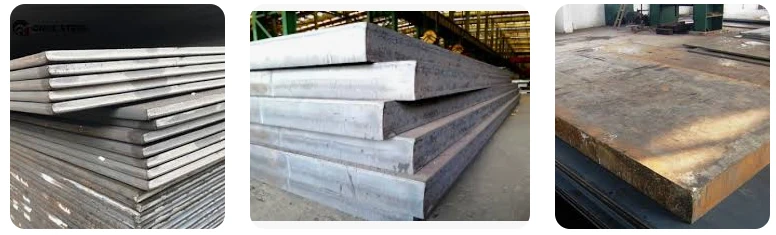
Here are its effective use cases, framed by the core problems it solves:
1. Critical Components in Arctic & Offshore Construction Equipment
This is the primary domain where S690QL1's -60°C toughness is indispensable.
Problem: Operating heavy cranes, piling rigs, or installation vessels in the Arctic, North Sea, or Antarctic where ambient temperatures drop below -40°C and steel is subjected to dynamic, high-impact loads. Standard high-strength steels risk brittle fracture.
Effective Use:
Lattice boom chords and critical pins on offshore construction cranes mounted on vessels or platforms.
Hammer components and leader systems for piling rigs operating in freezing environments.
Heavy-lift attachments (e.g., spreader bars, shackles) used in polar region logistics.
Why S690QL1? It uniquely provides the 690 MPa yield strength needed for high capacity, combined with guaranteed toughness at -60°C to prevent catastrophic brittle fracture in the coldest conditions.
2. Specialized Elements for Fixed Offshore Structures in Polar Regions
For the construction (fabrication) of installations meant to operate in extreme cold.
Problem: Fabricating lift points, padeyes, and heavy module supports for offshore platforms (oil/gas or wind) destined for Arctic service. These components are welded, thick, and subject to high stress during installation lifts.
Effective Use: These temporary but safety-critical lifting accessories are fabricated from S690QL1. They must be as light as possible to not penalize the lift, yet absolutely reliable at the lowest possible site temperatures during installation.
Why S690QL1? Its high strength minimizes the weight of the lifting gear itself, while its -60°C toughness ensures it won't fail during a critical lift in freezing conditions.
3. Advanced Military & Research Infrastructure in Polar Zones
Problem: Constructing mobile launching platforms, radar installations, or heavy shelter frames in Antarctica or high Arctic regions. Materials must withstand extreme cold, high winds, and be transportable with minimal weight.
Effective Use: Key load-bearing members in these specialized structures where reducing airlift or sled-transport weight is mission-critical, and material failure is not an option.
Why S690QL1? It offers the highest possible strength-to-weight ratio with certified performance at polar temperatures.
What S690QL1 is NOT Effectively Used For (The Misapplications)
Any building, bridge, or civil infrastructure project, even in cold climates. (Overkill; S355 or S460 grades are far more cost-effective and suitable).
General components of earth-moving equipment. (S690QL is sufficient for most cold-weather machinery).
Applications where design temperatures are warmer than -40°C. (S690QL is the correct, more economical choice).
The Decision Framework: Justifying S690QL1
Selecting S690QL1 is only justified after answering YES to all of the following:
Is the structure/component's DESIGN TEMPERATURE at or below -40°C, potentially reaching -60°C? (This is the primary driver).
Is the design strength-limited and weight-critical? (Does it require ~690 MPa yield strength to meet load demands within strict geometric/weight limits?).
Is the component subject to dynamic or impact loading? (Static loads in the cold are less critical).
Does the consequence of failure justify the 20-30%+ cost premium over S690QL? (i.e., risk to life, environmental disaster, loss of a multi-million dollar vessel).
Is there a fabricator with certified expertise in welding and handling Q&T steels at this strength and with strict low-temperature procedure qualifications?
The Fabrication Reality: A Major Constraint
The effective use of S690QL1 is entirely dependent on perfect, controlled fabrication:
Cutting: Only cold cutting (waterjet, machining). Thermal cutting is strictly prohibited.
Welding: Requires matching ultra-high-strength consumables, exacting pre/post-heat, extremely low heat input, and mandatory Post-Weld Heat Treatment (PWHT) to restore HAZ toughness.
Inspection: Demands extensive NDT and often CTOD testing at -60°C to validate fracture toughness.
Conclusion: A Material for the Coldest Frontiers
The effective use of S690QL1 in construction is limited to enabling the safest possible execution of the heaviest, most critical lifts and operations in the world's coldest industrial environments. It is a risk-mitigation material selected not for routine efficiency, but for absolute assurance of integrity under the most extreme thermal and mechanical stresses imaginable.
Its value proposition is not economic; it is one of survivability and reliability at the thermodynamic limits of structural steel performance. For 99.99% of construction, it is irrelevant. For the critical 0.01% of work at the polar extremes, it can be the only technically correct choice.