


P500QL1 is a high-strength, quenched and tempered (Q+T), weldable fine-grain steel grade designed for pressure purposes. It is defined under the European standard EN 10028-6.
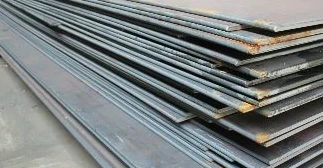
Chemical Composition and Mechanical Property
| Grade | C% | SI% | Mn% | P% | S% | N% | B% | Cr% | Mo% | Cu% | Nb% | Ni% | Ti% | V% | Zr% |
| P500QL1 | 0.18 | 0.6 | 1.7 | 0.02 | 0.01 | 0. 015 | 0.005 | 1 | 0.7 | 0.3 | 0.05 | 1.5 | 0.05 | 0.08 | 0.15 |
| Steel Grade | Yield Strength, for product in mm, Mpa | Tensile Strength, Mpa | Elongation, %, min | ||||
| P500QL1 | t≤50 | 50<t≤100 | 100<t≤150 | t≤100 | 100<t≤150 | 17 | |
| 500 | 480 | 440 | 590-770 | 540-720 | |||
 Core Application Fields
Industrial Automation & Control Systems: Widely used in assembly line control, equipment monitoring and process regulation, P500QL1 stably processes real-time device data, supporting intelligent production in automotive, electronics and machinery industries.
Power Electronics & Energy Management: Key in power conversion, distribution and quality monitoring, it applies to new energy converters, energy storage systems and power grid monitoring, ensuring power stability.
Transportation & Vehicle Electronics: Suitable for on-board ECUs, safety and infotainment systems, it resists harsh vehicle environments. Also used in rail transit control and monitoring to improve safety and efficiency.
Medical Equipment: Applied in monitors, diagnostic and treatment devices, it accurately processes patient data. Its high reliability and low power consumption fit portable medical equipment.
Communication Infrastructure: Used in 5G base stations, switches and routers, it processes large communication data stably, supporting high-speed network construction.
Consumer Electronics & Smart Home: Provides core processing for smart TVs, wearables and home controllers, supporting multi-tasks and HD video decoding to enhance user experience.
Industrial Automation & Control Systems: Widely used in assembly line control, equipment monitoring and process regulation, it stably processes real-time device data, supporting intelligent production in auto, electronics and machinery industries.
Power Electronics & Energy Management: Key in power conversion, distribution and quality monitoring, it applies to new energy converters, energy storage and power grid monitoring, ensuring power safety and stability.
Transportation & Vehicle Electronics: Suitable for on-board ECUs, safety and infotainment systems, it resists harsh vehicle environments. Also used in rail transit to improve operation safety and efficiency.
Medical Equipment: Applied in high-precision monitors, diagnostic and treatment devices, it accurately processes patient data. Its high reliability and low power consumption fit portable medical devices.
Communication Infrastructure: Used in 5G base stations, switches and routers, it stably processes large communication data, supporting high-speed network construction and smooth transmission.
Consumer Electronics & Smart Home: Provides core processing for smart TVs, wearables and home controllers, supporting multi-tasks and HD video decoding to enhance user experience.
Application Conditions of P500QL1 Steel
• P500QL1 steel is typically applied under conditions requiring high strength and good toughness, especially in low‑temperature environments where impact resistance is critical.
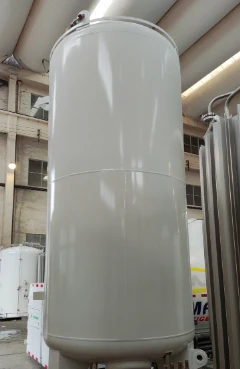
• It is used in pressure‑bearing structures operating at temperatures ranging from ambient down to approximately –50°C, depending on the specific certification and thickness of the material.
• The steel is suitable for applications involving high internal or external pressures, such as pressure vessels, storage tanks, and pipeline components.• It is commonly employed in environments where weldability is a key requirement, including offshore platforms, refineries, and chemical processing plants.
• P500QL1 is used under conditions that demand excellent fatigue resistance and structural integrity over long service lives, such as in power generation equipment and heavy machinery.
• It is applied in scenarios where strict quality control and compliance with European standards (EN 10028‑6) are necessary to ensure safety and reliability.
• The material is often utilized in projects requiring quenched and tempered delivery conditions to achieve optimal mechanical properties.
• It is suitable for use in both indoor and outdoor environments, including harsh industrial settings with exposure to corrosive substances, though additional protection may be required.
 processing
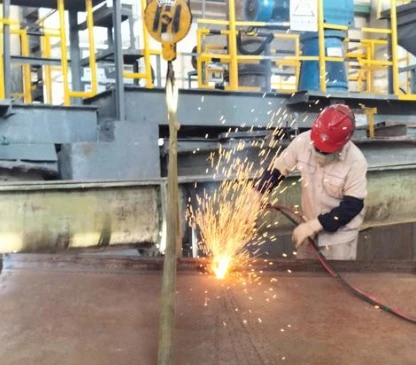
Cutting: P500QL1 can be cut using flame, plasma, or laser methods. Laser cutting is preferred for its precision and minimal heat‑affected zone, which helps maintain the material's mechanical properties. Flame cutting is suitable for thicker plates but requires careful control of heat input to avoid excessive grain growth.
Forming: The steel exhibits good formability, allowing it to be bent, rolled, and pressed into various shapes. Cold forming is typically used for moderate bends, while hot forming may be required for more complex geometries to reduce springback and improve dimensional accuracy.
Welding: P500QL1 has excellent weldability, compatible with common processes such as SMAW, GMAW, FCAW, and SAW. Preheating is often recommended for thicker sections to minimize the risk of hydrogen‑induced cracking. Proper interpass temperature control and post‑weld heat treatment can further enhance joint strength and toughness.
Machining: The material can be machined using standard tools, though its higher strength may require harder cutting edges and slower speeds compared to mild steel. Coolant is recommended to reduce heat buildup and improve tool life.
Heat Treatment: While P500QL1 is often used in the as‑delivered condition, heat treatment processes such as quenching and tempering can be applied to adjust hardness and toughness for specific applications. Careful control of temperature and cooling rates is essential to achieve consistent results.
Surface Treatment: To improve corrosion resistance, P500QL1 can be painted, galvanized, or coated with protective layers. Shot blasting is commonly used to remove scale and prepare the surface for coating, ensuring better adhesion and longer service life.
Get an valued quotation for P500QL1, Contact GNEE Steel.
What is P500QL1 steel used for?
P500QL1 is a high-strength, quenched and tempered structural steel plate primarily used in heavy engineering applications requiring excellent toughness and weldability. It is commonly employed in the construction of large cranes, offshore structures, pressure vessels, and mining equipment where reliability under dynamic loads is essential. Its low-temperature impact resistance makes it suitable for harsh environments.
How does P500QL1 achieve its high strength?
P500QL1 achieves high strength through a quenching and tempering process. After heating to the austenitizing temperature, the steel is rapidly cooled to form martensite, then tempered at a lower temperature to reduce brittleness while retaining strength. This microstructure gives the material its combination of high yield strength, toughness, and fatigue resistance.
What preheating is needed for P500QL1 welding?
Preheating requirements for P500QL1 depend on plate thickness, welding method, and ambient conditions. Typically, plates thicker than 25 mm require preheating to 80–150°C. Thicker sections or cold environments may need higher temperatures. Preheating reduces cooling rates, minimizes hardness in the heat-affected zone, and helps prevent cracking.
Can P500QL1 be used in cold environments?
Yes, P500QL1 is suitable for low-temperature service due to its improved toughness. The "L1" designation indicates good impact resistance at -40°C. This makes it ideal for Arctic offshore structures, cold-region construction, and equipment operating in harsh winter conditions where brittle fracture must be avoided.
What is the typical hardness of P500QL1?
P500QL1 usually has a hardness range of 180–230 HB after quenching and tempering. This level of hardness provides a good balance between strength and toughness, ensuring the material can withstand high loads without becoming brittle. Hardness testing is often performed to verify the effectiveness of the heat treatment process.
What is the fatigue resistance of P500QL1?
P500QL1 exhibits good fatigue resistance due to its fine-grained microstructure and high tensile strength. It can withstand repeated loading cycles typical in crane booms, bridges, and offshore equipment. Proper welding and post-weld treatment are essential to maximize fatigue performance by minimizing stress concentrations and defects.
What surface treatments are applied to P500QL1?
Common surface treatments for P500QL1 include shot blasting to remove scale and contaminants, followed by priming to prevent corrosion during storage and transportation. In corrosive environments, additional coatings such as epoxy or polyurethane may be applied. For offshore use, cathodic protection is often used in combination with coatings.
What is the maximum thickness available for P500QL1?
P500QL1 is commonly produced in thicknesses from 6 mm up to around 150 mm, depending on the manufacturer's capabilities. Thicker plates may require special quenching techniques to ensure uniform through-thickness properties. For critical applications, ultrasonic testing is often conducted to detect internal defects.
Is P500QL1 suitable for welding?
Yes, P500QL1 has excellent weldability due to its low carbon equivalent and controlled chemical composition. Preheating is often recommended to prevent hydrogen-induced cracking, especially in thick plates. Common welding methods such as SMAW, GMAW, FCAW, and SAW can be used successfully, provided proper procedures and post-weld heat treatment are followed.
What are the key mechanical properties of P500QL1?
P500QL1 typically exhibits a minimum yield strength of 500 MPa and a tensile strength between 620–720 MPa. It maintains good ductility with an elongation of around 16–20% and excellent toughness, especially at sub-zero temperatures. The steel also shows high fatigue resistance and good creep performance, making it ideal for heavy-duty structural components subjected to long-term stress.