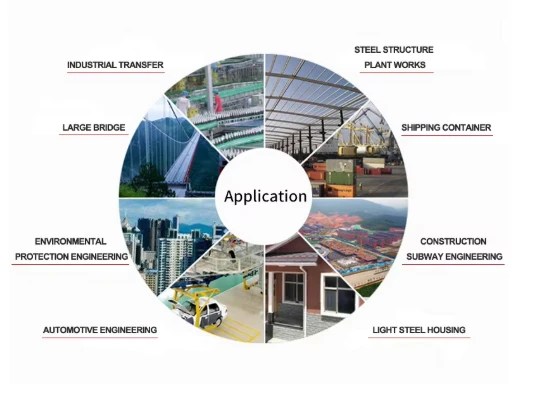
AR500 high-strength wear-resistant steel plate, designed specifically for harsh working conditions, is widely used in various industries due to its unique combination of properties.
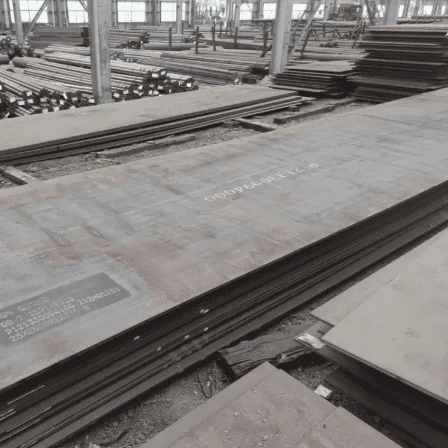
AR500 wear-resistant steel plate is a high-strength alloy steel plate processed through quenching and tempering. The "AR" in its name stands for wear resistance, and "500" roughly indicates its Brinell hardness value.
The core characteristic of this material is its excellent surface hardness while maintaining high toughness, thus resisting various forms of wear.
Performance Advantages
1. Excellent Wear Resistance: This is the most significant advantage of AR500 wear-resistant steel plate. Its high-hardness surface effectively resists cutting, gouging, and impact wear. Under the same working conditions, compared with ordinary steel, AR500 plate has a significantly longer service life, thereby reducing equipment downtime and replacement frequency, and lowering long-term maintenance costs.
2. Good Impact Toughness: Despite its high hardness, AR500 plate is not a brittle material. Thanks to its specific chemical composition and heat treatment process, AR500 steel retains sufficient toughness despite its high hardness, enabling it to withstand a certain degree of impact load without shattering or breaking. This is crucial for applications requiring resistance to material drops or equipment collisions.
3. High Strength: AR500 steel plates possess high yield strength and tensile strength, making components less prone to plastic deformation under heavy loads, ensuring the overall stability and reliability of the equipment structure.
4. Machinability: Despite its high hardness, AR500 steel plates can still be cut, bent, and welded to a certain extent. Using appropriate processes (such as preheating, specific welding materials, and techniques), it can be manufactured to meet the shape requirements of different equipment components. However, its processing is more difficult than that of ordinary mild steel, requiring specialized equipment and technology.
5. Economic Efficiency: From a life-cycle cost perspective, although the initial purchase cost of AR500 steel plates is higher than that of ordinary steel, its long service life significantly reduces labor costs for replacing parts, production losses due to equipment downtime, and the cost of frequently purchasing new materials. In the long run, its overall economic benefits are significant.
Main Application Areas
1. Mining and Quarrying Industry: This is one of the most widely used sectors. Specifically used for:
* Mining dump truck bodies: Withstanding the impact of loading ore and rock, and frictional wear during transportation.
* Crusher liners and jaw plates: In direct contact with hard ore, withstanding intense impact and abrasion.
* Chutes, hoppers, and liners: Guiding ore and gravel, withstanding the scouring and wear of continuously sliding materials.
* Screening equipment components: Such as the screen plates and liners of vibrating screens.
2. Building Materials and Cement Industry:
* Liners for conveying equipment for raw materials, clinker, and pulverized coal in cement production, such as pipes, elbows, and separator liners.
* Mixer blades and liners, withstanding friction from concrete aggregates.
* Fan blades, used to resist particle scouring when treating dusty exhaust gases.
3. Metallurgical Industry:
* Liners for raw material conveying systems in ironmaking and steelmaking processes, such as silos, feeders, and weighing hoppers. * Components of crushing and screening equipment for sintered ore and pelletized ore.
* Grab buckets and breaker liners in scrap steel recycling equipment.
4. Power and Coal Industry:
* Coal processing systems in thermal power plants, including coal crushers, internal linings of coal mills, coal conveyor troughs, and coal hopper liners.
* Heavy media separators, screw conveyor blades and linings in coal washing and beneficiation equipment.
* Critical wear parts of fly ash and pneumatic conveying pipelines.
5. Construction Machinery and Vehicles:
* Bucket cutting edges, bucket teeth, and side cutting edges of excavators and loaders.
* Bulldozer blades and ripper teeth.
* Mixing drum blades and liners of concrete mixer trucks.
* Garbage compression liner of sanitation vehicles.
6. Other Industrial Sectors:
* Easily worn parts of complete sets of equipment in sand and gravel aggregate production lines.
* Contact parts of material handling equipment at ports and wharves.
* Vulnerable parts in agricultural machinery that come into contact with soil, grains, and feed.
What information should be considered when choosing AR500?
 1. Wear type analysis: Determine whether the wear is primarily high-stress impact wear, low-stress sliding abrasive wear, or a combination of both. AR500 is more suitable for conditions with strong impact wear.
2. Impact load assessment: Although AR500 has good toughness, for extremely severe impacts, it may be necessary to evaluate or select a grade with superior toughness.
3. Processing and welding requirements: Develop diverse and strict processing and welding specifications, operated by experienced personnel, to prevent defects such as cracks and ensure component performance.
4. Cost-benefit trade-off: Compare the initial material cost, processing cost, and expected service life benefits to make an economically reasonable
choice. For areas with extremely severe wear, its replacement value is often very significant.
AR500 high-strength wear-resistant steel plate is an engineering material that performs excellently in harsh wear environments. Through its balance of high hardness, good toughness, and strength, it provides a reliable solution for critical wear components of many industrial equipment, effectively extending equipment life and improving the continuity and economy of production operations.
In practical applications, only by selecting appropriate materials based on specific working conditions and cooperating with standardized processing and manufacturing can its performance advantages be fully realized.