


SA514 Grade F is a high-yield strength, quenched and tempered alloy steel plate known for its exceptional strength (min 100 ksi yield), toughness, and good weldability, used in heavy-duty structural applications like construction equipment, truck frames, and crane booms, featuring specific alloying elements for enhanced performance and available in various thicknesses.
Key Characteristics
Type: High-Strength Low-Alloy (HSLA) Quenched and Tempered Steel Plate.
Yield Strength: Minimum 100 ksi (690 MPa) for plates up to 2.5 inches thick.
Tensile Strength: Typically 110-130 ksi (760-895 MPa).
Toughness: Excellent low-temperature toughness, often with supplemental Charpy V-notch testing.
Weldability: Good, suitable for demanding structural applications.
Alloying Elements: Contains Nickel, Chromium, Molybdenum, Vanadium, and Copper for strength and properties.
Availability & Standards
Governed by ASTM A514/ASME SA514 specifications, with Grade F being one of several options.
Supplied as plates, often in thicknesses from around 0.185" up to 2.5" (or more depending on thickness), with wider and longer dimensions available.
Chemical composition of Heat analysis for SA514 Grade F quenched and tempered steel plate (Max %)
|
Steel Grade |
The Main Elements in rolling SA514Gr.F high strength steel plate |
|||||||
|
C |
Si |
Mn |
P |
S |
N |
B |
||
|
SA514GrF |
0.10-0.20 |
0.15-0.35 |
0.60-1.00 |
0.035 |
0.035 |
0.0005-0.0006 |
||
|
Cr |
Mo |
Cu |
Nb |
Ni |
Ti |
V |
Zr |
|
|
0.40-0.65 |
0.40-0.60 |
0.15-0.50 |
- |
0.70-1.00 |
- |
0.03-0.08 |
- |
|
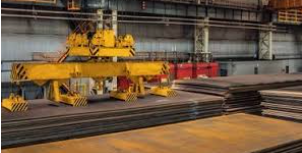
SA514 Grade F (also marketed under the tradename "T-1 Type F") is a high-strength, quenched and tempered alloy steel plate designed for highly stressed structural applications where a combination of extreme strength (100 ksi yield), excellent toughness, and good weldability is critical.
Its primary use is in components where reducing weight without sacrificing structural integrity is paramount. Here are its key applications:
Primary Industries & Applications:
1. Heavy Construction & Mobile Equipment
Crane Booms and Jibs: The #1 application. Its high strength-to-weight ratio allows for longer reach and greater lifting capacity without prohibitive weight.
Mining & Excavation Equipment: Arms, sticks, and frames for shovels, excavators, and hydraulic mining shovels.
Heavy Haul Truck Frames and Chassis (e.g., for large dump trucks in mining).
2. Material Handling & Logging
Heavy-Duty Forklift Masts and Forks.
Logging Equipment such as grapple arms and loader booms.
3. Energy Infrastructure
Wind Turbine Towers: For the high-stress "can" sections near the base of the tower, where loads are greatest.
Specialized components in hydroelectric and power transmission structures.
4. Transportation & Defense
Military Vehicle Components: Armor support structures, vehicle frames, and components requiring high ballistic resistance without the full weight of armor plate.
Trailer Frames for transporting extremely heavy loads.
5. General Heavy Fabrication
Bases and frames for large presses and industrial machinery.
Support structures in high-load environments like shipbuilding and offshore platforms.
Why SA514 Grade F is Chosen for These Uses:
High Strength-to-Weight Ratio: 100 ksi (690 MPa) minimum yield strength allows for lighter, stronger designs compared to using thicker sections of mild steel (like A36).
Excellent Toughness: It maintains good impact resistance (Charpy V-notch values) at low temperatures, crucial for equipment operating in various climates.
Good Weldability (with proper procedure): Despite its high strength, it can be reliably welded using low-hydrogen processes with preheat and controlled heat input.
Important Distinction: What It Is NOT Used For
It is NOT an abrasion-resistant (AR) plate like AR400 or AR500. Its primary purpose is structural support, not resisting sliding wear. For wear surfaces, dedicated AR plates are used, sometimes in combination with SA514 Grade F for the underlying structure.
It is NOT a general-purpose steel. Its high cost and specialized fabrication requirements make it unsuitable for standard construction.
In summary, SA514 Grade F is the "high-performance alloy" of structural steel plates, reserved for the most demanding applications in heavy machinery and infrastructure where maximizing strength while minimizing weight is the overriding engineering goal.
1. What Is SA514 Grade F Steel?
SA514 Grade F is a high-strength, quenched and tempered alloy steel plate used primarily in structural applications requiring extreme toughness and high yield strength, such as crane booms and mining equipment.
2. What Is The Yield Strength Of SA514 Grade F?
SA514 Grade F has a minimum yield strength of 100 ksi (690 MPa) for thicknesses up to 2.5 inches (63.5 mm). For thicker plates, the minimum yield strength decreases.
3. Is SA514 Grade F Weldable?
Yes, SA514 Grade F can be welded, but it requires strict control procedures due to its high hardenability. Preheating, low-hydrogen electrodes, and controlled heat input are mandatory to prevent hydrogen-induced cracking and maintain properties in the heat-affected zone (HAZ).
4. What Is SA514 Grade F Used For?
It is used in highly stressed structural components like crane booms, truck frames for heavy haulers, mining shovel arms, wind turbine towers (high-stress sections), and support structures in military vehicles and heavy machinery.
5. What Is The Difference Between SA514 And AR500 Steel?
SA514 Grade F is a through-hardened, quenched and tempered structural steel designed for load-bearing components. AR500 is an abrasion-resistant steel with a hard, wear-resistant surface, primarily used for liners in mining and material handling, not for primary structural support.
6. What Is The Chemical Composition Of SA514 Grade F?
Its typical composition includes Carbon (~0.15%), Manganese (~0.95%), Silicon (~0.55%), Chromium (~0.85%), Molybdenum (~0.55%), Vanadium (~0.08%), and Boron (0.001-0.005%) to achieve its high strength and hardenability.
7. What Is The Hardness Of SA514 Grade F?
The typical Brinell hardness range for SA514 Grade F is 235-293 HBW (approximately 22-30 HRC). This balances high strength with good toughness.
8. Can SA514 Grade F Be Machined?
Yes, but with difficulty. It is a very hard, strong steel that requires robust machinery, rigid setups, appropriate cutting tools (grade and geometry), ample cooling, and lower speeds/feeds compared to mild steels.
9. What Is The Equivalent Of SA514 Grade F In Europe?
There is no direct, identical European equivalent. The closest grades in terms of high strength and quenched & tempered condition are S690QL (EN 10025-6) or possibly Hardox 600 for wear applications, though their chemistries and exact properties differ.
10. How Does SA514 Grade F Compare To T1 Steel (A514)?
SA514 Grade F is T1 steel. "A514" is the ASTM designation for structural steel, and "SA514" is the ASME code designation for the same material. Grade F is one of the specific sub-grades under this specification.
Full specification and details are available on request. The above information is provided for guidance purposes only. For specific design requirements please contact our technical sales staff.
