


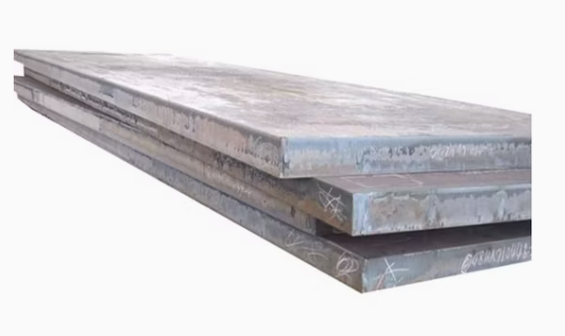
ASTM A537 Class 2 is a high-strength, quenched, and tempered carbon-manganese-silicon steel plate primarily used for fusion-welded pressure vessels and structures. Its superior yield and tensile strength make it a standard choice for industries operating under high pressure and variable temperature conditions.
Mechanical Properties
|
Grade |
Yield strength |
Tensile strength |
Elongation in 2" |
|---|---|---|---|
|
A537 Class 2 |
60 |
80 - 100 |
22 |
Chemical Composition
|
C |
Mn 1) |
P 2) |
S 2) |
Si |
Cu |
Ni 1) |
Cr |
Mo |
|---|---|---|---|---|---|---|---|---|
|
0.24 |
1.60 |
0.020 |
0.010 |
0.50 |
0.35 |
0.25 |
0.25 |
0.080 |
Carbon Equivalent
|
Thickness (in) |
0.375 - 2.00 |
|---|---|
|
Typical CET (wt %) |
0.33 |
|
Typical CEV (wt %) |
0.45 |
Formability properties
|
Thickness(in. [mm]) |
Bend Axis Perpendicular to Rolling Direction Inside Radius, R (min.) |
Bend Axis Perpendicular to Rolling Direction Die Width, W (min.) |
Bend Axis Parallel to Rolling Direction Inside Radius, R (min.) |
Bend Axis Parallel to Rolling Direction Die Width, W (min.) |
|---|---|---|---|---|
|
0.375 – 1.00 [9.5 – 25.4] |
1.5t |
8t |
2.25t |
10t |
|
1.00 – 2.00 [25.4 – 50.1] |
2.0t |
8t |
3.0t |
10t |
Weldability
|
Welding process |
Thickness(in. [mm]) |
Minimum Preheat and Interpass Temperature (°F [°C]) |
Consumables |
|---|---|---|---|
|
Shielded Metal Arc (SMAW) |
≤3/4 [≤19] |
50 [10] |
AWS E7015-X, E7016-X, E7018-X |
|
Shielded Metal Arc (SMAW) |
>3/4 – 1.5 [19 – 38] |
50 [10] |
AWS E7015-X, E7016-X, E7018-X |
|
Shielded Metal Arc (SMAW) |
>1.50 – 2.00 [>38 – 50] |
150 [65] |
AWS E7015-X, E7016-X, E7018-X |
|
Gas Metal Arc (GMAW) |
≤3/4 [≤19] |
50 [10] |
AWS ER70S-X |
|
Gas Metal Arc (GMAW) |
>3/4 – 1.5 [19 – 38] |
50 [10] |
AWS ER70S-X |
|
Gas Metal Arc (GMAW) |
>1.50 – 2.00 [>38 – 50] |
150 [65] |
AWS ER70S-X |
|
Submerged Arc (SAW) |
≤3/4 [≤19] |
50 [10] |
AWS F7XX-EXXX-XX |
|
Submerged Arc (SAW) |
>3/4 – 1.5 [19 – 38] |
50 [10] |
AWS F7XX-EXXX-XX |
|
Submerged Arc (SAW) |
>1.50 – 2.00 [>38 – 50] |
150 [65] |
AWS F7XX-EXXX-XX |
|
Flux Cored Arc (FCAW) |
≤3/4 [≤19] |
50 [10] |
AWS E7XTX-X |
|
Flux Cored Arc (FCAW) |
>3/4 – 1.5 [19 – 38] |
50 [10] |
AWS E7XTX-X |
|
Flux Cored Arc (FCAW) |
>1.50 – 2.00 [>38 – 50] |
150 [65] |
AWS E7XTX-X |
Processes for A537 Class 2 Steel
Quenching and Tempering (Q&T) Process:
A537 Class 2 undergoes mandatory quenching and tempering. First, it is austenitized at a controlled temperature, then rapidly quenched to form a martensitic structure. Followed by tempering at 595-650°C (1100-1200°F) to improve toughness and reduce residual stress.
Charpy V-Notch Impact Testing Process:
For low-temperature toughness verification, tests are conducted at -29°C (-20°F). Specimens are prepared as per ASTM standards, then impacted by a pendulum. The minimum required impact energy is 27 J (20 ft-lb) per specimen to prevent brittle fracture.
Welding Process:
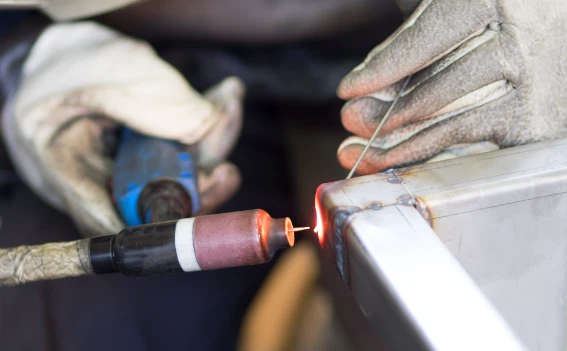
Common methods include SMAW, GMAW, FCAW and SAW. Preheating is recommended to avoid cold cracking, and post-weld heat treatment (PWHT) is performed after welding to ensure uniform mechanical properties in the weld zone.
Surface Treatment Process:
Hot-rolled plates are pickled to remove scale, then oiled to protect against rust. This provides a clean surface for subsequent processing like welding and coating.
Mechanical Testing Process:
Besides impact testing, tensile, hardness and bend tests are conducted. Tensile tests verify strength (485-620 MPa), while hardness tests check heat treatment effectiveness.
Applications
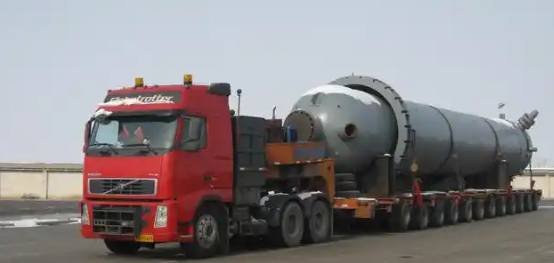
Pressure Vessel Manufacturing: Core application field, including key equipment like oil and gas storage tanks, boiler pressure components, and petrochemical reactors, which require reliable medium temperature and pressure resistance.
Offshore Engineering: Widely used in offshore platform pressure systems, adapting to harsh offshore working environments with its excellent toughness and strength.
Fluid Transport: Applied in high-pressure fluid transport pipelines, ensuring safe delivery of industrial fluids under medium temperature and pressure conditions.
Industrial Pressure Containers: Suitable for manufacturing industrial pressure containers that need to withstand medium temperature and pressure, meeting the core operational needs of related industrial scenarios.
Application Conditions
Temperature Conditions: Suitable for moderate-temperature service. The maximum safe operating temperature is 343°C (650°F), and the minimum service temperature is -29°C (-20°F). Beyond this range, its strength and toughness will degrade, which may affect operational safety.
Environmental Conditions: Adaptable to mild industrial environments. In harsh corrosive scenarios (e.g., marine, chemical industries), anti-corrosion measures such as coating or galvanizing must be taken to prevent rust and extend service life.
Pressure Conditions: Designed for medium and high-pressure working conditions, matching its minimum yield strength of 345 MPa and tensile strength of 485-620 MPa, which is compliant with ASTM A537 standard requirements for pressure vessel applications.
Processing Conditions: Welding shall adopt appropriate methods such as SMAW and GMAW, with mandatory preheating and post-weld heat treatment (PWHT). Cold forming shall avoid excessive deformation, and stress relief treatment is required after processing.
For more details about GNEE's steel products, contact us at beam@gneesteelgroup.com. We look forward to working with you.
What is the shelf life of A537 Class 2 steel plates if stored properly?
When stored in a dry, covered environment (away from moisture, salt, and corrosive substances), A537 Class 2 plates have an indefinite shelf life. Proper storage prevents rust and degradation, maintaining their original mechanical properties and surface quality.
What is the density of A537 Class 2 steel?
The density of A537 Class 2 steel is approximately 7.85 g/cm³ (0.284 lb/in³), the same as most carbon and low-alloy steels. This value is used for weight calculation in equipment design and transportation planning.
What is the coefficient of thermal expansion for A537 Class 2 steel?
The coefficient of thermal expansion for A537 Class 2 is approximately 11.7 × 10⁻⁶ per °C (6.5 × 10⁻⁶ per °F) between 20°C and 300°C. This property is critical for designing equipment that undergoes temperature fluctuations.
What post-weld heat treatment (PWHT) is recommended for A537 Class 2 steel?
Recommended PWHT for A537 Class 2 is tempering at 595°C to 650°C (1100°F to 1200°F) for a sufficient time, followed by slow cooling. This reduces weld residual stress, improves toughness, and ensures uniform mechanical properties in the weld zone.
Can A537 Class 2 steel be machined? What machining parameters are recommended?
Yes, A537 Class 2 can be machined using standard methods. Recommended parameters include using high-speed steel or carbide tools, proper cutting fluids to reduce heat, and moderate cutting speeds and feeds to avoid tool wear and material damage.
What is the Charpy V-notch impact energy requirement for A537 Class 2 steel?
At -29°C (-20°F), A537 Class 2 requires a minimum Charpy V-notch impact energy of 27 J (20 ft-lb) per specimen. This ensures the steel has sufficient toughness to resist brittle fracture under impact loads in low-temperature service.
How does the thickness of A537 Class 2 steel affect its mechanical properties?
Thicker A537 Class 2 plates may have slightly lower toughness due to slower cooling during heat treatment, leading to coarser grain structure. To maintain properties, thicker plates require precise heat treatment control and additional impact testing.
What is the difference between A537 Class 2 and A36 steel?
A537 Class 2 is a quenched and tempered pressure vessel steel with higher strength (min yield 345 MPa vs. A36's 250 MPa) and better toughness, while A36 is a carbon structural steel for general construction, with lower strength and simpler processing.
What are the key advantages of using A537 Class 2 steel in pressure vessel manufacturing?
Key advantages include high strength-to-weight ratio, excellent weldability, good low-temperature toughness, compliance with pressure vessel standards (ASTM A537), and suitability for moderate-temperature service, ensuring safe and reliable operation of pressure equipment.