


SA 387 Grade 22 Class 2 is a chromium-molybdenum alloy steel plate designed for high-temperature applications like boilers and pressure vessels, offering higher tensile strength than Class 1, good weldability, and excellent oxidation/corrosion resistance, with key composition including ~2% Chromium and ~1% Molybdenum, supplied normalized and tempered.

SA 387 GR.22 Equivalent Grades :
| BS | ASTM/ASME | UNS | EN | DIN |
| 622-515B | A387 / SA 387 | K21590 | 10 CRMO 910 | 10 CRMO 910 |
Other Types :
| ASME SA387 Grade 22 Alloy Steel Plate Supplier | ASTM A387 2.25Cr-1Mo Steel Plate Exporter |
| SA 387 GR.22 CL.2 Boiler Steel Plates | SA 387 Grade 22 Class 2 Steel Plate Stockists |
| Alloy Steel ASTM A387 Grade 22 Class 2 Plate | Alloy Steel Plate ASME SA 387 GR.22 CL.2 Dealer |
| SA 387 GR.22 CL.2 Plate Manufacturers | Chrome Moly SA 387 GR.22 CL. 2 Plate Stockholder |
| High Quality SA 387 GR.22 CL.2 Plate | Industrial SA 387 GR.22 CL.2 Plates Trader in India |
| SA 387 GR.22 CL.2 Steel Pressure Vessel Plates | SA 387 GR.22 CL.2 Chrome Moly Plate Distributor |
| SA 387 GR.22 CL.2 Boiler Plate | Chromium-Molybdenum Steel Plate SA387 GR.22 CL.2 |
| SA 387 GR.22 CL.2 Hot Rolled Plate | SA 387 Grade 22 CL.2 Alloy Steel HR Plates |
Chemical Composition of SA387 GR.22 CL.2 Plate
| C | Mn | P | S | Si | Cr | Mo |
| 0.04 - 0.15 | 0.25 - 0.66 | 0.035 | 0.035 | 0.5 max | 1.88 - 2.62 | 0.85 - 1.15 |
Mechanical Properties of SA 387 GR.22 CL.2 Plate
| Tensile Strength | Yield Strength | Elongationin 50mm (%) | Reduction of area in % |
| 75-100 ksi, 515-690 MPa | 45 Ksi, 310 MPa | 18 | 45 |
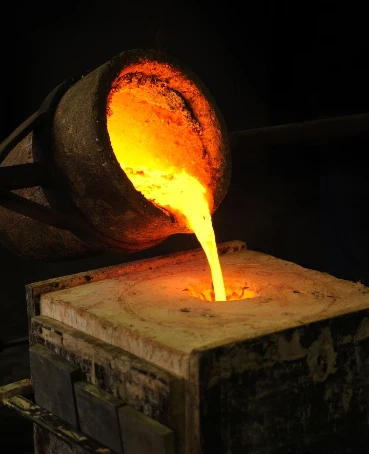
Key Characteristics & Processing Aspects
Material Type: Chromoly (Chromium-Molybdenum) Alloy Steel.
Primary Use: Pressure vessels, boilers, heat exchangers in high-temperature environments (oil & gas, chemical processing).
Chemical Composition: Key elements are ~2.25% Chromium (Cr) and ~1% Molybdenum (Mo) for corrosion/oxidation resistance, with controlled Carbon, Manganese, Phosphorus, and Sulfur.
Class 2 Properties: Higher strength requirements than Class 1; typically 75-100 ksi tensile strength.
Mandatory Treatments: Must be furnace normalized (or normalized and tempered) and undergo ultrasonic testing and Charpy impact testing (often at -20°C or -46°C).
Typical Manufacturing & Processing Steps
Melting & Casting: Raw materials melted and cast into slabs.
Hot Rolling: Slabs are hot rolled into plates of specified dimensions (thickness, width, length).
Heat Treatment: Crucial step, typically furnace normalized to refine grain structure and achieve desired mechanical properties, enhancing ductility and strength.
Testing & Inspection:
Chemical Analysis: Verifies element percentages.
Mechanical Testing: Tensile, yield, and elongation tests.
Impact Testing: Charpy V-notch tests for toughness.
Ultrasonic Testing (UT): Checks for internal flaws.
Finishing & Documentation: Surface prep, cutting, and preparation of Material Test Certificates (MTC) confirming compliance with ASME SA-387 Grade 22 Class 2 standards.
Key Performance Benefits
High-Temperature Strength: Excellent resistance to creep at elevated temperatures (up to ~550°C).
Corrosion Resistance: Good resistance to oxidation, pitting, and sulfide stress cracking.
Weldability: Readily weldable for fabrication into complex structures.
Core Industrial Applications
Petrochemical and Refining: Primarily used in hydroprocessing reactors, desulfurization equipment, and reforming furnaces. Its resistance to "sour gas" (hydrogen sulfide) makes it essential for crude oil hydrocracking.
Power Generation: Employed in ultra-supercritical thermal power boilers for components like steam headers, turbine casings, and drum components that must endure pressures above 25MPa.
Coal Chemical Industry: Used for gasifier shells and methanol synthesis towers where equipment must resist corrosive gases like CO and H₂S at temperatures of 500–550°C.
Nuclear Power: Found in nuclear reactor pressure vessels and liquefied gas tanks due to its high tensile strength and hydrogen corrosion resistance.

Specific Component Uses
Pressure Vessels: The primary application for storing and treating process media under high pressure.
Heat Exchangers: Used extensively in high-pressure heat exchangers for efficient thermal transfer in chemical plants.
Piping Systems: Includes high-temperature ducting, flanges, valves, and pipe clamps.
Industrial Infrastructure: Used in structural applications for bridges, offshore services, and shipbuilding.
For more details about GNEE's steel products, contact us at beam@gneesteelgroup.com. We look forward to working with you.
What is SA 387 Grade 22 Class 2?
It is a low-alloy chromium-molybdenum steel plate for pressure vessels, widely used in high-temperature and high-pressure environments, compliant with ASTM standards, offering excellent heat resistance and weldability.
What is the main alloy composition of this steel?
Its core components are iron, 2.25% chromium, and 1% molybdenum. Trace elements like carbon and manganese are added to enhance mechanical properties and structural stability.
Which ASTM standard governs SA 387 Grade 22 Class 2?
It is regulated by ASTM A387/A387M, a standard specifying low-alloy steel plates for pressure vessels operating at elevated temperatures and pressures.
What is the maximum service temperature of this steel?
It can reliably operate at a maximum temperature of approximately 593°C (1100°F), making it suitable for high-temperature industrial applications like boilers.
What are the typical mechanical properties at room temperature?
Yield strength ≥ 205 MPa, tensile strength 415-585 MPa, elongation ≥ 22%. These properties ensure good load-bearing capacity in harsh conditions.
Is SA 387 Grade 22 Class 2 weldable?
Yes, it has excellent weldability. Proper preheating (150-200°C) and post-weld heat treatment are recommended to avoid cold cracking and improve joint toughness.
What post-weld heat treatment (PWHT) is required?
Common PWHT is tempering at 620-675°C, held for sufficient time to relieve residual stresses, enhance ductility, and restore material performance after welding.
What industries mainly use this steel grade?
It is widely used in oil and gas, petrochemical, power generation (boilers, turbines), and chemical processing industries for pressure vessels and pipelines.
Can it be used in low-temperature environments?
It is not ideal for low temps below -29°C. Its toughness decreases at low temperatures; other grades like SA 387 Grade 11 are preferred for cryogenic conditions.
What is the difference between Class 1 and Class 2 of SA 387 Grade 22?
Class 2 requires stricter impact testing (Charpy V-notch) than Class 1, ensuring better toughness, suitable for more demanding high-temperature pressure applications.