


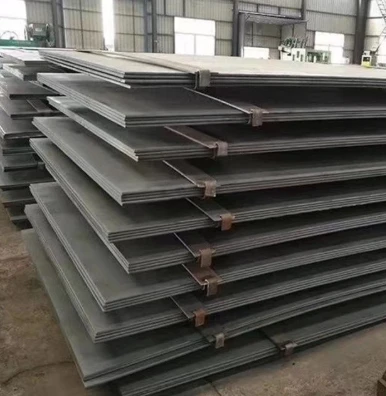
P690QL1 is a high-strength, fine-grain quenched and tempered steel plate that complies with the European standard EN 10028 - 6, mainly designed for pressure vessel and boiler applications. In its designation, "P" stands for pressure, indicating its use in pressure-bearing equipment; "690" refers to a minimum yield strength of 690 MPa; "Q" represents the quenched and tempered production process; and "L1" specifies that it maintains excellent impact toughness at -40°C, with a minimum impact energy of 27J in the Charpy-V test. It has outstanding weldability due to its optimized chemical composition that keeps low carbon equivalent and welding crack sensitivity index. Meanwhile, it possesses certain corrosion resistance and hydrogen-induced cracking resistance, making it reliable for harsh working conditions.
|
P690QL1 Chemical Composition |
|||||||
|
Grade |
The Element Max (%) |
||||||
|
C |
Si |
Mn |
P |
S |
N |
B |
|
|
P690QL1 |
0.20 |
0.80 |
1.70 |
0.020 |
0.010 |
0.015 |
0.005 |
|
Mo |
Cu |
Nb |
Ni |
Ti |
V |
Cr |
|
|
0.70 |
0.3 |
0.06 |
2.50 |
0.05 |
0.12 |
1.50 |
|
|
Grade |
P690QL1 Mechanical Property |
|||
|
Thickness |
Yield |
Tensile |
Elongation |
|
|
P690QL1 |
mm |
Min Mpa |
Mpa |
Min % |
|
6-50 |
690 |
770-940 |
14% |
|
|
50-100 |
670 |
770-940 |
14% |
|
|
100-150 |
630 |
720-900 |
14% |
|
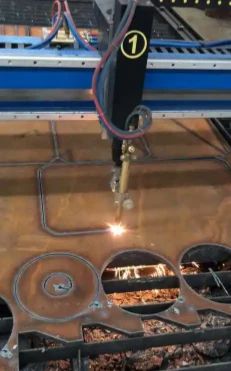 P690QL1 Processing Flow
Smelting and Casting:
Raw materials are smelted in an electric arc furnace or converter, with strict control of chemical composition (e.g., C, Si, Mn, Cr, Ni) to meet EN 10028-6 standards. The molten steel is refined and then cast into slabs via continuous casting to ensure uniform internal structure and avoid defects like segregation.
Controlled Rolling:
Slabs are heated to 1100-1250°C for homogenization, then rolled by multi-pass controlled rolling. Rolling temperature and speed are precisely adjusted to refine grain size and improve mechanical properties.
Quenching and Tempering:
After rolling, the steel plate is quenched (heated to austenitization temperature, then rapidly cooled with water/oil) to form a martensitic structure. It is then tempered at 550-650°C to relieve residual stress, enhance toughness, and achieve the desired strength-toughness balance.
Surface Treatment and Cutting:
The plate undergoes shot blasting or pickling to remove oxide scale. It is then cut into specified sizes via flame cutting, plasma cutting, or shearing, with edge trimming to ensure dimensional accuracy.
Quality Inspection:
Final inspections include ultrasonic testing (for internal defects), mechanical property testing (tensile, impact, hardness), and chemical composition analysis to confirm compliance with standards.
 Applications and Application Scenarios
I. Petrochemical Industry
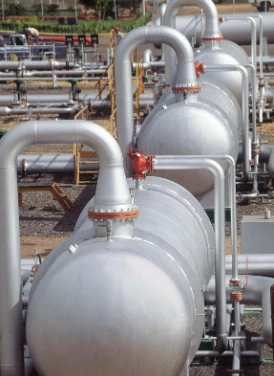
It is mainly used in the manufacture of pressure-bearing equipment, suitable for the entire process of oil and gas exploration and refining. Application scenarios include core equipment such as reactors, heat exchangers, and separators, which can withstand corrosive media such as hydrogen and hydrogen sulfide. Meanwhile, it is used in oil and gas storage tanks and liquefied gas tanks (e.g., 1650m³ LPG transport tanks) to meet high-pressure storage and transportation requirements and ensure the safety of medium storage and transportation.
II. Energy and Power Industry
It covers key equipment for thermal power, hydropower and nuclear power. In thermal power plants, it is used for boiler drums and high-pressure water pipes to withstand the impact of high-temperature and high-pressure steam. In the hydropower field, it is suitable for turbine volutes and high-pressure water transmission pipelines of hydropower stations to resist high-pressure water flow loads. In nuclear power, it is used for reactor pressure vessels and steam generator support rings, meeting the requirements of low impurities, high strength and radiation resistance.
III. Marine Engineering Industry
It is suitable for harsh marine corrosion and impact environments. It is mainly used for legs and columns of jack-up offshore platforms, key hull structures, as well as force-bearing components such as booms and base turntables of offshore lifting equipment. At the same time, it can be used to manufacture marine liquid cargo tanks, which can withstand marine salt spray corrosion and wave impact, ensuring the stability of offshore operations.
IV. Heavy Machinery and Infrastructure Industry
It is used for equipment and structures bearing heavy loads and complex stresses, including core load-bearing components of mining machinery, connection structures of wind power tower tubes, and key force-bearing components of large bridges. With its high strength and good toughness, it reduces the risk of fracture under heavy-load working conditions and extends the service life of equipment and structures.
In summary, with the core advantages of "high strength + high toughness + corrosion resistance", P690QL1 has become a key material for high-end equipment manufacturing in energy, chemical, marine and other fields, and is suitable for safe operation in various harsh working conditions.
Full specification and details are available on request. The above information is provided for guidance purposes only. For specific design requirements please contact our technical sales staff.
What standards does P690QL1 comply with?
P690QL1 mainly complies with the European standard EN 10025-6, which specifies the technical requirements for high-strength quenched and tempered structural steels, including chemical composition, mechanical properties and test methods.
What is the difference between P690QL1 and P690Q?
The main difference lies in impact toughness requirements. P690QL1 has higher low-temperature impact toughness than P690Q, with a specified test temperature of -20℃ (lower than P690Q), suitable for harsher low-temperature environments.
Can P690QL1 be cold-formed?
P690QL1 can be cold-formed, but due to its high strength, the forming force is larger than that of ordinary steel. Proper forming speed and radius should be controlled to avoid cracks and ensure forming quality.
What is the density of P690QL1?
The density of P690QL1 is about 7.85 g/cm³, the same as ordinary carbon steel. This density value is important for weight calculation and structural design in engineering projects.
What is the melting point of P690QL1?
The melting point of P690QL1 is between 1450℃ and 1500℃, similar to other alloy structural steels. This parameter is crucial for welding, casting and other thermal processing operations.
Does P690QL1 have corrosion resistance?
P690QL1 has certain natural corrosion resistance due to its alloy composition. For harsh corrosion environments (such as offshore, chemical), additional anti-corrosion treatments (painting, galvanizing) are recommended to extend service life.
What is the maximum thickness of P690QL1 plates?
The maximum thickness of P690QL1 plates can reach 150 mm (depending on manufacturers). Thick plates need strict heat treatment control to ensure uniform mechanical properties throughout the thickness.
How to store P690QL1 materials?
P690QL1 should be stored in a dry, well-ventilated warehouse to avoid moisture and rust. It should be placed away from corrosive substances and stacked neatly to prevent deformation and damage.
What machining methods are suitable for P690QL1?
P690QL1 is suitable for turning, milling, drilling, grinding and other machining methods. High-speed steel or cemented carbide tools should be used, and proper cutting parameters should be set to ensure machining efficiency and surface quality.
What is the elongation of P690QL1?
The minimum elongation of P690QL1 is 16% (after tensile test). Good elongation ensures that the steel can undergo a certain degree of plastic deformation without breaking, improving structural safety.