


SPV355 is a kind of pressure vessel steel plate with high strength and good toughness. It is mainly used in the manufacture of pressure vessels and boilers, complying with relevant industrial standards for safe operation under pressure.
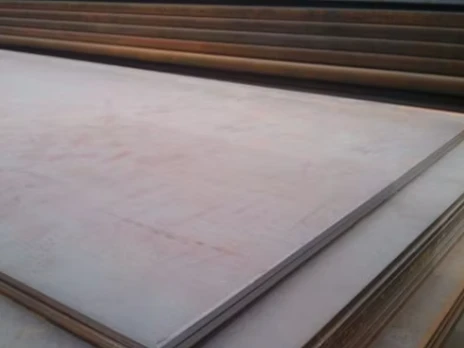
Mechnical property for SPV355 steel plate:
| Thickness (mm) | |||
| SPV355 | ≥6 ≤ 50 | > 50 ≤ 100 | > 100 |
| Yield strength (≥Mpa) | 355 | 335 | 315 |
| Tensile strength (Mpa) | 520-640 | ||
Chemical composition for SPV355 steel plate (Ladle Analysis Max%)
| Main chemical elements composition of SPV355 steel plate | ||||
| C | Si | Mn | P | S |
| 0.20 | 0.55 | 1.60 | 0.030 | 0.030 |
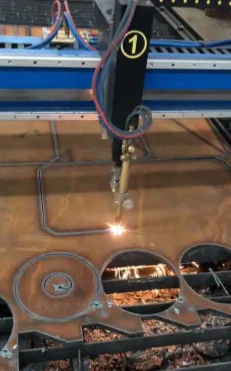 Processes Adopted for SPV
Controlled Rolling Process:
This is a core process for SPV production. The heated steel billets are rolled step by step with strictly controlled rolling temperature, speed and pressure. It refines the grain structure of the steel, enhances its strength and toughness, and ensures the uniformity of mechanical properties across the entire plate.
Quenching and Tempering Process:
After rolling, quenching and tempering heat treatment are performed. Quenching involves rapid cooling of the steel plate to improve hardness and strength. Tempering follows at an appropriate temperature to reduce brittleness, eliminate internal stress, and achieve the ideal balance of strength and ductility required for pressure vessel applications.
Precision Heating Process:
The steel billets are heated in a professional furnace with precise temperature control. It maintains a stable heating environment and sufficient holding time to make the internal structure of the billets uniform, improve plasticity, and lay a good foundation for subsequent rolling and forming.
Surface Finishing Process:
Includes derusting, cleaning and polishing. It removes oxide scales and impurities on the surface of the steel plate, ensures a smooth and clean surface, prevents corrosion during storage and use, and improves the overall quality and service life of the product.
Dimensional Calibration Process:
Adopts professional straightening and cutting equipment. It corrects the flatness and straightness of the steel plate, cuts it to the required size accurately, and ensures that the product dimensions meet the strict requirements of pressure vessel manufacturing and installation.
Advantages of SPV355
Excellent Mechanical Properties: It has outstanding strength and toughness, maintaining structural stability even under high pressure and temperature, which is crucial for pressure vessel safety.
Good Weldability: It can be easily welded with common techniques, with low risk of weld cracking or performance degradation, simplifying manufacturing and reducing production costs.
Stable Performance: Through strict heat treatment and rolling processes, its internal structure is uniform, ensuring consistent performance across the entire material without obvious property differences.
Strong Environmental Adaptability: It resists creep and fatigue under long-term high-temperature operation and avoids brittle fracture at low temperatures, adapting to various harsh working conditions.
Reliable Durability: It has good corrosion resistance to common media like steam and natural gas, with long service life and low later maintenance costs, widely trusted in related industries.
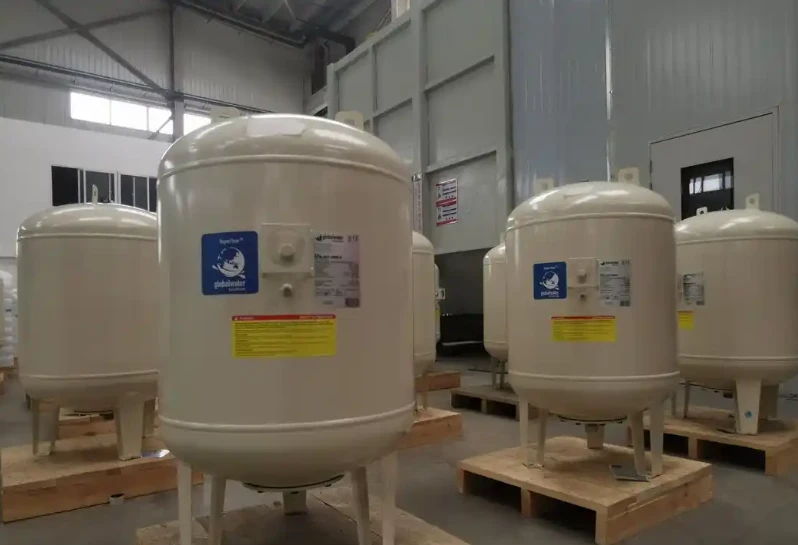
applications
Boiler Manufacturing: Widely used in the production of industrial boilers, including water-tube boilers, fire-tube boilers and waste heat boilers. It is mainly applied to key components such as boiler drums, header pipes and heat exchange tubes, which need to bear high temperature and pressure for a long time to ensure the stable operation of the boiler system.
Pressure Vessel Production: An important material for manufacturing pressure vessels in petroleum, chemical, natural gas and other industries. It is suitable for vessels that store, transport or react with mediums such as high-pressure gas, liquid chemicals and steam, such as storage tanks, reactors and separators.
Petrochemical Equipment: Used in the manufacturing of core equipment in petrochemical processing plants, including hydrogenation reactors, catalytic cracking equipment and pipeline systems. These equipments often work in harsh environments such as high temperature, high pressure and corrosive mediums, and SPV can meet their performance requirements.
Thermal Power Generation Equipment: Applied to key parts of thermal power plants, such as steam turbines, condensers and pipeline manifolds. It can withstand the impact of high-temperature and high-pressure steam, ensuring the safe and efficient operation of power generation equipment.
Marine Engineering Equipment: Used in the production of marine boilers, pressure vessels and offshore platform supporting equipment. It has good adaptability to marine salt spray corrosion and complex temperature changes, meeting the special requirements of marine engineering.
For more details about GNEE's steel products, contact us at beam@gneesteelgroup.com. We look forward to working with you.
What is the difference between SPV355 and SPV410?
The main difference lies in strength: SPV355 has a minimum yield strength of 355 MPa, while SPV410 is 410 MPa. SPV410 is suitable for higher pressure scenarios, and their chemical components also have slight differences.
How to store SPV355 steel plates?
SPV355 steel plates should be stored in a dry, well-ventilated warehouse to avoid moisture and rust. They should be placed horizontally, separated from the ground, and avoid collision and scratch to protect the surface quality.
What is the application of SPV355 in the chemical industry?
In the chemical industry, SPV355 is used to manufacture reactors, storage tanks, pipelines and other equipment that carry chemical media. It can withstand the corrosion of general chemical media and ensure production safety.
Is SPV355 a low-alloy steel?
Yes, SPV355 belongs to low-alloy high-strength steel. It adds a small amount of alloying elements (such as Mn, Si) on the basis of carbon steel, which improves its strength and toughness without significantly increasing the cost.
What is the surface quality requirement of SPV355 steel plates?
The surface of SPV355 steel plates should be smooth, free of cracks, scars, folds, delaminations and other defects. Minor surface defects that do not affect the use can be repaired according to relevant standards.
Can SPV355 be used for high-pressure vessels?
SPV355 is mainly used for medium and low-pressure vessels (general pressure ≤10 MPa). For high-pressure vessels with higher pressure requirements, higher-strength pressure vessel steels (such as SPV410, SPV490) should be selected.
What is the service life of SPV355 pressure vessels?
The service life of SPV355 pressure vessels is usually 10-20 years, depending on the operating environment, maintenance level and working pressure. Regular inspection and maintenance can extend its service life.
What are the precautions for using SPV355?
When using SPV355, avoid exceeding the maximum operating temperature and pressure, conduct regular inspection and maintenance, prevent corrosion and wear, and ensure the welding joints are intact to guarantee safe and stable operation.
What welding materials are suitable for SPV355?
Suitable welding materials for SPV355 include E50 series electrodes (such as E5015, E5016) and ER50 series solid wires. The welding materials should match the chemical composition and mechanical properties of SPV355.
What is the forming performance of SPV355?
SPV355 has good forming performance, which can be formed into various shapes (such as cylindrical, spherical) through cold bending, hot rolling and other processes. The forming temperature and bending radius should be controlled reasonably.