



EN P500QL1 is a high-performance European standard container steel plate with the numerical code 1.8875. As a key material for low-temperature and pressure-bearing equipment, it is widely used in scenarios such as polar oil extraction equipment and low-temperature storage tanks. Its "QL1" marking indicates reliable impact resistance in low-temperature conditions, while the 500MPa yield strength ensures it can withstand large external pressure and loads. Additionally, its good processability allows it to be processed into various sizes of components, playing an important role in ensuring the safety and stability of industrial equipment.
P500QL1 Boiler Plate Steel Chemical Composition:
| Grade | C% | SI% | Mn% | P% | S% | N% | B% | Cr% | Mo% | Cu% | Nb% | Ni% | Ti% | V% | Zr% |
| P500QL1 | 0.18 | 0.6 | 1.7 | 0.02 | 0.01 | 0. 015 | 0.005 | 1 | 0.7 | 0.3 | 0.05 | 1.5 | 0.05 | 0.08 | 0.15 |
P500QL1 Pressure Vessel Plate Mechanical Properties:
| Steel Grade | Yield Strength, for product in mm, Mpa | Tensile Strength, Mpa | Elongation, %, min | ||||
| P500QL1 | t≤50 | 50 | 100 | t≤100 | 100 | 17 | |
| 500 | 480 | 440 | 590-770 | 540-720 | |||
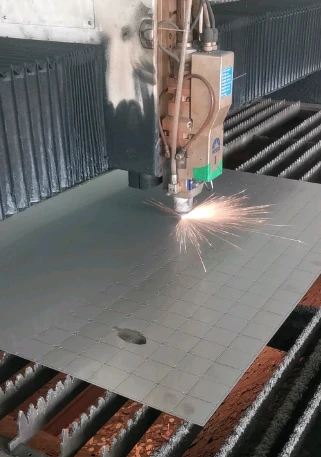 Processing Methods of P500QL1
Thermo‑mechanical Controlled Processing (TMCP): P500QL1 is typically produced using TMCP, which combines controlled rolling with accelerated cooling. This process refines the grain structure, improves strength and toughness, and ensures consistent mechanical properties across the plate.
Cutting: The material can be cut by plasma, laser, or flame methods. Laser cutting is preferred for precision and minimal heat‑affected zone, while flame cutting is used for thicker sections with proper heat control.
Forming: P500QL1 offers good formability and can be cold‑formed for simple shapes or hot‑formed for complex geometries. Proper temperature control during hot forming helps reduce springback and maintain structural integrity.
Welding: It exhibits excellent weldability and can be joined using SMAW, GMAW, FCAW, and SAW. Preheating and interpass temperature control are recommended for thicker plates to prevent hydrogen‑induced cracking and ensure strong, durable joints.
Machining: Standard machining methods are applicable, but due to its higher strength, harder cutting tools and lower speeds are often required. Coolant is used to reduce heat and extend tool life.
Surface Treatment: Shot blasting is commonly used to remove scale and prepare the surface for painting or coating, improving corrosion resistance and overall durability.
advantages
High Strength: P500QL1 offers excellent tensile and yield strength, making it suitable for heavy‑load structures that require reliable performance under pressure.
Good Toughness: It maintains toughness even at low temperatures, reducing the risk of brittle fracture and improving overall structural safety.
Excellent Weldability: The steel can be easily welded using common methods, allowing for flexible fabrication and reducing production time and costs.
Good Formability: P500QL1 can be bent, rolled, and shaped without significant loss of strength, supporting diverse manufacturing processes.
Consistent Quality: Strict production standards ensure uniform mechanical properties across batches, providing reliability in large‑scale projects.
Corrosion Resistance: When properly treated, it demonstrates good resistance to atmospheric corrosion, extending service life in outdoor environments.
Cost‑Effective: Its balanced performance and ease of processing make it a cost‑efficient choice for many structural applications.
Wide Applicability: Suitable for use in bridges, cranes, offshore structures, and heavy machinery, P500QL1 meets the needs of multiple industries.
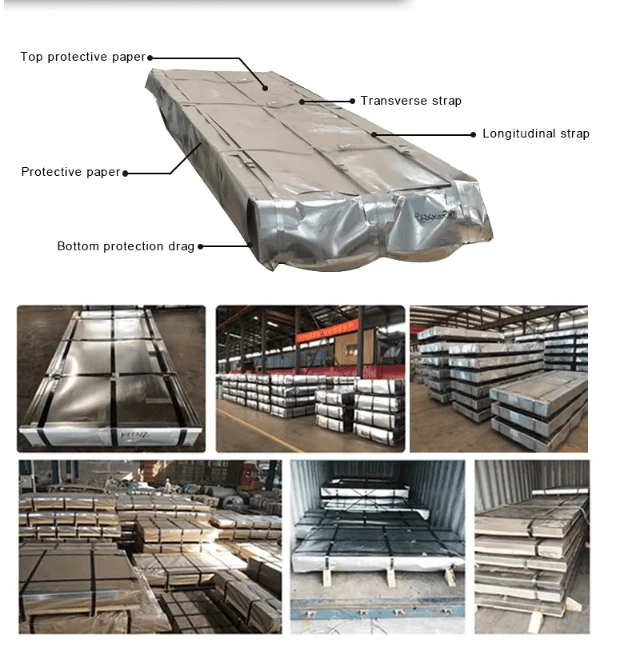
Why Choose Us :
You can get the perfect material according to your requirement at the least possible price.
We also offer Reworks, FOB, CFR, CIF, and door to door delivery prices. We suggest you to do deal for shipping which will be quite economical.
The materials we provide are completely verifiable, right from raw material test certificate to the final dimensional statement.(Reports will show on requirement)
We guarantee to give a response within 24hours(usually in the same hour)
You can get stock alternatives, mill deliveries with minimizing manufacturing time.
We are fully dedicated to our customers. If it will not possible to meet your requirements after examining all options, we will not mislead you by making false promises which will create good customer relations.
Full specification and details are available on request. The above information is provided for guidance purposes only. For specific design requirements please contact our technical sales staff.
What are the advantages of using P500QL1 in construction?
The main advantages of P500QL1 include high strength, good toughness, excellent weldability, and a favorable strength-to-weight ratio. It allows designers to reduce material thickness and overall weight while maintaining structural integrity. Its reliability under dynamic and cyclic loads makes it a cost-effective choice for heavy construction projects.
What are the limitations of P500QL1?
P500QL1 has limitations in very high-temperature applications where creep resistance becomes insufficient. It may also require careful welding procedures to avoid cracking, especially in thick sections. Additionally, its high strength can make machining more challenging and costly compared to lower-strength steels.
Can P500QL1 be used in pressure vessels?
Yes, P500QL1 is suitable for certain pressure vessel applications, particularly those requiring high strength and toughness. It must comply with additional standards such as EN 10028-7 for pressure vessel steels, which specifies stricter testing and quality control requirements. Proper design and welding procedures are essential to ensure safety and performance.
What is the density of P500QL1?
P500QL1 has a density of approximately 7.85 g/cm³, similar to other carbon and low-alloy steels. This density is used in structural calculations to determine weight and load distribution. Despite its high strength, its density remains standard, allowing for predictable design and fabrication.
What is the modulus of elasticity of P500QL1?
The modulus of elasticity of P500QL1 is about 210 GPa, typical of most carbon and low-alloy steels. This value is used in engineering calculations to determine deflection, stress, and strain under load. Its high strength combined with a standard modulus makes it suitable for precise structural designs.
What is the Poisson's ratio of P500QL1?
P500QL1 has a Poisson's ratio of approximately 0.3, which is standard for steel. This ratio describes the lateral strain response to axial loading and is used in finite element analysis and structural modeling. Its value ensures compatibility with other steel components in assembled structures.
What is the thermal conductivity of P500QL1?
P500QL1 has a thermal conductivity of around 45–50 W/m·K at room temperature. This property is important for welding and heat treatment processes, as it affects heat distribution and cooling rates. Good thermal conductivity helps prevent excessive hardness and cracking in the heat-affected zone during welding.
What is the coefficient of thermal expansion of P500QL1?
P500QL1 has a coefficient of thermal expansion of approximately 12×10⁻⁶ per °C, similar to other low-alloy steels. This property is crucial for designing structures exposed to temperature variations, as it helps predict dimensional changes and thermal stresses. Proper allowance for expansion and contraction is necessary to avoid deformation.
What quality control tests are performed on P500QL1?
Quality control for P500QL1 includes chemical analysis, tensile testing, impact testing, hardness testing, and ultrasonic inspection. Some applications may also require bend tests, macrostructure examination, or fatigue testing. These tests ensure the material meets the required strength, toughness, and purity levels specified in EN 10025-6.
What are the typical applications of P500QL1 in the mining industry?
P500QL1 is used in mining equipment such as crushers, conveyor frames, and heavy-duty trucks. Its high strength and toughness allow it to withstand abrasive materials and heavy loads. The steel's weldability simplifies the fabrication of large, durable components, while its fatigue resistance ensures long service life in demanding mining conditions.