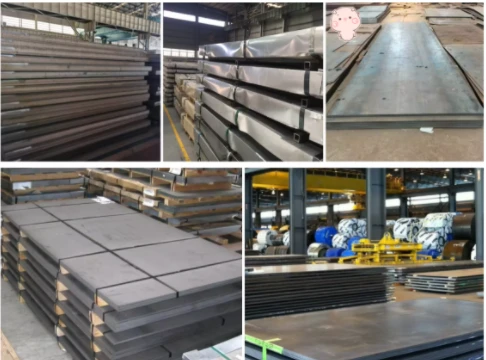
Is ASTM A36 equivalent to S235JR?
This is a common point of comparison and potential confusion in international procurement and design.
The short answer is: No, ASTM A36 is not a direct, certified equivalent to S235JR (or S235J2). While they are often used for similar applications, they are specified under different systems with key differences in philosophy and requirements.
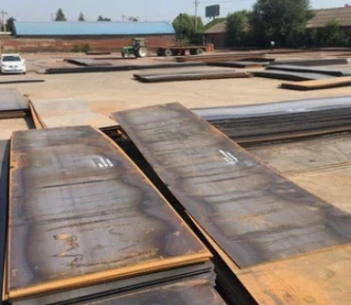
What is A36 material?
A36 material is a carbon structural steel defined by the ASTM A36 specification, serving as the most common and economical general-purpose construction steel in North America.** It is characterized by a minimum yield strength of 36,000 psi (250 MPa), good ductility, and excellent weldability and fabrication properties. Primarily supplied in shapes, plates, and bars, it is the default choice for a vast range of applications including building frames, bridges, machinery bases, and general fabrication where high strength or special toughness is not required. Its widespread use is driven by its low cost, ready availability, and well-understood behavior under standard design codes.
What is S235JR material?
S235JR material is a non-alloy structural steel grade specified in the European standard EN 10025-2, characterized by a minimum yield strength of 235 MPa for thicknesses up to 16 mm. The "S" denotes structural steel, "235" its yield strength, "J" indicates the steel is killed (fully deoxidized) with specified impact properties, and "R" means it is tested at room temperature (+20°C) where it must absorb at least 27 Joules. It is a general-purpose, cost-effective steel with good weldability and formability, widely used in building frames, industrial structures, and general fabrication for static applications in moderate climates, where low-temperature impact toughness is not a critical design requirement.
Here is a detailed comparison about A36 and S235JR
Core Comparison: A36 vs. S235JR
| Feature | ASTM A36 (USA) | S235JR (EN 10025-2) (EU) |
|---|---|---|
| Governing Philosophy | Performance-based. Primarily defines mechanical properties. Chemistry is secondary and less restrictive. | Composition-based. Defines strict maximum chemical limits, with mechanical properties as a consequence. |
| Key Chemical Difference | Carbon (C): Max 0.26% (up to 0.29% for thicker plates). No mandatory deoxidation practice specified. It can be supplied as rimmed, semi-killed, or killed steel. |
Carbon (C): Max 0.17%. Mandatory "R" = Rimmed steel. (For S235J2: "J2" = killed steel). This is a fundamental metallurgical difference. |
| Yield Strength (ReH) | ≥ 250 MPa (36 ksi) for all shapes, plates, and bars up to 200mm thick. | ≥ 235 MPa for thickness ≤ 16mm (decreases with thickness). |
| Tensile Strength (Rm) | 400 - 550 MPa (58-80 ksi) | 360 - 510 MPa |
| Elongation (A₅) | ≥ 20% (for plates ≤ 200mm) | ≥ 26% (for thickness ≤ 40mm) |
| Impact Toughness | Not required by default. Can be specified as a supplementary requirement ("Charpy V-notch test"). | "R" = Room temperature (≥ 27J at +20°C). This is a mandatory requirement. |
Why A36 and S235JR Are NOT Direct Equivalents
1.Carbon Content & Weldability: A36 allows significantly more carbon (max 0.26-0.29%) compared to S235JR's 0.17% max. This gives S235JR a distinct advantage in weldability, as its lower Carbon Equivalent (CEV) reduces the risk of cold cracking. An A36 piece with carbon near its upper limit requires more careful welding procedures.
2.Metallurgical State: S235JR is specifically a rimmed steel. It has a particular solidification structure with a purer surface layer, which is excellent for cold forming but can lead to variable internal chemistry. A36 can be rimmed, semi-killed, or killed, so its internal soundness and forming characteristics are not guaranteed.
3.Impact Toughness: This is a critical distinction. S235JR must pass a Charpy impact test at room temperature. For ASTM A36, impact testing is not a mandatory requirement unless explicitly ordered by the purchaser. For structures subject to dynamic loads or cold temperatures, this is a major specification difference.
4.Strength: A36 has a higher minimum yield strength (250 MPa) than S235JR (235 MPa). A designer using S235JR cannot automatically substitute A36 and expect the same safety factor without recalculation, and vice-versa.
Conclusion: Always treat them as similar but distinct grades. The correct choice depends on the governing design code, required certifications, welding specifications, and service environment. Never assume equivalence without technical validation.
1. What is SA36 steel commonly used for?
SA36 is the most widely used general-purpose structural steel in North America, primarily employed in building frames, bridges, industrial equipment, and general fabrication where moderate strength and good weldability are required.
2. What is the yield strength of SA36 steel?
SA36 has a minimum yield strength of 36,000 psi (250 MPa), which is the basis for its name ("36") and makes it suitable for a broad range of structural applications.
3. Is SA36 steel weldable?
Yes, SA36 is highly weldable using common methods like SMAW, GMAW, and FCAW. However, preheating may be necessary for thicker sections or restrained joints due to its variable carbon content.
4. How does SA36 differ from SA572 Grade 50?
SA36 has a lower yield strength (36 ksi vs. 50 ksi) and is a carbon steel, while SA572 Grade 50 is a high-strength low-alloy (HSLA) steel with better strength-to-weight ratio and atmospheric corrosion resistance.
Full specification and details are available on request. The above information is provided for guidance purposes only. For specific design requirements please contact our technical sales staff.