


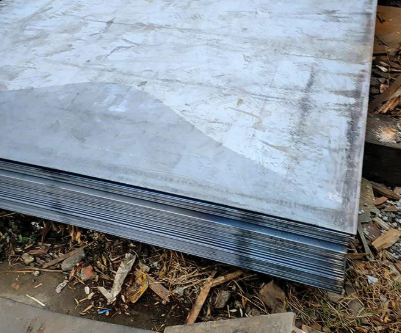
ASTM A302 Grade D is a high-strength low-alloy manganese-molybdenum-nickel steel plate complying with ASTM A302/ASME SA-302M standards. It boasts excellent mechanical properties (tensile strength 550-690MPa, yield strength ≥345MPa), good low-temperature toughness (-20℃ to -60℃ impact qualified) and high-temperature resistance (up to 410℃). Processed via mandatory normalizing + tempering, it has superior weldability, formability and hydrogen corrosion resistance. Widely used in petrochemical, power and nuclear industries, it is a reliable material for pressure vessels, boiler drums, heat exchangers and other critical pressure-bearing equipment.
|
A302 Grade D Chemical Composition |
|||||||
|
Carbon, max |
% |
Manganese, max |
% |
Silicon, max |
% |
Sulfur max |
% |
|
25mm or under |
0.2 |
Heat Analysis |
1.15-1.50 |
Heat Analysis |
0.15-0.40 |
All thick |
0.035 |
|
25-50mm |
0.23 |
Product Analysis |
1.07-1.62 |
Product Analysis |
0.13-0.45 |
||
|
over 50mm |
0.25 |
|
|
|
|
||
|
|
|
Molybdenum max |
% |
Nickel max |
% |
Phosphorus |
% |
|
|
|
Heat Analysis |
0.45-0.60 |
Heat Analysis |
0.70-1.00 |
All thick |
0.035 |
|
|
|
Product Analysis |
0.41-0.64 |
Product Analysis |
0.67-1.03 |
||
|
Mechanical Property of A302 Grade D steel plate |
A302 Grade D |
|
Tensile strength, kis [MPa] |
80-100 [550-690] |
|
Yield strength, min, kis [MPa] |
50 [345] |
|
Elongation in 8 in. [200 mm], min, % |
17 |
|
Elongation in 2 in. [50 mm], min, % |
20 |
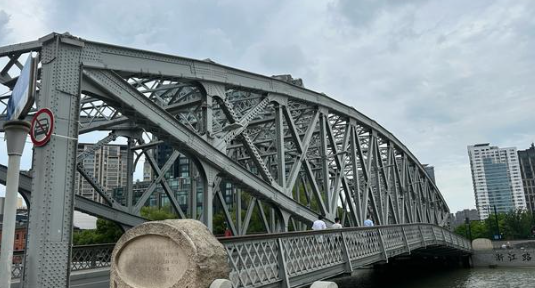
Core Industrial Applications
Petrochemical & Refineries: Used for constructing reactors, distillation columns, and pressure vessels that must withstand corrosive substances and high operating pressures.
Energy & Power Generation: Found in high-pressure boilers, steam drums, and heat exchangers within power plants.
Oil & Gas Projects: Extensively utilized for large-scale storage tanks (both for gas and liquid) and specialized piping components in offshore and onshore projects.
Specific Equipment Examples
Heat Exchangers: Its ability to maintain structural integrity at elevated temperatures makes it ideal for internal exchange units.
Gas Storage Spheres: Often used for spherical tanks designed to hold volatile gases under extreme pressure.
Nuclear Components: Due to its manganese-molybdenum-nickel composition, it has historically been used in some nuclear reactor pressure vessels (RPV) requiring high fracture toughness.
Critical Operating Conditions
ASTM A302 Grade D is typically chosen for projects involving:
High Pressures: Where standard carbon steel plates would require excessive thickness.
Temperature Ranges: Generally effective from -20°C up to 500°C.
Welded Constructions: Specifically formulated for welded boilers where weld-zone toughness is paramount.
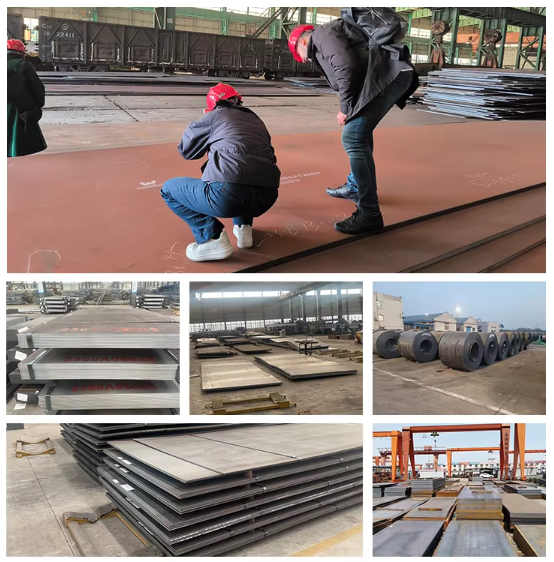
Why Choose Us :
You can get the perfect material according to your requirement at the least possible price.
We also offer Reworks, FOB, CFR, CIF, and door to door delivery prices. We suggest you to do deal for shipping which will be quite economical.
The materials we provide are completely verifiable, right from raw material test certificate to the final dimensional statement.(Reports will show on requirement)
We guarantee to give a response within 24hours(usually in the same hour)
You can get stock alternatives, mill deliveries with minimizing manufacturing time.
We are fully dedicated to our customers. If it will not possible to meet your requirements after examining all options, we will not mislead you by making false promises which will create good customer relations.
For more details about GNEE's steel products, contact us at beam@gneesteelgroup.com. We look forward to working with you.
What is the thermal conductivity of A302 Grade D?
At 20°C, its thermal conductivity is approximately 48 W/(m·K), and it decreases slightly with increasing temperature. This good thermal conductivity ensures uniform heat distribution in high-temperature equipment, reducing thermal stress.
How to store A302 Grade D plates to prevent deterioration?
Store in a dry, well-ventilated warehouse, avoid direct rain and moisture, place plates on wooden pallets to prevent contact with the ground, and apply anti-rust oil to the surface for long-term storage to prevent oxidation and rust.
What is the machinability of A302 Grade D?
It has good machinability when properly heat-treated. Use high-speed steel or carbide tools, adopt appropriate cutting parameters (speed, feed rate), and use cutting fluids to reduce wear and improve surface finish of machined parts.
Can A302 Grade D be used in petrochemical reactors?
Yes, it is suitable for petrochemical reactors. It can withstand high temperatures, high pressures, and the corrosion of organic media in reactors, ensuring stable operation and long service life of petrochemical production equipment.
What is the coefficient of thermal expansion of A302 Grade D?
Its linear thermal expansion coefficient is about 11.7 × 10⁻⁶ /°C (20-100°C). This parameter is crucial for designing high-temperature equipment to compensate for thermal expansion and avoid structural deformation.
What defects should be avoided during the production of A302 Grade D?
Key defects to avoid include porosity, inclusions, cracks (hot or cold), and uneven thickness. Strict control of smelting, rolling, and heat treatment processes, along with thorough non-destructive testing, ensures defect-free products.
What is the difference between A302 Grade D and A516 Grade 70?
A302 Grade D is low-alloy steel with higher temperature/pressure resistance, while A516 Grade 70 is carbon steel. Grade D has better creep resistance at high temperatures, suitable for more severe service conditions.
Can A302 Grade D be used for steam pipelines?
Yes, it is an excellent material for steam pipelines. Its high tensile strength, good impact toughness, and resistance to high-temperature steam corrosion ensure safe and reliable transportation of high-pressure steam in power plants.
What is the elongation requirement of A302 Grade D?
The minimum elongation (in 200 mm) is 22%. This high elongation indicates good ductility, allowing the steel to undergo plastic deformation without fracture under load, enhancing equipment reliability.
What surface treatments are applicable to A302 Grade D?
Applicable surface treatments include shot blasting (to remove rust and scale), painting (epoxy or polyurethane coatings), and galvanizing (for enhanced corrosion resistance in outdoor or humid environments), extending service life.
What quality certificates are usually provided with A302 Grade D products?
Common quality certificates include ASTM material certification (MTC), chemical composition report, mechanical property test report, non-destructive testing report, and heat treatment record, ensuring compliance with standards.