


P690Q is a high-strength quenched and tempered alloy structural steel that belongs to the high-performance steel category. It boasts excellent comprehensive mechanical properties, including outstanding tensile strength, superior toughness, and good ductility, which enable it to withstand complex stress environments. Widely utilized in heavy machinery manufacturing, large-scale engineering structures, offshore platforms, and other key fields that demand high load-bearing capacity and reliable performance, it plays a crucial role in ensuring the stability and durability of core components.
EN P690Q EN 10028-6 Chemical element
| Element | Min | Max | Similar |
|---|---|---|---|
| V | - | 0.1200 | - |
| Ti | - | 0.0500 | - |
| Si | - | 0.8000 | - |
| S | - | 0.0150 | - |
| P | - | 0.0250 | - |
| Ni | - | 2.5000 | - |
| Nb | - | 0.0600 | - |
| N | - | 0.0150 | - |
| Mo | - | 0.7000 | - |
| Mn | 1.2000 | 1.7000 | - |
| Cu | - | 0.3000 | - |
| Cr | - | 1.5000 | - |
| C | - | 0.2000 | - |
| Al | 0.0200 | - | - |
EN P690Q EN 10028-6 Mechanical properties
| Yield Rp0.2 (MPa) |
Tensile Rm (MPa) |
Impact KV/Ku (J) |
Elongation A (%) |
Reduction in cross section on fracture Z (%) |
As-Heat-Treated Condition | Brinell hardness (HBW) |
|---|---|---|---|---|---|---|
| 375 (≥) | 573 (≥) | 42 | 24 | 24 | Solution and Aging, Annealing, Ausaging, Q+T,etc | 131 |
EN P690Q EN 10028-6 Physical properties
| Temperature (°C) |
Modulus of elasticity (GPa) |
Mean coefficient of thermal expansion 10-6/(°C) between 20(°C) and | Thermal conductivity (W/m·°C) |
Specific thermal capacity (J/kg·°C) |
Specific electrical resistivity (Ω mm²/m) |
Density (kg/dm³) |
Poisson's coefficient, ν |
|---|---|---|---|---|---|---|---|
| 23 | - | - | 0.34 | - | |||
| 266 | 413 | - | 32.3 | 313 | - | ||
| 525 | - | 32 | 21.2 | 342 | 341 |
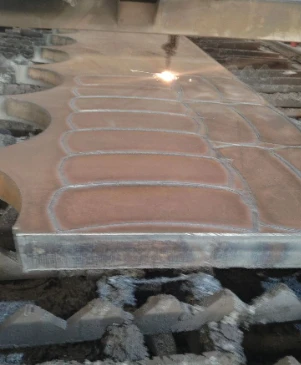 Processes Adopted for P690Q
Controlled Chemical Composition Process:
Strictly control the content of alloying elements during smelting. Optimize the proportion of key elements to lay a foundation for subsequent heat treatment and ensure the material's basic mechanical properties.
Hot Rolling Process:
Heat steel billets to a suitable temperature for hot rolling. Precisely control rolling speed, pressure and temperature to refine grain structure, improve material compactness and enhance overall strength.
Quenching and Tempering Process:
First, rapidly cool the rolled steel via quenching to form a martensitic structure and improve hardness. Then temper at a moderate temperature to reduce brittleness, balancing strength and toughness.
Controlled Cooling Process:
Adopt targeted cooling measures after rolling or heat treatment. Stabilize the material's microstructure, prevent deformation and ensure consistent performance across the entire batch.
Quality Inspection Process:
Implement non-destructive testing and mechanical property testing throughout production. Detect defects and ensure the final product meets technical standards for critical applications.
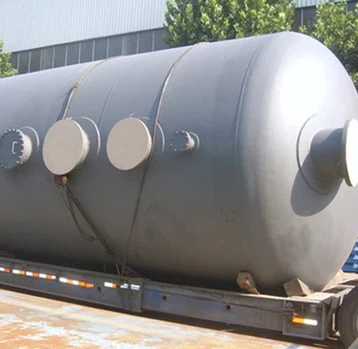 applications
Pressure Vessels and Boilers:
It is a preferred material for manufacturing pressure vessels, boilers, and heat exchangers used in petrochemical, thermal power, and chemical processing industries. These components often operate under high internal pressure and temperature fluctuations, and P690Q's excellent strength and toughness ensure safe and stable operation over long periods.
Offshore and Marine Engineering:
In offshore oil and gas exploration platforms, ship hulls, and marine pipelines, P690Q is used to withstand harsh marine environments such as saltwater corrosion, low temperatures, and strong wind loads. Its resistance to brittle fracture at low temperatures and good weldability make it suitable for offshore structural components that require high reliability.
Heavy Machinery and Construction:
It is applied in the manufacturing of heavy machinery parts, such as excavator arms, crane booms, and hydraulic cylinders, as well as large-scale construction structures like bridges and stadiums. The high strength of P690Q allows for the design of lighter and more compact components without compromising structural integrity, reducing overall equipment weight and improving efficiency.
Nuclear Power Industry:
Some auxiliary components in nuclear power plants, such as pressure pipelines and storage tanks, also adopt P690Q. It meets the strict safety requirements of the nuclear industry, providing stable performance under high pressure and radiation environments.
Full specification and details are available on request. The above information is provided for guidance purposes only. For specific design requirements please contact our technical sales staff.
What is the minimum yield strength of P690Q?
The minimum yield strength of P690Q is usually 690MPa, which is a key indicator reflecting its ability to resist plastic deformation under load, making it suitable for structures bearing large stresses.
What is the maximum thickness of P690Q plates usually available?
The maximum thickness of P690Q plates can reach 150mm or more, depending on the manufacturer's production capacity. Thick plates are often used in heavy machinery bases and large engineering structures that require high load-bearing capacity.
What is the tensile strength range of P690Q?
The tensile strength of P690Q generally ranges from 690MPa to 830MPa. This high strength range enables it to bear large loads and is widely used in structural parts requiring high strength and reliability.
What is the application of P690Q in offshore engineering?
In offshore engineering, P690Q is used to manufacture offshore platforms, oil rigs, and underwater pipelines. Its high strength and corrosion resistance can withstand harsh marine environments such as salt spray and high pressure.
Can P690Q be used to make pressure vessels?
Yes, P690Q is suitable for manufacturing pressure vessels that bear high pressure and harsh media. Its high strength and good toughness can ensure the safety and stability of the vessel during operation, meeting relevant pressure vessel standards.
What machining methods are suitable for P690Q?
P690Q can be processed by turning, milling, drilling, and grinding. Due to its high hardness, it requires high-speed steel or cemented carbide tools, and proper cutting parameters to ensure machining efficiency and surface quality.
How does temperature affect the performance of P690Q?
P690Q maintains good mechanical properties within a certain temperature range. At low temperatures, it still has high impact toughness, while at high temperatures, its strength may decrease slightly, but it can meet most working condition requirements.
What standards does P690Q comply with?
P690Q usually complies with European standards such as EN 10025 or EN 10225, which specify its chemical composition, mechanical properties, heat treatment, and testing methods to ensure product quality and consistency.
Can P690Q be welded easily?
P690Q can be welded, but it requires proper welding processes and materials due to its high strength. Preheating and post-weld heat treatment are often needed to avoid welding cracks and ensure joint performance.