


A537 Class 3 is a type of carbon-manganese-silicon steel plate developed for use in pressure vessel applications where elevated temperature service and good weldability are required. It is a normalized and tempered steel that offers a combination of high strength, toughness, and resistance to brittle fracture, making it suitable for boilers, storage tanks, and other pressure-containing structures. The material is designed to be readily fabricated using standard welding procedures, and it maintains its mechanical properties even after exposure to the thermal cycles involved in manufacturing and operation.
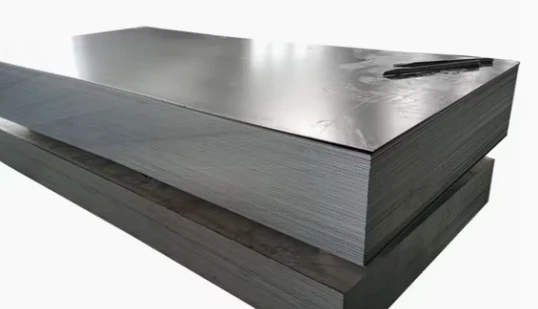
Mechnical property for A537CL3 steel plate:
| Thickness(mm) | Yield strength (≥Mpa) | Tensile strength (Mpa) | Elongation in ≥,% | |
| 200mm | 50mm | |||
| T≤65 | 380 | 550-690 | ... | 22 |
| 65<T≤100 | 345 | 515-655 | ... | 22 |
| 100<T | 275 | 485-620 | ... | 20 |
Chemical composition for A537CL3 steel plate (Heat Analysis Max%)
| Main chemical elements composition of A537CL3 steel plate | |||||||||
| Thickness(mm) | C | Si | Mn | P | S | Cu | Ni | Cr | Mo |
| T≤40 | 0.24 | 0.13-0.55 | 0.64-1.46 | 0.035 | 0.035 | 0.38 | 0.28 | 0.29 | 0.09 |
| 40<T | 0.92-1.72 | ||||||||
Advantages of A537CL3
High Strength and Good Toughness
A537CL3 provides a favorable combination of high tensile strength and excellent toughness, especially at low temperatures. This allows pressure vessels and structural components made from this steel to withstand significant internal pressures and external loads while maintaining resistance to brittle fracture, even in cold environments.
Excellent Weldability
The steel is designed to be readily welded using common arc welding processes without requiring complex preheating or post-weld heat treatment procedures, although controlled heating and stress-relief annealing are often recommended for thick sections. Good weldability simplifies fabrication, reduces production time, and helps ensure the integrity of welded joints.
Good Elevated Temperature Performance
A537CL3 maintains reasonable strength and creep resistance at moderately high temperatures, making it suitable for service in boilers, heat exchangers, and pressure vessels where exposure to elevated temperatures is common. Its ability to retain mechanical properties under thermal cycling helps extend the service life of equipment.
Superior Resistance to Brittle Fracture
Through normalization and tempering, the steel achieves a fine-grained microstructure that enhances toughness and ductility. This makes components less susceptible to cracking under sudden loading, thermal shock, or in the presence of defects, improving overall structural safety and reliability.
Cost-Effective and Versatile
Compared with alloy steels or stainless steels, A537CL3 offers a good balance of performance and cost. Its wide applicability across pressure vessel, boiler, and storage tank applications makes it a versatile choice for many industrial sectors, including petrochemical, power generation, and offshore engineering.
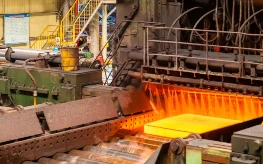
processing
Material Preparation
The steel plates are inspected for chemical composition, mechanical properties, and surface condition to ensure they meet ASTM A537 requirements. Plates are then cleaned to remove oil, rust, and scale, which could affect welding and forming quality.
Cutting and Blanking
Plates are cut into required sizes using plasma, flame, or laser cutting. The cutting process must be controlled to avoid excessive heat input, which can cause edge hardening or microcracking. Cut edges are checked for smoothness and free of notches.
Forming and Shaping
Plates are formed into the desired geometry using press braking, rolling, or other forming methods. The forming temperature is typically kept within a moderate range to prevent cold-working embrittlement or excessive springback. Complex shapes may require multiple forming steps with intermediate inspections.
Welding
A537 Class 3 is readily weldable using common processes such as SMAW, GMAW, and SAW. Preheating may be applied for thicker sections to reduce the risk of hydrogen-induced cracking. Welded joints are carefully controlled for heat input, and post-weld heat treatment is often performed to relieve residual stresses and improve toughness.
Heat Treatment
After welding or forming, stress relief annealing is commonly applied to enhance dimensional stability and reduce the potential for cracking. The temperature and cooling rate are controlled to maintain the steel's strength and toughness balance.
Surface Treatment and Finishing
The final surfaces are prepared by grinding, blasting, or painting to improve corrosion resistance and appearance. For pressure vessel applications, weld seams are ground smooth to avoid stress concentration.
Inspection and Testing
Final inspections include visual checks, ultrasonic testing, radiographic testing, and mechanical property verification. These tests ensure that the finished components are free of defects and meet the required safety standards for pressure-containing service.
Request a professional quotation for A537 Class 3 from GNEE Steel.
What are the typical fabrication considerations for A537 Class 3 steel?
Fabricating A537 Class 3 steel requires attention to welding procedures, preheating, and heat input control to ensure good weld quality and mechanical properties. Thicker plates may need edge preparation and controlled cooling rates to prevent cracking. Forming and bending should be performed within the material's ductility limits to avoid excessive strain. Fabricators must also follow proper cleaning and inspection practices to detect any defects before and after welding. Adhering to these considerations ensures the final product meets the required safety and performance standards.
What non‑destructive testing (NDT) methods are used on A537 Class 3 welds?
Common NDT methods for A537 Class 3 welds include ultrasonic testing, radiographic testing, magnetic particle inspection, and liquid penetrant inspection. Ultrasonic testing detects internal defects, while radiographic testing provides visual images of weld quality. Magnetic particle and liquid penetrant inspections are used to identify surface and near‑surface flaws. These tests are essential for ensuring the integrity of pressure vessel welds and complying with industry codes and standards. Proper NDT helps prevent failures and ensures the reliability of A537 Class 3 structures.
What is the fatigue resistance of A537 Class 3 steel?
A537 Class 3 steel has good fatigue resistance, which is important for pressure vessels and structures subjected to cyclic loading. Its high strength and toughness help withstand repeated stress cycles without failure. However, fatigue performance can be affected by factors such as weld quality, surface defects, and residual stresses. Proper welding procedures, PWHT, and NDT can significantly improve fatigue life. Designers should consult relevant fatigue design codes to ensure A537 Class 3 is used appropriately in cyclic loading applications.
What are the environmental considerations when using A537 Class 3 steel?
A537 Class 3 steel is generally considered environmentally friendly due to its recyclability and long service life. However, its production involves energy consumption and greenhouse gas emissions, typical of steel manufacturing processes. The use of coatings and surface treatments may introduce additional environmental considerations, requiring proper handling and disposal. End‑of‑life recycling of A537 Class 3 steel helps reduce resource depletion and waste. Manufacturers and users should also consider corrosion control to minimize environmental impact and extend the material's service life.
What are the cost considerations of using A537 Class 3 steel?
A537 Class 3 steel offers a cost‑effective solution for many pressure vessel applications compared to alloy steels. Its relatively simple chemical composition and heat treatment process contribute to lower material costs. However, fabrication costs may increase for thicker plates due to additional preheating, PWHT, and inspection requirements. The overall cost depends on factors such as plate thickness, welding complexity, and project specifications. When evaluating costs, designers should consider both initial material expenses and long‑term performance and maintenance requirements.
What are the transportation requirements for A537 Class 3 plates?
Transporting A537 Class 3 steel plates requires proper packaging and securing to prevent damage during transit. Plates should be protected from moisture and corrosion using weather‑resistant wrapping or containers. They should be secured with straps or chains to avoid shifting, which could cause bending or surface damage. Care should be taken to prevent contact with other materials that may scratch or contaminate the surface. Following transportation guidelines helps ensure that A537 Class 3 plates arrive at the fabrication facility in good condition.
What are the inspection requirements for A537 Class 3 steel during fabrication?
During fabrication, A537 Class 3 steel must undergo various inspections to ensure compliance with standards and specifications. These include visual inspection of plates and welds, dimensional checks, and verification of welding procedures. NDT methods such as ultrasonic, radiographic, magnetic particle, and liquid penetrant testing are performed at appropriate stages to detect defects. Inspectors must also verify that preheating and PWHT have been carried out correctly. Rigorous inspection ensures the structural integrity and safety of pressure vessels and other fabricated components.
What are the documentation and certification requirements for A537 Class 3 steel?
A537 Class 3 steel must be accompanied by mill test reports (MTRs) that provide information on chemical composition, mechanical properties, heat treatment, and test results. Manufacturers may also need to provide certification of compliance with ASTM A537 and relevant pressure vessel codes. Fabricators must maintain records of welding procedures, NDT results, and heat treatment processes. Proper documentation ensures traceability and helps demonstrate compliance with regulatory and customer requirements throughout the life cycle of the product.
What are the future trends and developments related to A537 Class 3 steel?
Future trends for A537 Class 3 steel may include improvements in manufacturing processes to enhance toughness and reduce production costs. Developments in corrosion‑resistant coatings and surface treatments could extend its application range. There may also be increased use of advanced NDT techniques to improve inspection accuracy and efficiency. As industries demand higher performance and greater sustainability, A537 Class 3 steel may see further optimizations in chemistry and heat treatment to meet evolving standards and application needs.
What are the key factors to consider when selecting A537 Class 3 steel for a project?
When selecting A537 Class 3 steel, key factors include operating pressure and temperature, required strength and toughness, plate thickness, and environmental conditions. Weldability, fabrication complexity, and cost considerations are also important. Designers must ensure the material complies with relevant standards such as ASTM A537 and ASME codes. Proper material selection, combined with appropriate welding and inspection practices, ensures the reliability and safety of pressure vessels and other critical structures in various industrial applications.