


The application of S960QL in the aerospace field represents a frontier exploration, pushing the boundaries of terrestrial high-strength steel into an environment defined by extreme performance-to-weight ratios and zero tolerance for failure.
A feasibility analysis reveals that while technically possible in niche, ground-based applications, its widespread use in primary airborne structures is highly constrained and often outcompeted by alternative materials.
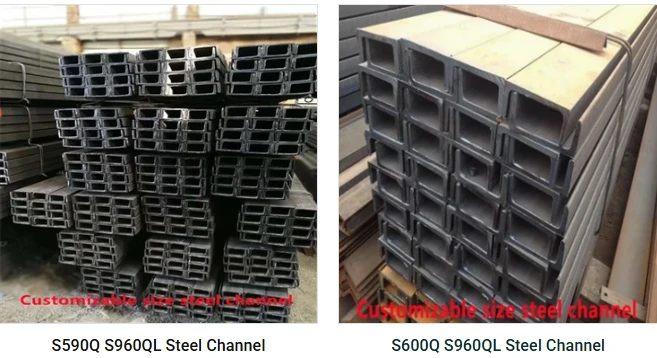
Here is a detailed, multi-faceted analysis.
1. Potential Drivers for Feasibility (The "Why Consider It?")
Extreme Strength-to-Weight Ratio: At 960 MPa minimum yield, S960QL offers one of the highest specific strengths (strength/density) of any readily available, weldable metallic alloy. For non-flying, weight-sensitive aerospace ground support equipment (GSE), this is highly attractive.
Superior Stiffness vs. Composites: Its modulus of elasticity (~210 GPa) is vastly higher than carbon fiber composites (~70-150 GPa along fiber). For components where dimensional stability under load (stiffness) is more critical than pure strength, steel retains an advantage.
High Fracture Toughness at Low Temperature: The QL grade guarantees good impact resistance down to -60°C, aligning with the thermal environment of high-altitude or space-adjacent applications.
Maturity and Certifiability: As a standardized, mill-produced material with defined properties, it can be more straightforward to certify for certain applications than novel alloys or composites, following established aerospace material qualification protocols (e.g., MMPDS handbook incorporation).
2. Critical Barriers to Feasibility (The "Why It's Not Used")
A. The Density Penalty (The Primary Showstopper for Airborne Use)
Fundamental Physics: Steel density is ~7.85 g/cm³.
Comparison:
Aerospace Aluminum Alloys (e.g., 7050-T7451): Density ~2.8 g/cm³, Yield ~450 MPa. Specific Strength: ~160 MPa/(g/cm³).
S960QL: Specific Strength: ~122 MPa/(g/cm³).
Titanium Alloys (e.g., Ti-6Al-4V): Density ~4.43 g/cm³, Yield ~830 MPa. Specific Strength: ~187 MPa/(g/cm³).
Carbon Fiber Reinforced Polymer (CFRP): Density ~1.55 g/cm³, Tensile ~1500+ MPa. Specific Strength: >970 MPa/(g/cm³).
Conclusion: For any airborne structure where weight directly dictates performance (fuel efficiency, payload, maneuverability), S960QL is outclassed by aluminum, titanium, and composites on a specific strength basis. Its use would incur a massive weight penalty.
B. Fabrication and Joining Challenges in Aerospace Context
Precision vs. Process: Aerospace manufacturing demands micrometer-level precision and repeatability. The severe HAZ softening, distortion, and residual stresses induced by welding S960QL are anathema to this philosophy. While electron beam or laser welding could mitigate heat input, the HAZ issue remains.
Fatigue Performance: The fatigue strength of welded joints, even after HFMI treatment, is governed by the detail category, not the base metal's high strength. Aerospace structures are fatigue-critical. The risk of initiating a fatigue crack from a micron-scale imperfection in a weld or the HAZ is unacceptably high compared to machined or bolted structures from aluminum/titanium.
Inspectability and Damage Tolerance: Aerospace philosophy is "damage tolerance." Cracks must be easily detectable and grow slowly. The ultra-high strength, martensitic microstructure of S960QL has lower fracture toughness and faster crack growth rates (da/dN) than aerospace-grade aluminum or titanium, making it less tolerant of flaws.
C. Environmental and Thermal Limitations
Corrosion Susceptibility: Requires extensive protective coatings (cadmium plating, primers) which add weight and process complexity. Stainless variants or proprietary maraging steels are preferred for high-strength corrosion-prone environments.
Poor Performance at Elevated Temperatures: Loses strength rapidly above ~300°C. Unsuitable for applications near engines or experiencing aerodynamic heating. Nickel superalloys or titanium are used here.
Embrittlement at Cryogenic Temperatures: While good to -60°C, for liquid fuel systems (LOX, LH2 at -183°C to -253°C), special austenitic stainless steels (e.g., 304L) or aluminum alloys are mandatory.
3. Feasibility Matrix: Potential Niche Applications
High-Strength Ground Support Equipment (GSE)
Launch Vehicle Umbilical Arms, Heavy Integration Jigs, Engine Test Stands. FEASIBLE & POTENTIALLY OPTIMAL. Needs high stiffness and strength to position heavy loads precisely. Not weight-sensitive. Weld fabrication is acceptable. S960QL can reduce bulk. Satellite & Spacecraft Non-Critical Structure Mounting Brackets, Instrument Supports within a launch vehicle fairing. CONDITIONALLY FEASIBLE. Must be non-welded, machined from solid plate to avoid HAZ issues. Must pass stringent vibration/flight load testing. Likely outcompeted by 4340M or maraging steel for high-strength brackets. Aircraft Landing Gear Components Secondary, Non-Fatigue-Critical Links or Drag Braces. LOW FEASIBILITY. Landing gear is the pinnacle of high-strength steel use (typically 300M/4340, ~1900 MPa yield). S960QL lacks the necessary strength, deep hardenability, and proven fatigue pedigree for primary parts. Could be considered for a non-critical pin or lever, but standard aerospace grades would be preferred for supply chain reasons. Armor for Military Aircraft & Helicopters Seat Armor, Critical Area Ballistic Protection. FEASIBLE AS A CANDIDATE. Used in terrestrial vehicles. However, aerospace armor typically uses specialized rolled homogeneous armor (RHA) grades or composite ceramics. Weight is still a premium, favoring ultra-high-hardness steels or composites.
4. The Competitive Landscape: What Aerospace Actually Uses
For contexts where one might consider S960QL, these are the incumbent materials:
For Ultra-High Strength (>1500 MPa): 300M (AISI 4340M), AerMet 100, Maraging Steels (18Ni 300). These are specialty aerospace steels with superior combinations of strength, toughness, and hardenability, developed specifically for landing gear and critical fasteners.
For High Strength & Weldability: HP 9-4-XX series steels. Developed for aerospace weldments, offering better weldability and toughness than standard Q&T grades like S960QL.
For General High-Strength Structure: Aerospace Aluminum (7xxx series) and Titanium (Ti-6Al-4V). They dominate due to superior specific strength and well-understood manufacturing.
For Maximum Specific Strength: Carbon Fiber Composites. The undisputed champion for primary structures in modern aircraft and spacecraft.
Conclusion: A Terrestrial Champion in an Aerospace Niche
Feasibility Summary:
In Primary Airborne Structures: Not Feasible. Defeated by the density penalty and superior alternatives (Al, Ti, Composites).
In Critical, Load-Bearing Aerospace Components (Landing Gear): Not Feasible. Outclassed by dedicated, higher-performance aerospace steels (300M, Maraging).
In Precision, High-Strength Ground Support Equipment: Highly Feasible & Advantageous. This is its most viable niche. Where extreme strength and stiffness are needed, and weight is secondary (earth-bound applications), S960QL can enable lighter, stiffer designs than conventional steel, improving GSE performance.
In Secondary, Machined Spacecraft Components: Marginally Feasible. Could be considered but faces stiff competition from established aerospace materials with guaranteed space heritage and more favorable fabrication properties.
Final Verdict: S960QL is a world-class material for pushing the limits of terrestrial engineering. However, the aerospace field operates on a different set of fundamental priorities (specific strength, damage tolerance, extreme environmental resistance). Its application is therefore restricted to the intersection where terrestrial engineering challenges meet aerospace-adjacent requirements-primarily in heavy, high-performance ground support infrastructure. It is a tool for building the launchpad, not the spacecraft.