


 SPV490 is a high-quality pressure vessel steel plate specifically developed for manufacturing various pressure-bearing equipment. It is widely applied in the production of pressure vessels that carry gases, liquids or other media under certain pressure, thanks to its excellent comprehensive mechanical properties, superior weldability and high tensile and yield strength. This steel plate can stably bear specific operating pressures in harsh working environments, effectively prevent leakage, deformation or fracture of equipment, and thus ensure the safe, continuous and reliable operation of industrial production equipment.
|
SPV490 Chemical Composition |
|||||
|
Grade |
The Element Max (%) |
||||
|
C |
Si |
Mn |
P |
S |
|
|
SPV490 |
0.18 |
0.75 |
1.60 |
0.030 |
0.030 |
|
Grade |
|
SPV490 Mechanical Property |
||
|
Thickness |
Yield |
Tensile |
Elongation |
|
|
SPV490 |
mm |
Min Mpa |
Mpa |
Min % |
|
6-50 |
490 |
610-740 |
18% |
|
|
50-100 |
470 |
610-740 |
25% |
|
|
100-200 |
450 |
610-740 |
19% |
|
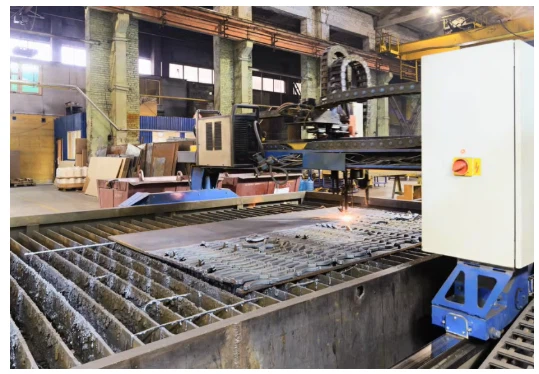 processing
1. Heat Treatment Options
The most vital part of SPV490 processing is the thermal cycle, which determines its final strength and grain structure:
Normalizing (N): Refines grain structure for improved uniformity and toughness.
Quenching & Tempering (QT): Most common for SPV490 to achieve its high yield strength (490+ MPa) while maintaining ductility.
Stress Relieving (SR): Often performed after heavy welding to eliminate internal residual stresses.
2. Cutting and Forming
Cutting: Primarily processed via CNC Flame Cutting or Plasma Cutting. Due to its thickness (often up to 200mm), laser cutting is less common.
Cold/Hot Forming: Can be rolled into cylindrical shells or pressed into hemispherical heads. If hot forming is performed above the critical temperature, the plate may require re-heat treatment to restore its mechanical properties.
3. Welding Requirements
As a pressure vessel steel, welding is subject to strict codes (like JIS B 8265):
Preheating: Necessary to prevent hydrogen-induced cracking, typically between 100°C and 150°C depending on thickness.
Filler Metals: Must match the high tensile strength (610–740 MPa) of the base metal.
Post-Weld Heat Treatment (PWHT): Essential for thick-walled vessels to ensure joint integrity.
4. Machining and Surface Prep
Edge Preparation: Beveling (V, U, or X-shaped) is required for full-penetration welds.
Surface Treatment: Usually involves Shot Blasting (to Sa 2.5 standard) and application of an epoxy primer to prevent corrosion during storage or fabrication.
5. Non-Destructive Testing (NDT)
Given its use in high-risk environments, SPV490 undergoes rigorous testing:
Ultrasonic Testing (UT): To detect internal laminations or inclusions (e.g., JIS G 0801 standards).
Magnetic Particle (MT) or Radiographic Testing (RT): Specifically for inspecting the integrity of welded seams.
 applications
Pressure Vessels: The primary use for manufacturing spherical gas holders, storage tanks, and reactors in the oil, gas, and petrochemical industries.
Boiler Components: Ideal for high-pressure steam drums, headers, and shells in thermal power plants due to its strength at intermediate temperatures.
Energy Storage: Extensively used for LPG and LNG storage tanks because its high toughness prevents brittle failure in cold environments.
Heat Exchangers: Applied in refinery processing units that require materials to withstand simultaneous thermal stress and internal pressure.
Hydropower Infrastructure: Used for high-pressure penstocks and turbine casings in hydroelectric stations.
Chemical Equipment: Fabrication of separators, columns, and high-pressure piping for chemical synthesis plants.
Benefits of SPV490
Enhanced Equipment Safety: Its excellent strength-toughness balance and low-temperature resistance minimize the risk of equipment deformation, cracking and leakage in harsh working conditions (high pressure, low temperature, thermal cycle), effectively avoiding safety accidents and reducing potential loss.
Reduced Production Costs: Superior weldability and machinability simplify processing procedures, shorten production cycles and lower labor and material consumption. High material utilization rate also reduces waste, optimizing the overall cost structure for enterprises.
Prolonged Service Life: Reliable corrosion resistance and fatigue resistance enable equipment made of SPV490 to withstand long-term operation erosion, extending service life significantly and reducing the frequency of equipment replacement and maintenance.
Wide Application Adaptability: Compliance with international and domestic standards and stable performance make it applicable to multiple industries such as petrochemical, power generation and pressure vessel manufacturing, meeting diverse project needs and improving application flexibility.
Contact us at beam@gneesteelgroup.com for pricing, technical support, or customized solutions. We are always ready to support your project.
Can SPV490 be used in high-pressure gas cylinders?
Yes, SPV490 can be used to manufacture high-pressure gas cylinders. Its high yield strength and good toughness can ensure that the gas cylinder can bear high-pressure gas and is not easy to explode, meeting the safety standards of gas cylinders.
What is the difference between SPV490 and Q345R?
SPV490 complies with Japanese standards, while Q345R complies with Chinese standards. SPV490 has higher yield strength. Q345R is widely used in China, while SPV490 is more used in equipment imported from Japan or joint ventures.
Can SPV490 be used to manufacture boiler drums?
Yes, SPV490 is suitable for manufacturing boiler drums. Boiler drums bear high pressure and temperature, and SPV490's excellent strength, toughness and weldability can meet the safety and performance requirements of boiler drums.
Does SPV490 need to be normalized before welding?
Generally, SPV490 does not need to be normalized before welding if it has undergone normalizing treatment. But for thick plates or complex structures, preheating before welding can be carried out to reduce welding stress and avoid cracks.
What are the requirements for the welding materials of SPV490?
The welding materials of SPV490 should match its mechanical properties. Generally, low-hydrogen type welding rods or welding wires are selected to ensure that the weld joint has the same strength and toughness as the base metal.
Is SPV490 a low-alloy steel?
Yes, SPV490 is a low-alloy high-strength pressure vessel steel. It adds a small amount of alloying elements such as Mn and Si on the basis of carbon steel to improve its strength and toughness without increasing production costs too much.
What is the maximum working temperature of SPV490?
The maximum working temperature of SPV490 is generally not more than 450℃. When working at higher temperatures, the mechanical properties of the steel plate will decrease, which may affect the safety of the pressure vessel.
What is the application of SPV490 in the chemical industry?
In the chemical industry, SPV490 is used to manufacture chemical reactors, storage tanks for chemical raw materials, pipelines and other equipment. It can resist the pressure of chemical media and ensure the safe operation of chemical production.
What are the main advantages of SPV490 compared with ordinary carbon steel?
Compared with ordinary carbon steel, SPV490 has higher strength, better toughness and weldability. It can reduce the thickness of steel plates in equipment manufacturing, save materials, and improve the safety and service life of equipment.