


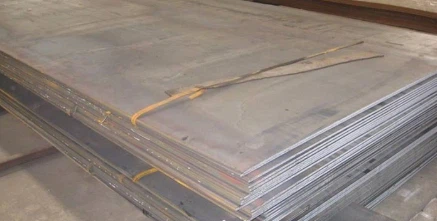
P265GH is a European standard pressure vessel steel grade specified in EN 10028-2. It is a non-alloy structural steel with good weldability, high temperature resistance and pressure-bearing capacity, widely used in boiler and pressure vessel manufacturing.
Chemical Composition
| Element | % by mass | Element | % by mass |
| Carbon (C) | ≤0.20 | Silicon (Si) | ≤0.40 |
| Manganese (Mn) | 0.80 to 1.40 | Phosphorous (P) (maximum) | 0.025 |
| Sulphur (S) (maximum) | 0.015 | Aluminium (Al) | <=0.020 |
| Nitrogen (N) | <=0.012 | Chromium (Cr) | <=0.30 |
| Copper (Cu) | <=0.30 | Molybdenum (Mo) | <=0.08 |
| Niobium (Nb) | <=0.020 | Nickel (Ni) | <=0.30 |
| Titanium (Ti) (maximum) | 0.03 | Vanadium (Vi) | <=0.02 |
Mechanical Properties
| Nominal thickness (millimeter): | to 100 | 100 - 150 | 150 - 250 |
| Rm - Tensile strength (MPa) (+N) | 410-530 | 400-530 | 390-530 |
| Nominal thickness (millimeter): | to 16 | 16 - 40 | 40 - 60 | 60 - 100 | 100 - 150 | 150 - 250 |
| ReH - Minimum yield strength (MPa) (+N) | 265 | 255 | 245 | 215 | 200 | 185 |
| KV - Impact energy (J) transverse, (+N) | -20° 27 |
0° 27 |
+20° 40 |
| KV - Impact energy (J) longitud., | -10° 28 |
0° 40 |
+20° 47 |
| A - Min. elongation at fracture (%) (+N) | 22-23 |
| A - Min. elongation at fracture (%) transverse, (+N) | 21 |
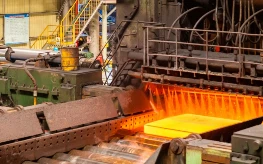
Processes Adopted for P265GH Applications
For Boiler and Steam System Components: Mainly adopts hot forming (900-1100°C) for boiler drums and tube shells, followed by normalized heat treatment. Welding uses arc welding or submerged arc welding with preheating (80-150°C) and post-weld heat treatment to ensure resistance to high-temperature steam erosion.
For Petrochemical Equipment: Adopts anti-corrosion welding (matching EN-standard consumables) for reactors and pipelines. Cold forming is used for small-sized parts, with stress relief annealing afterward. Machining adopts moderate cutting speed with cooling fluid to avoid material hardening.
For Heat Exchangers and Pressure Vessels: Tube plates and spherical tanks are fabricated via hot forming and precision machining. Welding adopts gas shielded welding for tightness. Post-processing includes tempering (600-650°C) to enhance toughness and pressure-bearing capacity.
For Other Industrial Fields: Uses bending and stamping (cold forming) for heating system components. Structural parts adopt normalized heat treatment after forming, with machining to meet dimensional accuracy requirements.
Main Applications
Boiler and Steam System Components: As a core material for boilers and pressure vessels, P265GH is widely used in manufacturing boiler drums, superheater shells, and reheater tubes in thermal and nuclear power plants. It can withstand high-temperature steam erosion and pressure, ensuring stable operation of power generation equipment <superscript>1<superscript>4.
Petrochemical Equipment: It is applied to fabricate hydrogenation reactors, synthesis towers, and high-temperature cracking devices. It also suits oil and gas transmission pipelines (especially those with anti-H₂S corrosion design) and chemical distillation towers, adapting to harsh working environments with high temperature and pressure <superscript>4<superscript>7.
Heat Exchangers and Pressure Vessels: Used for making heat exchanger tube plates, separators, spherical tanks, and LNG storage tank liners. Its good toughness and pressure-bearing capacity meet the requirements of medium and low-temperature pressure vessel manufacturing <superscript>3<superscript>4.
Other Industrial Fields: It is employed in high-temperature and high-pressure pipelines of industrial furnaces, central heating system pressure components, and even structural parts of construction and engineering machinery (when low-temperature toughness requirements are met) <superscript>4<superscript>8.

Application Conditions
Temperature Range: Suitable for operating temperatures up to 400-550°C, with excellent creep resistance to avoid slow deformation under long-term high-temperature stress <superscript>1<superscript>7.
Pressure Requirement: Designed for medium and high-pressure environments, with a minimum yield strength of 265 MPa at room temperature, matching pressure-bearing scenarios in boilers and pressure vessels <superscript>1<superscript>6.
Welding and Heat Treatment: Must adopt appropriate welding processes with preheating and post-weld heat treatment if needed. Delivery status is usually hot-rolled, normalized, or normalized+tempered to ensure stable performance<superscript>5<superscript>7.
Standard Compliance: Complies with European standards EN 10028-2 and EN 10216-2, with strict control of phosphorus (≤0.025%) and sulfur (≤0.015%) content to ensure material purity and corrosion resistance <superscript>6<superscript>8.
In summary, P265GH is a cost-effective material for high-temperature and pressure-bearing scenarios, with applications closely relying on its mechanical properties and strict compliance with operating conditions.
Contact us at beam@gneesteelgroup.com for pricing, technical support, or customized solutions. We are always ready to support your project.
Can P265GH be used in low-temperature environments?
P265GH is not specially designed for low-temperature use. Its impact toughness decreases at temperatures below 0°C. For low-temperature (-20°C or lower) applications, low-temperature pressure vessel steels like P275NL1 are more suitable.
What is the density of P265GH?
The density of P265GH is approximately 7.85 g/cm³, the same as ordinary carbon steel. This value is crucial for weight calculation and structural design of equipment such as pressure vessels and pipelines.
What are the surface quality requirements for P265GH?
P265GH surfaces should be free of cracks, folds, scars, delaminations and other defects. Minor surface defects can be removed by grinding, but the remaining thickness must meet the design requirements. Surface roughness is also regulated by standards.
How to inspect P265GH for defects?
Common inspection methods for P265GH include visual inspection, ultrasonic testing (UT), radiographic testing (RT), magnetic particle testing (MT) and liquid penetrant testing (PT), to detect surface and internal defects and ensure product quality.
What is the melting point of P265GH?
The melting point range of P265GH is about 1450-1500°C, similar to other carbon steels. This parameter is important for processes such as casting, forging and welding, ensuring proper temperature control during processing.
Is P265GH corrosion-resistant?
P265GH has basic corrosion resistance in atmospheric and mild corrosive environments but is not resistant to strong acids, alkalis or saltwater. For corrosive working conditions, anti-corrosion treatments (painting, galvanizing) or corrosion-resistant alloys are needed.
What is the Poisson's ratio of P265GH?
The Poisson's ratio of P265GH at room temperature is approximately 0.29-0.30, a key parameter for elastic deformation calculation in structural design, reflecting the ratio of lateral strain to axial strain under stress.
Can P265GH be forged?
Yes, P265GH has good forgeability. Forging is usually performed at 1100-1250°C, followed by proper heat treatment (normalization) to refine grains, improve mechanical properties and eliminate forging defects.
What is the thermal conductivity of P265GH?
The thermal conductivity of P265GH at room temperature is about 45-50 W/(m·K), which decreases slightly with increasing temperature. This property is essential for heat transfer calculation in boiler and heat exchanger design.
What is the coefficient of thermal expansion of P265GH?
The linear thermal expansion coefficient of P265GH between 20-100°C is about 11.5×10⁻⁶/°C. It increases with temperature, which must be considered in thermal stress analysis of high-temperature equipment.