


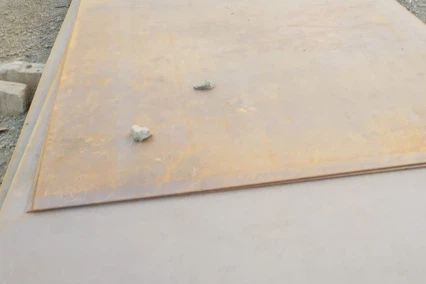
16Mo3 is a EN10028 specified pressure vessel grade molybdenum steel alloy for use in elevated working temperatures.
The material is used as a weldable steel in the fabrication of industrial boilers and steel pressurised vessels found in the oil, gas and chemical industry. Due to the materials molybdenum content, 16Mo3 has excellent heat resistance and corrosion resistant characteristics.
Mechanical Properties of 16Mo3
| Grade | Thickness | Temperature (Deg C) | |||||||||
|---|---|---|---|---|---|---|---|---|---|---|---|
| (mm) | 50 | 100 | 150 | 200 | 250 | 300 | 350 | 400 | 450 | 500 | |
| MPa | MPa | MPa | MPa | MPa | MPa | MPa | MPa | MPa | MPa | ||
| 16Mo3 | < 16 | 273 | 264 | 250 | 233 | 213 | 194 | 175 | 159 | 147 | 141 |
| > 16 < 40 | 268 | 259 | 245 | 228 | 209 | 190 | 172 | 156 | 145 | 139 | |
| > 40 < 60 | 258 | 250 | 236 | 220 | 202 | 183 | 165 | 150 | 139 | 134 | |
| > 60 < 100 | 238 | 230 | 218 | 203 | 186 | 169 | 153 | 139 | 129 | 123 | |
| > 100 < 150 | 218 | 211 | 200 | 186 | 171 | 155 | 140 | 127 | 118 | 113 | |
| > 150 < 250 | 208 | 202 | 191 | 178 | 163 | 148 | 134 | 121 | 113 | 108 |
Chemical Composition of 16Mo3
| % | |
|---|---|
| Carbon (C) | 0.12/0.20 |
| Silicon (Si) | 0.35 |
| Manganese (Mn) | 0.40/0.90 |
| Phosphorus (P) | 0.025 |
| Sulphur (S) | 0.010 |
| Chromium (Cr) | 0.030 |
| Molybdenum (Mo) | 0.25/0.35 |
| Nickel (Ni) | 0.30 |
| Nitrogen (N) | 0.012 |
| Copper (Cu) | 0.30 |
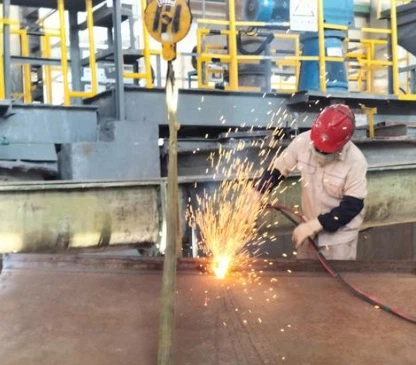 Processing of 16Mo3
Welding Processing: Adopt matching electrodes (e.g., E5015-G) and common processes like manual arc welding or gas metal arc welding. Preheat to 150-200℃ to reduce cold cracking risk, control interpass temperature below 300℃. Conduct post-weld heat treatment (600-650℃) with sufficient holding time to eliminate residual stress and ensure joint toughness and strength.
Forming Processing: Suitable for hot forming and cold forming. Hot forming is preferred for thick workpieces, with heating temperature 850-900℃, followed by slow cooling. Cold forming (e.g., bending, stamping) should be done at room temperature; avoid excessive deformation to prevent material hardening, and perform stress relief annealing if needed.
Heat Treatment Processing: Core process includes normalizing (890-950℃, air cooling) to refine grains and improve mechanical properties. For welded parts and formed components, stress relief annealing (550-600℃) is necessary to reduce internal stress and avoid deformation during service.
Cutting & Machining: Can be processed by flame cutting, plasma cutting or mechanical machining. Flame cutting requires preheating to 100-150℃ to prevent edge cracking. Machining uses high-speed steel or carbide tools, with appropriate cutting speed and feed rate to ensure surface finish and avoid tool wear.
Surface Treatment: Remove oxide scale and impurities via shot blasting or pickling before installation. Avoid surface scratches during processing; apply anti-corrosion coating if used in humid or corrosive environments to enhance durability.
 Applications of 16Mo3
16Mo3 is a low-alloy heat-resistant steel widely utilized in high-temperature and high-pressure industrial fields due to its excellent comprehensive performance. Its main applications are as follows:
Boiler Manufacturing: It is a core material for boiler components such as water wall tubes, superheater tubes, economizer tubes and boiler drums. These parts need to withstand long-term operation at 350-550℃ and high pressure, and 16Mo3's good high-temperature strength and creep resistance can ensure operational safety.
Pressure Vessels: Used in the production of pressure vessels for petrochemical, chemical and energy industries, such as hydrogenation reactors, gas storage tanks and heat exchangers, which handle high-temperature media like steam, oil and gas.
Industrial Piping: Applied to high-temperature and high-pressure pipelines in power plants, refineries and chemical plants for transporting steam, hot oil and other media, with reliable corrosion resistance and thermal stability.
Thermal Power Equipment: Utilized in auxiliary components of thermal power generation systems, including steam headers and connecting pipes, adapting to the cyclic high-temperature working environment of power generation equipment.
Petrochemical Equipment: Used in equipment such as catalytic cracking units and hydrocracking reactors, resisting the erosion of high-temperature and corrosive media in petrochemical processing.
Application Conditions of 16Mo3
To give full play to its performance, 16Mo3 must meet specific application conditions, mainly covering the following aspects:
Temperature Range: Suitable for long-term operation at 350-550℃. Beyond 550℃, its creep resistance and mechanical properties will decrease significantly, affecting service life.
Pressure Requirement: Applicable to medium and high-pressure environments (usually 10-30MPa). It must pass strict pressure testing before use to avoid leakage risks.
Medium Compatibility: Suitable for neutral or weakly alkaline media such as steam and hot water. It is not recommended for strong acid, strong alkali or highly corrosive media to prevent material corrosion.
Welding and Heat Treatment: Welding must use matching electrodes (such as E5015-G) and strict preheating (150-200℃) and post-weld heat treatment (600-650℃) to avoid welding cracks and ensure joint performance.
Operating Environment: It should be used in a dry and well-ventilated environment. Avoid long-term exposure to humid, dusty or high-salt environments to prevent surface oxidation and corrosion.
Full specification and details are available on request. The above information is provided for guidance purposes only. For specific design requirements please contact our technical sales staff.
What is the melting point of 16Mo3 steel?
The melting point range of 16Mo3 steel is about 1450-1500°C, similar to other low-alloy steels. This high melting point ensures it can maintain structural stability at high operating temperatures below its melting point.
What are the main chemical components of 16Mo3 steel?
The main chemical components of 16Mo3 steel include C (0.12-0.20%), Si (0.10-0.35%), Mn (0.40-0.70%), Mo (0.25-0.35%), P ≤ 0.025%, S ≤ 0.015%, and Fe as the base element.
What is the hardness of 16Mo3 steel?
The Brinell hardness (HB) of 16Mo3 steel after normalizing is typically between 137-179 HB. This moderate hardness balances strength and toughness, making it easy to process and form.
What is the difference between 16Mo3 and 16Mn steel?
The main difference is that 16Mo3 contains molybdenum (0.25-0.35%) for better high-temperature resistance, while 16Mn is manganese-alloyed steel with better low-temperature toughness but weaker high-temperature creep performance.
Is 16Mo3 steel corrosion-resistant?
16Mo3 steel has basic atmospheric corrosion resistance but is not suitable for strong corrosive environments (e.g., acid/alkali solutions). Anti-corrosion measures like painting, galvanizing, or lining are needed in corrosive working conditions.
Which standard does 16Mo3 steel comply with?
16Mo3 steel complies with the European standard EN 10028-2, which specifies technical requirements for non-alloy and alloy steels for pressure purposes, covering chemical composition, mechanical properties and heat treatment.
What are the common applications of 16Mo3 steel?
16Mo3 steel is widely used in manufacturing pressure vessels, boilers, heat exchangers, and pipelines for petrochemical, power generation, and chemical industries due to its excellent high-temperature and pressure resistance.
Does 16Mo3 steel require heat treatment before use?
Yes, 16Mo3 steel usually needs normalizing heat treatment (heating to 890-950°C, holding, then air cooling) to refine grains, improve mechanical properties, and ensure uniformity for safe service in high-pressure environments.
What is the elongation at break of 16Mo3 steel?
The elongation at break of 16Mo3 steel is at least 22% (for thickness ≤ 16mm). This good ductility allows the steel to deform without breaking when subjected to external forces, enhancing its safety in practical applications.
What is the tensile strength of 16Mo3 steel?
The tensile strength of 16Mo3 steel is typically between 410-530 MPa. This strength level ensures it can withstand certain pressure and load, making it suitable for high-pressure equipment in industrial environments.