


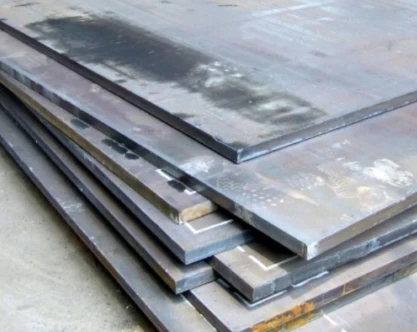
 P420M is a non-alloy fine-grained structural steel compliant with European standard EN 10028-5, tailored for pressure vessel components. Produced via the Thermo-Mechanical Controlled Process, it combines controlled rolling and cooling to refine microstructure without post-normalizing, delivering reliable strength, toughness and dimensional stability for harsh operating conditions.
With strictly controlled chemical composition, P420M boasts excellent weldability, simplifying the fabrication of large-scale structures. It is widely used in petrochemical, energy and heavy machinery sectors. Preheating is recommended for thick plates to prevent cracking, while stress relief annealing can be applied as needed to eliminate internal stress and ensure long-term structural integrity.
Product Specification
| Category | Details |
| Quality Standard | EN 10028-5, GB 713, ASTM A841, ISO 9328-5-2018 |
| Certifications | ISO 9001, CE, AD 2000-W0, PED, ASME Section II, LR, DNV, BV, SGS |
| Thickness | 6-100mm |
| Width | 900-4800mm |
| Length | 3000-25000mm |
| Weight | Depends on length and width |
| Tolerances | Thickness: ±0.3 mm to ±1.0 mm, Width: ±5 mm, Length: ±10 mm |
| Technology | Thermomechanically Rolled |
| Processing Service | Bending, Welding, Decoiling, Cutting, Punching |
| Shapes | Pressure Vessel Steel Plate, Pressure Vessel Steel Sheet, Pipes, Profiles |
| MOQ (Minimum Order Quantity) | 5 tons (according to the actual tonnage) |
| Lead Time | Typically 7-20 days |
| Price Terms & Payment | Based on customer requirements, T/T, L/C |
| Ports | Qingdao, Lianyungang, Dalian |
| Export Countries | Southeast Asia, Central Asia, Europe, Kazakhstan, South America, Middle East, etc. |
| Shipping Method | Offers Sea, Air and Customised Shipping |
Chemical Compositions
| Element | P420M Content (%) |
|---|
| Carbon, C | max 0.16 |
| Silicon, Si | max 0.50 |
| Manganese, Mn | 1.10 – 1.70 |
| Phosphorus, P | max 0.025 |
| Sulfur, S | max 0.010 |
| Nitrogen, N | max 0.02 |
| Chromium, Cr | max 0.30 |
| Nickel, Ni | max 0.50 |
| Molybdenum, Mo | max 0.20 |
| Vanadium, V | max 0.10 |
| Copper, Cu | max 0.30 |
| Titanium, Ti | max 0.05 |
| Niobium, Nb | max 0.05 |
Mechanical Properties
| Thickness Range (mm) | Tensile Strength (MPa/ksi) | Yield Strength (MPa/ksi) | Brinell Hardness (HB) | Rockwell Hardness (HRB) | Vickers Hardness (HV) | Elongation (%) | Elastic Modulus (GPa/ksi) |
|---|
| 6 – 16 | 500-660 / 72.5-95.7 | 420 / 60.9 | 130-180 | 70-90 | 130-180 | 22-25 | 210 / 30,457 |
| 16 – 40 | 500-660 / 72.5-95.7 | 400 / 58.0 | 130-180 | 70-90 | 130-180 | 21-23 | 210 / 30,457 |
| 40 – 63 | 500-660 / 72.5-95.7 | 390 / 56.6 | 130-180 | 70-90 | 130-180 | 20-22 | 210 / 30,457 |
| 63 – 100 | 500-660 / 72.5-95.7 | 370 / 53.7 | 130-180 | 70-90 | 130-180 | 19-21 | 210 / 30,457 |
| 100 – 150 | 500-660 / 72.5-95.7 | 350 / 50.8 | 130-180 | 70-90 | 130-180 | 18-20 | 210 / 30,457 |
| >150 | 500-660 / 72.5-95.7 | 330 / 47.9 | 130-180 | 70-90 | 130-180 | 16-18 | 210 / 30,457 |
| Thickness Range (mm) | Tensile Strength (MPa/ksi) | Yield Strength (MPa/ksi) | Brinell Hardness (HB) | Rockwell Hardness (HRB) | Vickers Hardness (HV) | Elongation (%) | Elastic Modulus (GPa/ksi) |
|---|
| 6 – 16 | 510-670 / 73.9-97.2 | 430 / 62.4 | 140-190 | 72-92 | 140-190 | 23-26 | 210 / 30,457 |
| 16 – 40 | 510-670 / 73.9-97.2 | 410 / 59.5 | 140-190 | 72-92 | 140-190 | 22-24 | 210 / 30,457 |
| 40 – 63 | 510-670 / 73.9-97.2 | 400 / 58.0 | 140-190 | 72-92 | 140-190 | 21-23 | 210 / 30,457 |
| 63 – 100 | 510-670 / 73.9-97.2 | 380 / 55.1 | 140-190 | 72-92 | 140-190 | 20-22 | 210 / 30,457 |
| 100 – 150 | 510-670 / 73.9-97.2 | 360 / 52.2 | 140-190 | 72-92 | 140-190 | 19-21 | 210 / 30,457 |
| >150 | 510-670 / 73.9-97.2 | 340 / 49.3 | 140-190 | 72-92 | 140-190 | 17-19 | 210 / 30,457 |
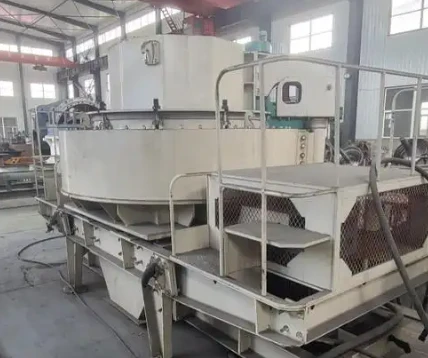
Core Applications
Petrochemical & Gas: Construction of pressure vessels, gas storage spheres, and reactors that must contain volatile substances under high pressure.
Energy Sector: Manufacturing of boiler drums for thermal power plants and high-pressure penstocks for hydroelectric facilities.
Logistics: Pressurized tanks for railway wagons and transport trailers designed for hazardous chemicals or liquefied gases.
Arctic Engineering: Utilizing P420ML2 for offshore platforms or pipelines operating in temperatures as low as -50°C.
Key Benefits
Weight Optimization: The high yield strength (min. 420 MPa) allows engineers to design vessels with thinner walls, reducing the overall steel tonnage and lowering transportation and installation costs.
Superior Weldability: Due to the TMCP (Thermomechanical Rolling) process, P420M has a very low Carbon Equivalent (CEV). This minimizes the risk of cold cracking and often reduces the need for extensive preheating during welding.
Fracture Toughness: The fine-grained microstructure provides exceptional resistance to brittle fracture, making the material extremely safe for critical infrastructure where failure is not an option.
Cost-Efficiency: While it provides high performance, its excellent formability and reduced welding complexity lead to faster fabrication times and lower labor costs compared to older normalized grades.
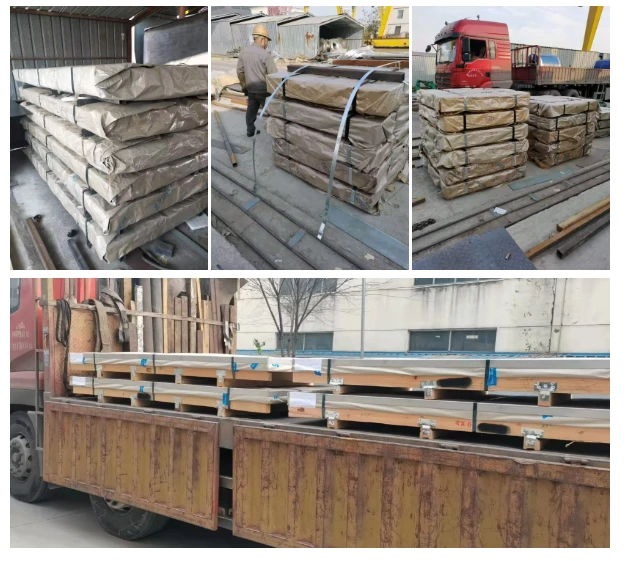
Packing
1.Seaworthy Packaging: We use strong, durable materials such as wooden pallets or crates to ensure the steel plates are securely packed for long sea voyages, preventing damage from movement.
2.Waterproof Wrapping: P420M is covered with high-quality waterproof materials to protect it from moisture and corrosion during transport, especially in humid environments.
3.Edge and Surface Protection: We apply edge protectors and use padded coverings to safeguard the steel from scratches and dents, ensuring that the material's surface and edges remain intact.
4.Custom Labeling and Marking: All shipments are clearly labeled with handling instructions and customer-specific requirements, facilitating smooth customs clearance and proper storage upon arrival.
Get an valued quotation for P420M , Contact GNEE Steel.
What is P420M mainly used for in industrial applications?
P420M is a high-performance material widely used in industrial fields like mechanical manufacturing, engineering machinery and auto parts. It offers excellent strength and wear resistance, suitable for components under high load and harsh working conditions.
What is the density of P420M?
The density of P420M is approximately 7.85 g/cm³, which is similar to common carbon and low-alloy steels. This density ensures good structural stability and load-bearing capacity in applications.
Is P420M a low-alloy steel?
Yes, P420M is a low-alloy steel. It contains a small amount of alloying elements like manganese, silicon and chromium, which improve its mechanical properties compared to ordinary carbon steel without significantly increasing production costs.
What is the yield strength of P420M?
The minimum yield strength of P420M is 420 MPa, which is the origin of its model name. This high yield strength ensures that the material can resist deformation under load, making it ideal for heavy-duty structural components.
What heat treatment processes is P420M suitable for?
P420M is suitable for heat treatment processes like quenching and tempering. Quenching enhances its hardness and strength, while tempering improves toughness and reduces brittleness, optimizing its overall mechanical performance.
What is the melting point range of P420M?
The melting point range of P420M is typically between 1450°C and 1500°C. This high melting point makes it suitable for high-temperature processing and applications where it may be exposed to elevated temperatures for short periods.
What is the difference between P420M and P420 steel?
The main difference between P420M and P420 steel lies in impurity content and mechanical uniformity. P420M has lower harmful impurities, better toughness and more stable performance, making it suitable for higher-demand industrial applications.
Can P420M be used in high-pressure equipment?
P420M can be used in some high-pressure equipment after strict testing and certification. Its high tensile strength and yield strength enable it to withstand certain pressure, but it must comply with relevant industry standards and safety regulations.
Can P420M be welded easily?
P420M can be welded with proper techniques and materials. It is recommended to use matching welding electrodes and preheat the material before welding to reduce internal stress and avoid cracks in the weld joint.
What are the key mechanical properties of P420M?
The key mechanical properties of P420M include high tensile strength, good yield strength and toughness. It also has outstanding fatigue resistance and impact resistance, ensuring stable performance in long-term and heavy-duty operations.