


 A662 Grade C is a carbon-manganese-silicon alloy steel plate specified in ASTM A662, primarily intended for use in medium and low-temperature pressure vessel applications. It is produced under controlled melting and rolling conditions to achieve a fine-grained microstructure, providing a good combination of strength, ductility, and low-temperature toughness, typically suitable for service down to around -45°C. The material exhibits excellent weldability with appropriate preheating and post-weld heat treatment, making it a cost-effective choice for fabricating boilers, storage tanks, heat exchangers, and other pressure-bearing equipment in industries such as petrochemical, power generation, low-temperature storage and transportation, and water conservancy.
Chemical Composition and Mechanical Property
|
Grade |
Chemical Composition(%) |
||||
|
C |
Mn≥ |
Si |
P |
S |
|
|
A662 Grade C(A662GR C) |
0.24 |
0.13-0.45 |
0.79-1.62 |
0.035 |
0.035 |
|
Grade |
Mechanical Property |
|
|||
|
Tensile Strength(MPa) |
Yield Strength(MPa) |
% Elongation in 2 in.(50mm) min |
Impacting Test Temperature(°C) |
|
|
|
A662 Grade C(A662GR C) |
480-620 |
295 |
20 |
-20,40,-60 |
ASTM A662 Equivalent Steel Grade:
| ASTM | EN10028 | JIS | ISO |
|---|---|---|---|
| A662-A | - | G3115-SPV235G3126-SPV235 | - |
 Processes Adopted for A662 Grade C
Smelting Process:
Adopts EAF/BOF smelting with LF refining. Strictly controls C, Mn, Si and harmful impurities (S, P) to ensure uniform chemical composition and steel purity, laying a foundation for excellent mechanical properties.
Rolling Process:
Applies CRCC technology. Heats billets to 1100-1250℃ for hot rolling, precisely controlling rolling parameters to refine grains, enhance strength/toughness, and ensure uniform thickness and surface quality.
Heat Treatment Process:
Core process is normalizing (890-950℃, constant temperature, air cooling). Optimizes microstructure, eliminates internal stress, and improves low-temperature toughness and mechanical stability.
Welding Process:
Commonly uses SMAW, GMAW and SAW. Requires preheating (50-100℃) to prevent cold cracks and PWHT (e.g., stress relief annealing) to eliminate residual stress and ensure weld reliability.
Surface Treatment Process:
Adopts shot blasting, pickling and passivation for application scenarios. Removes surface oxides/impurities, improves corrosion resistance, and prepares for subsequent anti-corrosion coating (if needed).
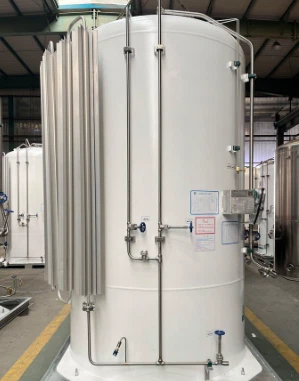 A662 Grade C Applications
Petrochemical Industry:
As a specialized steel for medium and low-temperature pressure vessels, it is mainly used to manufacture critical equipment (reactors, heat exchangers, storage tanks, etc.). It operates stably at -30℃ and above, resisting medium pressure and corrosion to ensure safe petrochemical production.
Power Energy Industry:
Suitable for high-temperature and high-pressure equipment (boiler drums, nuclear reactor pressure vessels, etc.). It withstands alternating temperature conditions and ensures long-term safe operation of power generation equipment with excellent strength and fatigue resistance.
Low-Temperature Storage and Transportation Field:
Used in low-temperature medium (liquid ammonia, LPG, etc.) storage and transportation containers. Adaptable to -20℃ to -45℃ environments, it meets strict requirements for toughness and sealing.
Water Conservancy and Hydropower Field:
Applicable to pressure-bearing components (high-pressure water pipes, turbine volutes, etc.) in hydropower stations. It retains good mechanical properties in low-temperature water, ensuring stable operation of water conservancy facilities.
 A662 Grade C Application Conditions
Temperature Conditions: Suitable for medium-low temperature environments (-45℃ to 345℃), maintaining stable mechanical properties under alternating temperatures to avoid brittle fracture or performance degradation.
Pressure Requirements: For medium-low pressure scenarios (0.6MPa-10MPa), with MAWP matching plate thickness, ensuring structural safety of pressure-bearing equipment.
Medium Compatibility: Compatible with non/weakly corrosive media (oil, gas, LPG, etc.), not suitable for strong corrosive environments without additional anti-corrosion treatment.
Welding Process Conditions: Requires appropriate welding processes and materials; preheating (50-100℃) and post-weld heat treatment are recommended for stable weld performance.
Structural Design Requirements: Complies with industry standards (e.g., ASME Section VIII); avoids sharp corners and stress concentration to prevent fatigue damage.
Why Choose Us :
You can get the perfect material according to your requirement at the least possible price.
We also offer Reworks, FOB, CFR, CIF, and door to door delivery prices. We suggest you to do deal for shipping which will be quite economical.
The materials we provide are completely verifiable, right from raw material test certificate to the final dimensional statement.(Reports will show on requirement)
We guarantee to give a response within 24hours(usually in the same hour)
You can get stock alternatives, mill deliveries with minimizing manufacturing time.
We are fully dedicated to our customers. If it will not possible to meet your requirements after examining all options, we will not mislead you by making false promises which will create good customer relations.
Full specification and details are available on request. The above information is provided for guidance purposes only. For specific design requirements please contact our technical sales staff.
What are the main chemical components of A662 Grade C?
The main chemical components include carbon (C) ≤0.20%, manganese (Mn) 0.70-1.35%, phosphorus (P) ≤0.035%, sulfur (S) ≤0.035%, silicon (Si) 0.15-0.40%, and trace other elements.
What standards does A662 Grade C comply with?
A662 Grade C complies with the ASTM A662 standard, which is an American Society for Testing and Materials specification for carbon-manganese steel plates for pressure vessels.
What is the difference between A662 Grade C and Grade A?
The main difference lies in strength and toughness. Grade C has higher yield and tensile strength than Grade A, and better low-temperature toughness, suitable for more demanding service conditions.
What is the melting point of A662 Grade C?
The melting point range of A662 Grade C is 1420-1460°C (2588-2660°F), similar to other carbon-manganese steels, which is important for welding and heat treatment processes.
What is the minimum service temperature of A662 Grade C?
The minimum service temperature of A662 Grade C is -29°C (-20°F). It maintains good toughness and structural stability at this temperature, avoiding brittle fracture in low-temperature applications.
What corrosion resistance does A662 Grade C have?
It has general corrosion resistance in atmospheric and mild chemical environments. For harsh corrosive conditions, additional anti-corrosion treatments (e.g., painting, galvanizing) are required.
Does A662 Grade C require heat treatment?
It depends on thickness and application. Thin plates (≤12mm) may be used as-rolled, while thicker plates or those for severe environments need normalizing or stress-relief heat treatment.
What is the Poisson's ratio of A662 Grade C?
At room temperature, the Poisson's ratio of A662 Grade C is about 0.3, which is used to calculate lateral deformation when the material is subjected to axial stress.
Is A662 Grade C suitable for low-temperature storage tanks?
Yes, it is suitable for low-temperature storage tanks operating above -29°C. Its good low-temperature toughness prevents brittle fracture, ensuring the safety of storage tanks.
What is the hardness requirement of A662 Grade C?
The typical Brinell hardness (HB) of A662 Grade C is ≤197. Hardness testing is usually performed to ensure the material has appropriate toughness and avoid excessive hardness.
What are the typical mechanical properties of A662 Grade C?
Typically, its tensile strength is 485-620 MPa, yield strength ≥290 MPa, elongation ≥23% in 2 inches. It also has excellent impact toughness, especially at low temperatures.