


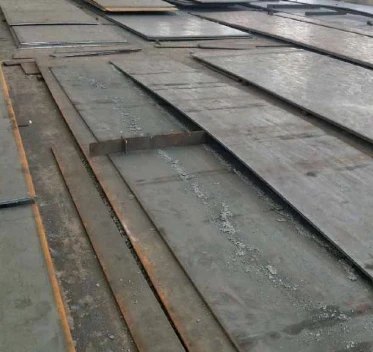
 ASME SA515 Grade 65 is a specific grade of carbon-silicon steel plate designed primarily for intermediate and higher-temperature service in welded boilers and other pressure vessels.
Key Specifications
Standard: ASME SA515 / ASTM A515.
Mechanical Properties:
Tensile Strength: 65–85 ksi (450–585 MPa).
Yield Strength: Minimum 35 ksi (240 MPa).
Elongation: Minimum 19% in 8" (200 mm) or 23% in 2" (50 mm).
Manufacturing: The steel is "killed" and produced to a coarse austenitic grain size practice. This grain structure helps minimize graphitization at high temperatures.
SA515 Grade 65 pressure vessel steel chemical composition %
| Grade | Thickness | C max | Mn max | P max | S max | Si |
| SA515 Grade 65 | t≤25 | 0.28 | 0.90 | 0.025 | 0.025 | 0.15-0.40 |
| 25﹤t≤50 | 0.31 | |||||
| 50﹤t≤100 | 0.33 | |||||
| 100﹤t | 0.33 |
SA515 Grade 65 pressure vessel steel Mechanical properties
| Grade | Yield strength ReH MPa min | Tensile strength Rm MPa | Elongation A% min | |
| 200mm | 50mm | |||
| SA515 Grade 65 | 240 | 450-585 | 19 | 23 |
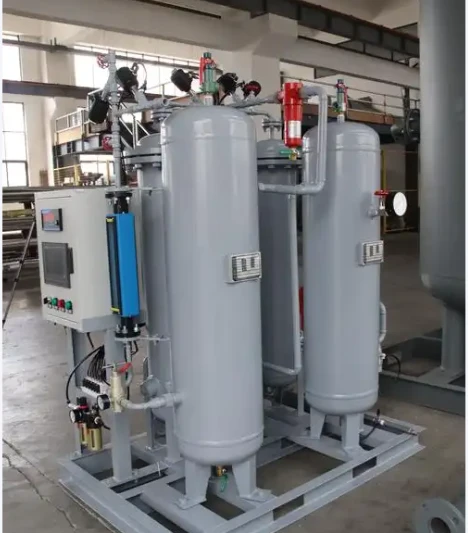 Operating Conditions
Temperature Range: Primarily used for service up to 538°C (1000°F).
Design Philosophy: It is manufactured using coarse grain practice. This specific grain structure provides superior resistance to creep (deformation under long-term heat) and graphitization (the breakdown of steel structure at high temperatures) compared to fine-grained steels like SA516.
Pressure Requirements: Designed for high-pressure environments, such as those found in steam-generating boilers.
Primary Applications
Boiler Components: Ideal for steam drums, water walls, and boiler shells in power plants.
Petrochemical Pressure Vessels: Used for storage tanks and processing units that operate at elevated temperatures in refineries.
Heat Exchangers: Applied in thermal transfer equipment where the metal is exposed to fluctuating but high thermal loads.
Steam Piping: Frequently used for large-diameter steam transport pipes in industrial settings.
Important Constraints
Not for Low Temperatures: Because it is a coarse-grained steel, it has lower notch toughness (impact resistance) at cold temperatures. If your application operates at ambient or sub-zero temperatures, ASME SA516 Grade 65 is typically the better alternative.
Heat Treatment: For thicknesses over 2 inches (50 mm), normalizing is typically required to ensure uniform mechanical properties.
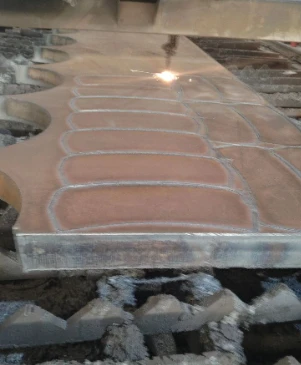 SA515 Grade 65 Processing
Hot Forming & Rolling
SA515 Grade 65 is primarily processed via hot rolling at temperatures ranging from 1100°C to 1250°C, which refines its ferritic-pearlitic microstructure and ensures uniform mechanical properties across the plate. Hot forming operations (bending, forging) are performed above 900°C to avoid cold working brittleness; post-forming slow cooling is recommended for thick plates to reduce residual stress and prevent thermal cracking, critical for pressure vessel applications requiring structural integrity.
Cutting & Machining
The grade is machinable and cuttable via conventional methods: oxy-fuel cutting for thick sections (≥20mm) with preheating to 150°C–200°C to eliminate edge hardening, and plasma/laser cutting for thin to medium plates (≤20mm) for precise, clean edges. Machining (milling, drilling, turning) uses high-speed steel or carbide tools with moderate feed rates; coolant is essential to control heat and prevent tool wear, as the material's moderate tensile strength (450–585 MPa) creates steady cutting resistance.
Heat Treatment
Stress relief annealing is the primary post-processing heat treatment, conducted at 595°C–675°C for 1 hour per 25mm of thickness, followed by air cooling. This process relieves residual stresses from forming/cutting, improves ductility (minimum 21% elongation), and stabilizes dimensions-mandatory for pressure vessel components to meet ASME Boiler and Pressure Vessel Code (BPVC) requirements. Normalization (870°C–925°C, air cool) is optional for thin plates to enhance toughness and uniformity.
Surface Preparation & Finishing
Post-processing surface treatment includes shot blasting to remove scale and oxide layers, followed by painting or coating to prevent corrosion in industrial environments. Welded surfaces are ground smooth to eliminate stress risers; non-destructive testing (NDT) (ultrasonic, magnetic particle) is applied after all processing steps to verify no internal/external defects, aligning with SA515's core use case in pressure-containing equipment.
Get an valued quotation for SA515 Grade 65, Contact GNEE Steel.
What is SA515 Grade 65?
SA515 Grade 65 is a carbon steel plate specified by ASTM A515. It is primarily used for pressure vessels operating at moderate to elevated temperatures, offering good tensile strength and weldability for industrial applications.
What is the minimum tensile strength of SA515 Grade 65?
The minimum tensile strength of SA515 Grade 65 is 450 MPa (65,000 psi). This strength level makes it suitable for pressure-containing structures that require reliable load-bearing capacity at moderate temperatures.
What is the minimum yield strength of SA515 Grade 65?
SA515 Grade 65 has a minimum yield strength of 290 MPa (42,000 psi). This yield strength ensures the material can withstand stress without permanent deformation in pressure vessel service.
Which standard governs SA515 Grade 65?
SA515 Grade 65 is governed by ASTM International Standard A515/A515M. This standard specifies the requirements for carbon steel plates for pressure vessels designed for intermediate and elevated temperature service.
What is the maximum service temperature of SA515 Grade 65?
The maximum recommended service temperature for SA515 Grade 65 is 593°C (1100°F). Beyond this temperature, its mechanical properties may degrade, affecting pressure vessel integrity.
What are the typical chemical compositions of SA515 Grade 65?
Typical chemical compositions (wt%) include: C ≤ 0.31, Mn 0.60-1.00, P ≤ 0.035, S ≤ 0.035, Si 0.15-0.40. These elements ensure good strength and weldability.
Is SA515 Grade 65 weldable?
Yes, SA515 Grade 65 is highly weldable. It can be welded using common methods like shielded metal arc welding (SMAW), gas metal arc welding (GMAW), and submerged arc welding (SAW) with proper preheat and post-weld heat treatment.
What preheat temperature is required for welding SA515 Grade 65?
The typical preheat temperature for welding SA515 Grade 65 ranges from 60°C to 150°C (140°F to 302°F), depending on plate thickness and welding process. Preheating prevents cold cracking and improves weld quality.
What are the common applications of SA515 Grade 65?
SA515 Grade 65 is widely used in pressure vessels, boilers, storage tanks, and heat exchangers in industries like oil and gas, petrochemical, power generation, and chemical processing due to its temperature and pressure resistance.
What is the difference between SA515 Grade 60 and Grade 65?
The main difference is tensile and yield strength: Grade 65 has higher minimum tensile (450 MPa vs 415 MPa) and yield (290 MPa vs 275 MPa) strengths than Grade 60, making it suitable for more demanding pressure applications.