


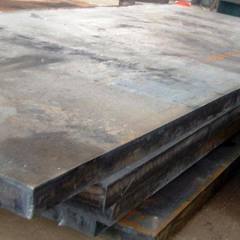
S890Q is a European standard (EN 10025-6) high-strength fine-grain structural steel known for its excellent weldability and strength, featuring a minimum yield strength of 890 MPa (MegaPascals) after quenching and tempering (Q). It's used in demanding applications like heavy machinery, cranes, and bridges, allowing for weight reduction and higher loads, with good machinability and forming properties.
|
S890QChemical Composition |
||||||||
|
Grade |
The Element Max (%) |
|||||||
|
C |
Si |
Mn |
P |
S |
N |
B |
Cr |
|
|
S890 Q |
0.20 |
0.80 |
1.70 |
0.020-0.025 |
0.010-0.015 |
0.015 |
0.005 |
1.50 |
|
Cu |
Mo |
Nb |
Ni |
Ti |
V |
Zr |
|
|
|
0.50 |
0.70 |
0.06 |
2.0 |
0.05 |
0.12 |
0.15 |
|
|
|
Grade |
S890Q Mechanical Property |
|||||
|
Thickness |
Yield |
Tensile |
Elongation |
Min Impact Energy
|
||
|
S890 Q |
mm |
Min Mpa |
Mpa |
Min % |
-20 |
30J |
|
3<t≦50 |
890 |
940-1100 |
11 |
-20 |
30J |
|
|
50<t≦100 |
830 |
880-1100 |
11 |
-20 |
30J |
|
|
100<t≦150 |
800 |
820-1000 |
11 |
-20 |
30J |
|
applications
Lifting Equipment:
In the lifting equipment sector, S890Q is a preferred material for crane booms, telescopic sections, outriggers, and high-capacity hooks. Its combination of high yield strength and good toughness ensures that crane structures can withstand dynamic loads, fatigue, and extreme lifting conditions. The use of S890Q enables the design of longer, lighter booms with higher lifting capacities.
Bridge Construction:
S890Q is employed in the construction of heavily stressed bridge components such as main girders, cross beams, and support structures. It is especially useful for long-span bridges and temporary bridge trestles where high strength and stiffness are essential. The material's ability to resist fatigue and dynamic loads makes it suitable for bridges subjected to heavy traffic and harsh environmental conditions.
Offshore Industry:
In the offshore sector, S890Q is used for the fabrication of support structures for wind turbines, including tower internals, transition pieces, and monopile reinforcements. It is also utilized in drilling rigs, platform structures, and subsea equipment where resistance to high wind, wave, and ice loads is required. The steel's excellent low-temperature toughness is critical for ensuring structural safety in cold offshore environments.
Transportation:
S890Q finds application in the transportation industry for heavy-duty truck chassis, trailer frames, and components of special transport vehicles. Its high strength allows manufacturers to reduce the weight of vehicle structures, thereby increasing payload capacity and improving overall efficiency. It is also used in the construction of rail freight wagons and other transportation equipment requiring high load-bearing capability.
Mechanical Engineering:
Within mechanical engineering, S890Q is used to produce high-strength machine parts such as large gears, heavy-duty shafts, hydraulic cylinder rods, and suspension arms. Its combination of strength and toughness makes it suitable for components subjected to high static and dynamic loads, as well as cyclic fatigue.
Pressure Equipment:
S890Q is suitable for the fabrication of pressure vessels, storage tanks, and high-pressure pipes, particularly in applications governed by German regulations such as the AD 2000 standards. Its high strength allows for thinner wall thicknesses, reducing overall weight and material costs while maintaining the required pressure resistance and safety margins.
Full specification and details are available on request. The above information is provided for guidance purposes only. For specific design requirements please contact our technical sales staff.
What is S890Q steel and what does its designation mean?
S890Q is a high-strength quenched and tempered structural steel defined in European standards (e.g., EN 10025-6). The "S" stands for structural steel, "890" indicates the minimum yield strength in MPa, and "Q" denotes quenched and tempered (QT) heat treatment.
What is grade S890Q steel equivalent to?
S890Q is a European high-yield strength structural steel (EN 10025-6) with a minimum yield strength of 890 MPa in quenched and tempered (Q) condition, equivalent to grades like Q890 (China), and similar in application to ASTM A514 or Weldox 700, offering high strength for heavy-duty applications like construction, cranes, and heavy machinery, with specific impact toughness at -20°C.
What are the typical mechanical properties of S890Q?
S890Q typically has a minimum yield strength of 890 MPa, minimum tensile strength often in the range 960–1100 MPa, good toughness (often specified with Charpy V-notch values at low temperatures), and good weldability when proper procedures are followed.
What are common applications of S890Q steel?
S890Q is used in heavy-duty structures where high strength and weight reduction are critical, such as crane booms, mobile crane structures, high-rise building components, offshore structures, and heavy equipment frames.
What heat treatment is applied to S890Q?
S890Q is produced by quenching (rapid cooling) followed by tempering (reheating to a lower temperature and cooling), which achieves high strength while maintaining toughness and reducing brittleness.
What welding considerations are important for S890Q?
Key welding considerations include preheating and interpass temperature control to prevent hydrogen-induced cracking, using low-hydrogen welding consumables, controlling heat input, and performing post-weld heat treatment (PWHT) when required by design or code.
How does S890Q compare to S690Q in terms of strength and application?
S890Q has a higher minimum yield strength than S690Q (890 MPa vs. 690 MPa). This allows S890Q to provide equivalent load capacity with thinner plates or sections, making it better suited for weight‑critical or higher‑load applications such as large crane booms and long‑reach excavator structures. S690Q, by contrast, is used in a wider range of heavy structures where the maximum strength of S890Q is not necessary.
How does S890Q compare to quenched‑and‑tempered carbon‑manganese steels (e.g., A514/A517 in ASTM) in terms of standardization and properties?
S890Q is a European standard (EN) high‑strength structural steel with defined yield strength and toughness requirements, often with tighter controls on chemical composition and heat treatment for structural use. ASTM A514/A517 are also quenched and tempered (QT) high‑strength steels but follow American standards; their grade designations, strength ranges, and toughness/testing criteria may differ. Both are used for heavy structural applications, but material approval and procurement specifications depend on whether the project follows EN or ASTM standards.
How does S890Q compare to hot‑rolled high‑strength steels (e.g., S355) in terms of strength, toughness, and fabrication?
S890Q has a substantially higher yield strength than S355 (890 MPa vs. 355 MPa), which enables significant weight reduction. It also generally offers better low‑temperature toughness due to its QT heat treatment. However, S890Q requires more careful fabrication: stricter welding procedures (including preheating and low‑hydrogen consumables), more controlled cutting and forming to prevent cracking, and typically more rigorous quality control compared to the more easily fabricated S355.