


What factors influence the price of SA387 Grade 12 Class 1?
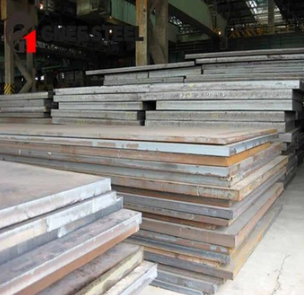
SA387 Grade 12 Class 1 Chromium-Molybdenum (Cr-Mo) alloy steel plate, standardized by ASME/ASTM, designed for weldable pressure vessels and boilers operating at elevated temperatures, offering good strength, toughness, and improved corrosion resistance due to its chromium content, suitable for demanding oil & gas, petrochemical, and power generation applications.
The price of SA387 Grade 12 Class 1 is influenced by a similar set of factors as other alloy steels, but with specific nuances due to its lower alloy content (1Cr-0.5Mo) and annealed (Class 1) condition. Here are the key factors:
1. Raw Material & Market Factors
Alloy Cost Volatility: Prices of molybdenum (Mo) and chromium (Cr) directly impact cost, though less sharply than for higher-alloy grades like Grade 22. Fluctuations in scrap steel and iron ore prices also set a baseline.
Global Demand: Demand from power generation, petrochemical, and boiler manufacturing sectors drives competition. Economic cycles affecting these industries heavily influence pricing.
Trade Policies: Tariffs, quotas, or anti-dumping measures on steel imports in key markets (e.g., U.S., EU, India) can limit supply sources and raise costs.
2. Product Specifications & Manufacturing
Plate Dimensions: Thickness and width are critical. Thicker plates (>50mm) or extra-wide cuts require more intensive rolling, may involve limited mill capacity, and consume more material per unit, increasing price.
Heat Treatment (Class 1): The annealing process adds cost due to furnace time, energy consumption, and controlled cooling. However, it is generally less expensive than the normalizing & tempering required for Class 2.
Order Quantity: Larger volumes (full heats or truckloads) typically enjoy volume discounts. Small or cut-piece orders incur higher per-unit costs due to handling and processing.
Mill Source & Certification: Plates from reputable mills (especially in the EU, Japan, or North America) with full ASTM/ASME certification and traceability command a premium over generic or imported material without accredited documentation.
3. Purchasing & Logistics Factors
Testing & Certification: Standard Mill Test Reports (MTRs) are included. Additional testing (e.g., ultrasonic examination, extended chemical analysis, or impact testing at low temperatures) adds cost.
Processing Services: If the supplier provides cutting, beveling, shot blasting, or priming, these value-added services increase the final price.
Delivery & Location: Freight costs from mill or warehouse to the job site, urgency of delivery (ex-stock vs. mill production lead time), and regional logistics challenges affect pricing.
Currency Exchange Rates: Transactions often occur in USD or EUR, so fluctuations can impact buyers in other currencies.
Key Differences vs. Higher-Alloy Grades (e.g., Grade 22)
Lower Alloy Content: Grade 12's reduced Cr/Mo levels make it more sensitive to general carbon steel market trends and less driven by exotic alloy surcharges.
Annealed Condition (Class 1): Often chosen for complex forming; the annealing cost is generally lower than N&T (Class 2), but the trade-off is that the final component must undergo PWHT to achieve service properties, shifting some cost to the fabricator.
Application Niche: It serves moderate-temperature service (~425-475°C), so demand is less driven by extreme high-temperature projects (e.g., hydrocrackers), and more by general boiler and vessel maintenance.
Summary Table of Price Influencers
| Category | Specific Factors for SA387 Gr 12 Cl 1 |
|---|---|
| Market | Molybdenum/chromium prices; carbon steel trends; trade policies; sector demand (power, petrochemical). |
| Product | Plate thickness/width; annealing cost; order volume; mill reputation/certification. |
| Quality | Standard MTR vs. extra testing (UT, impact tests). |
| Logistics | Freight/distance; processing services (cutting, beveling); currency rates; stock vs. mill-order lead time. |
Practical Pricing Scenario:
High Cost Scenario: A thick, non-standard width plate ordered in a small quantity from a European mill, requiring additional impact testing, with urgent ex-stock delivery during a period of high molybdenum prices.
Lower Cost Scenario: A standard-size plate ordered in bulk from a stockist during stable markets, with only standard certification and routine lead time.
Procurement Tip: Buyers should specify exact dimensions, quantity, testing requirements, and delivery schedule to receive comparable quotes. Consider total cost of ownership, including potential post-purchase processing (like PWHT) for Class 1 material.
What is SA387 Grade 12 Class 1?
SA387 Grade 12 Class 1 is a chromium-molybdenum alloy steel plate specification, part of the ASME Boiler and Pressure Vessel Code, designed for service in welded pressure vessels operating at moderate to high temperatures.
What is the chemical composition of SA387 Gr 12 Cl 1?
Its typical composition includes Chromium (0.80-1.25%) and Molybdenum (0.44-0.65%), along with controlled amounts of Carbon, Manganese, Silicon, Phosphorus, and Sulfur.
What are the mechanical properties of SA387 Grade 12 Class 1?
Key mechanical properties include a minimum tensile strength of 415 MPa (60 ksi) and a minimum yield strength of 220 MPa (32 ksi), with elongation requirements that vary by plate thickness.
Is SA387 Grade 12 Class 1 equivalent to ASTM A387 Gr12?
Essentially, yes. SA387 is the ASME designation, which is generally identical to the ASTM A387 Gr12 specification. The "SA" prefix indicates its adoption by ASME for code construction.
What is the difference between Class 1 and Class 2 for SA387 Grade 12?
The main difference is the mandatory heat treatment for Class 2. SA387 Grade 12 Class 2 must be supplied in the normalized and tempered condition, while Class 1 can be supplied as-rolled, annealed, or normalized and tempered.
What is the temperature limit for SA387 Grade 12 steel?
It is suitable for service temperatures up to approximately 800°F (427°C), making it a common choice for hydrogen service and other elevated temperature applications in refineries.
How do you weld SA387 Grade 12 Class 1 plate?
Welding requires proper procedures, including preheating (typically 250-400°F / 121-204°C) and post-weld heat treatment (PWHT) for most applications. Common filler metals include E8016-B2 or ER80S-B2.
Where is SA387 Grade 12 Class 1 typically used?
It is widely used in the fabrication of pressure vessels, reactors, and heat exchangers for the oil & gas, petrochemical, and power generation industries.
Is SA387 Grade 12 Class 1 a creep strength enhanced ferritic (CSEF) steel?
No, it is not. SA387 Gr12 is a traditional 1Cr-0.5Mo alloy. CSEF steels like Grades 91, 92, and 122 have different compositions and significantly higher temperature strength.
What is the hardness of SA387 Grade 12 Class 1?
Hardness is not explicitly specified in the standard, but it is controlled by the chemistry and mechanical properties. In service, hardness is often limited to a maximum (e.g., 200 HB Brinell) to resist hydrogen-induced cracking (HIC) or sulfide stress cracking (SSC).
Full specification and details are available on request. The above information is provided for guidance purposes only. For specific design requirements please contact our technical sales staff.
