


What is SA36 material equivalent to?
Understanding the equivalents for SA-36 / A36 is crucial for global procurement, design conversion, and material substitution.
The most important concept is that there is no single, perfect, certified equivalent to A36. The choice of an "equivalent" depends on which property is most critical for your application: minimum yield strength, chemical composition, or guaranteed impact toughness.
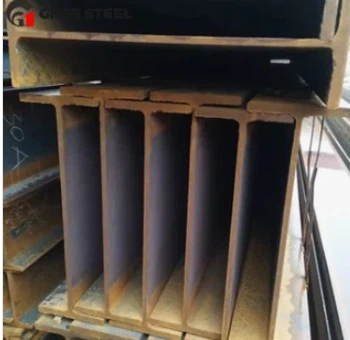
What is SA36 material?
SA36 refers to a standard for a popular, versatile carbon structural steel (ASME SA36) used in construction, bridges, and general fabrication, virtually identical in properties to ASTM A36 steel, but with ASME certification for use in boilers and pressure vessels, meaning it undergoes stricter testing for high-pressure applications, while also being suitable for welding, bolting, and riveting in general construction. It's known for good strength (minimum 36 ksi yield) and formability, with applications from machinery frames to tanks.
Here is a detailed breakdown of SA-36 / A36 equivalents across different standards.
Quick Reference: Equivalent Table
| Standard | Closest Equivalent(s) | Key Differences & Notes |
|---|---|---|
| European (EN) | S235JR S235J0 / S235J2 |
Not a direct match. See critical analysis below. |
| International (ISO) | Fe 360-B / E235-B | Largely superseded by EN standards. Very similar to S235 series. |
| Chinese (GB/T) | Q235B Q235D (for toughness) |
Q235B is the most common general-purpose equivalent. |
| Japanese (JIS) | SS400 | Similar strength concept, but SS400 specifies tensile strength (400-510 MPa) not yield strength. |
| British (BS) | 43A, 43B (Older BS 4360) | Now largely replaced by EN grades (S235). |
| German (DIN) | St37-2, S235J2G3 | DIN standards have been harmonized with EN. |
| Canadian (CSA) | G40.21 300W | Very similar, 300 MPa yield. A36 is also widely used directly in Canada. |
Conclusion for EN Equivalents:
For Strength Matching: The closest match is actually S275 (275 MPa yield). However, S275 has stricter chemistry.
For General Purpose/Application Matching: S235JR or S235J2 are used in similar types of buildings and structures. S235J2 (impact at -20°C) is often a better functional equivalent than S235JR because its killed steel practice and guaranteed toughness address two of A36's common weaknesses.
For Welding/Chemistry Matching: No direct equivalent. A36's chemistry is closer to some S275 grades but with different strength.
How to Choose the Correct "Equivalent" about SA36
The right choice depends on the governing design code and the critical property:
If the Design is Governed by Yield Strength (e.g., an American design being fabricated abroad):
You need a material with a guaranteed yield strength ≥ 250 MPa. In the EN system, this points you to S275JR or S275J2.
You must re-approve the design with the new material's exact properties (which may change member sizes).
If the Application is General Construction (e.g., a warehouse, non-critical frame):
Where local availability and cost dictate, S235JR/J2 (EU) or Q235B (China) are commonly accepted as "commercial equivalents" because they serve the same purpose. This requires formal engineering approval.
If Low-Temperature Toughness is Critical (e.g., outdoor structure in a cold climate):
Standard A36 is a poor choice (no required toughness).
The equivalent should be a grade with mandatory impact tests, like S235J2 (-20°C) or, for a better strength match, S275J2.
If Weldability is the Primary Concern:
European grades (S235, S275) with their lower carbon content are superior and more forgiving than A36.
Summary: The Practical Answer
In European/International contexts, the most commonly accepted functional or commercial equivalents for general use are the S235 series (JR, J0, J2) and the S275 series for strength-matched applications.
In Asian contexts, Q235B (China) or SS400 (Japan) are the standard equivalents.
Crucially, "equivalent" does not mean "interchangeable without review."
For substitution, you must have: 1) Formal approval from the responsible design engineer, 2) Certified mill test reports for the actual material, and 3) Updated welding procedures if the chemistry differs.
Final Verdict: The true "equivalent" is determined not by a simple table, but by the project specifications, governing codes, and a technical evaluation of which material properties are non-negotiable. Always consult a materials engineer or the relevant design authority before substituting.
1. What is SA36 steel commonly used for?
SA36 is the most widely used general-purpose structural steel in North America, primarily employed in building frames, bridges, industrial equipment, and general fabrication where moderate strength and good weldability are required.
2. What is the yield strength of SA36 steel?
SA36 has a minimum yield strength of 36,000 psi (250 MPa), which is the basis for its name ("36") and makes it suitable for a broad range of structural applications.
3. Is SA36 steel weldable?
Yes, SA36 is highly weldable using common methods like SMAW, GMAW, and FCAW. However, preheating may be necessary for thicker sections or restrained joints due to its variable carbon content.
4. How does SA36 differ from SA572 Grade 50?
SA36 has a lower yield strength (36 ksi vs. 50 ksi) and is a carbon steel, while SA572 Grade 50 is a high-strength low-alloy (HSLA) steel with better strength-to-weight ratio and atmospheric corrosion resistance.

Full specification and details are available on request. The above information is provided for guidance purposes only. For specific design requirements please contact our technical sales staff.