


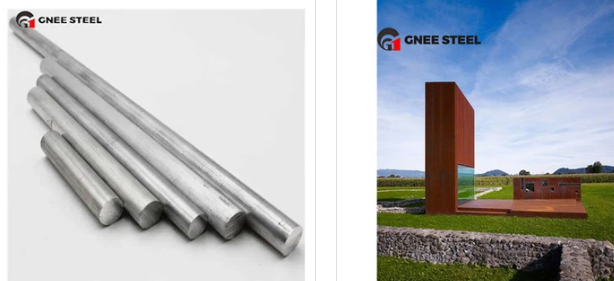
S355J0 is a European standard (EN 10025-2) non-alloy structural steel, known for its minimum yield strength of 355 MPa, good weldability, and toughness at 0°C, indicated by the 'J0' (0°C impact test). It's a low-carbon manganese steel, suitable for general construction, bridges, and machinery in mild climates, often supplied normalized or untreated, and is similar to ASTM A572 Grade 50.
Key Characteristics:
Strength: Minimum yield strength of 355 MPa.
Impact Resistance: Tested to provide at least 27 Joules at 0°C (indicated by 'J0').
Composition: Low carbon (max 0.20%) and manganese content, making it easily weldable.
Condition: Often supplied normalized or untreated for good machinability and formability.
Applications:
General construction and structural engineering.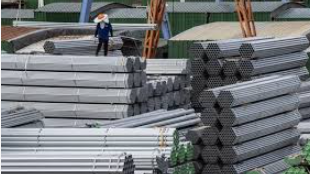
Bridges, ships, and power plant equipment.
Lifting and transport machinery.
Structures requiring good weldability and strength in mild (above 0°C) conditions.
Equivalents:
ASTM A572 Grade 50
DIN St52-3
JIS SM490
Here is a comprehensive summary of the mechanical properties of S355J0 structural steel according to the European standard EN 10025-2:2004.These are the minimum guaranteed values used for design. Actual test certificates from steel mills will often report higher values.
1. Key Mechanical Properties (Core Table)
The most critical properties-yield strength, tensile strength, and elongation-depend on the product thickness.
| Product Thickness, *t* (mm) | Yield Strength, ReH (min.) MPa | Tensile Strength, Rm MPa | Elongation, A (min.) % (Longitudinal) |
|---|---|---|---|
| t ≤ 16 | 355 | 470 - 630 | 21 |
| 16 < t ≤ 40 | 345 | 470 - 630 | 21 |
| 40 < t ≤ 63 | 335 | 470 - 630 | 21 |
| 63 < t ≤ 80 | 325 | 470 - 630 | 20 |
| 80 < t ≤ 100 | 315 | 470 - 630 | 20 |
| 100 < t ≤ 150 (Flats only) | 295 | 450 - 600 | 19 |
| 150 < t ≤ 250 (Flats only) | 285 | 450 - 600 | 19 |
(For long products like beams, the relevant thickness is the nominal thickness of the flange.)
2. Impact Toughness (The "J0" Property)
This is a mandatory property for S355J0.
Test: Charpy V-notch impact test.
Test Temperature: 0°C
Minimum Average Impact Energy: 27 Joules
Rule: The average of 3 tests must be ≥ 27 J, with no single test result below 70% of this value (i.e., ≥ 19 J).
3. Other Important Mechanical & Technological Properties
| Property | Typical Value / Requirement | Note |
|---|---|---|
| Modulus of Elasticity (Young's Modulus) | ~210,000 MPa (210 GPa) | Standard value for steel, assumed in design. |
| Shear Modulus | ~81,000 MPa (81 GPa) | Standard value for steel. |
| Poisson's Ratio | ~0.3 | Standard value for steel. |
| Density | 7850 kg/m³ | |
| Bend Test | Must pass without cracking. | The inner bend radius depends on thickness and quality grade. |
Summary for Engineers & Designers:
When working with S355J0:
Always use the yield strength corresponding to your specific material thickness from the table above.
Remember it has guaranteed, tested toughness at 0°C (27 J min.), which is a key advantage over some "equivalent" grades like ASTM A572 Gr. 50 where toughness is not mandatory.
It is a readily weldable steel, but welding procedures (especially preheat for thicker sections) must be based on its actual CEV and thickness.
For precise design, always request and refer to the official mill test certificate for the specific batch of material, as it will list the actual measured properties, which are typically higher than these minimums.
This combination of strength, guaranteed toughness, and good weldability makes S355J0 one of the most widely used structural steels in Europe and internationally.
1. What is S355J0 steel?
S355J0 is a non-alloy structural steel grade per EN 10025-2, with a minimum yield strength of 355 MPa and guaranteed impact toughness at 0°C.
2. What does the 'J0' in S355J0 mean?
The 'J0' indicates Charpy V-notch impact testing at 0°C, ensuring a minimum absorbed energy of 27 Joules for reliable performance in cold conditions.
3. What are the main applications of S355J0?
It is commonly used in bridges, offshore structures, building frames, and heavy machinery in temperate climates where temperatures may drop to freezing.
4. What is the difference between S355JR and S355J0?
S355JR is impact tested at +20°C, while S355J0 is tested at 0°C, making J0 suitable for applications exposed to near-freezing temperatures.
5. What is the yield strength of S355J0?
The minimum yield strength is 355 MPa for thicknesses up to 16 mm, with decreasing values for thicker sections per EN 10025-2.
6. Can S355J0 be welded?
Yes, S355J0 has good weldability, but proper procedures-including potential preheating for thick sections or cold environments-should be followed.
7. Is S355J0 equivalent to ASTM A572 Grade 50?
Not directly. While strength is similar, S355J0 includes mandatory impact toughness at 0°C, which is not required in standard A572 Grade 50.
8. What is the chemical composition of S355J0?
It typically contains max 0.24% Carbon, max 1.60% Manganese, and controlled phosphorus/sulfur (e.g., P ≤ 0.035%, S ≤ 0.035%).
9. Is S355J0 corrosion resistant?
No, it is not corrosion-resistant and requires protective coatings like painting or galvanizing for outdoor use.
10. How does S355J0 compare to S355J2?
S355J0 is impact tested at 0°C, while S355J2 is tested at -20°C, making J2 suitable for even colder (sub-zero) environments.
11. What are the mechanical properties of S355J0?
Key properties include yield strength ≥355 MPa (t≤16mm), tensile strength 470-630 MPa, elongation ≥20-22%, and 27J impact energy at 0°C.
12. Is S355J0 suitable for low-temperature service below 0°C?
No, S355J0 is certified only for 0°C. For sustained service below freezing, grades like S355J2 (-20°C) or S355K2 (-20°C with higher impact energy) should be used.
Full specification and details are available on request. The above information is provided for guidance purposes only. For specific design requirements please contact our technical sales staff.
